Boost your bookings with a free system health check

Zonal has partnered with strategic sales and marketing experts, Bums on Seats, to offer customers a free strategic bookings audit and health check.

In partnership with Bums on Seats, we will work with you to identify opportunities for sales growth and process improvements, covering all aspects of the customer journey from first impressions through to the post-visit experience.

What will the health check include?

  • Customer booking behaviour
    Using your data, the team will identify trends in your customer booking behaviour and produce a report highlighting opportunities for sales growth or changes to their behaviour that might better suit your business.
  • Customer booking process
    The team will review your end-to-end customer booking process to ensure the journey is optimised and as frictionless as possible.
  • System optimisation
    Looking at site-level operations, Bums on Seats will ensure you are making the best use of your Zonal reservations systems and any additional applications you may use.

The health check will allow you and your team to identify clear actions that can be implemented as quick wins, as well as longer term solutions to improve efficiency and business resilience.

The FREE Bookings Health Check is only available for Zonal customers using our Reservations Systems.

Claim your free bookings health check

How have these audits already helped hospitality businesses?

Over the past 12 months, the Bums on Seats team have helped hospitality businesses achieve some fantastic results, streamlining processes and identifying opportunities to generate additional revenue, including:

  • £90K additional revenue generated by increasing the average spend per head by £3 against just 25% of prebooked covers over 12 months.
  • £363K potential revenue generated in 12 months through increasing the volume of private hires by only 30%.
  • £274K additional revenue by accepting just 36 more pre-booked covers every weekend across a 12 site estate.

Webinar | Booking trends for 2022

2022 RESTAURANT AND PUB BOOKING TRENDS

Consumers are back and table bookings are on the rise. Are you ready?

Zonal have partnered with strategic sales and marketing hospitality experts, Bums on Seats, to bring you this hugely topical, free webinar, led by Zonal’s Group Product Director Alison Vasey and CEO and founder of Bums on Seats Amber Staynings.

In the webinar we discuss:

  • The benefits of bookings
  • 2022 V 2021
  • Consumer booking trends
  • Opportunities for hospitality businesses

Watch our on-demand webinar now to find out how to maximise this huge opportunity >>

Access this free webinar

Guide: 12 tips for Christmas

With Christmas just weeks away and the festive season already in full swing, restaurants, pubs and bars are getting ready for the most critical trading period of the year. But what should operators be doing to prepare for the Christmas period as we enter the month of December?

To help you with your Christmas plans, Zonal, together with our good friends at Bums on Seats, and Wireless Social have put together twelve top tips to help your festive season go with a bang.

Download the 12 tips for Christmas guide to find out more about:

  • How to optimise your booking platform and eliminate no-shows
  • The most effective ways to communicate with booked guests
  • How to maximise your venue’s visibility
  • Ways to encourage guest Wi-Fi log ins

And much more…..

Download the full guide

Resources Icon

5 ways to help prevent no-shows this Christmas

No-shows are on the rise again. The number of customers not turning up for bookings has doubled from 6% in September 2022 to 12% in 2023, costing the industry an estimated £17.59bn per year. With the Christmas season just around the corner, operators need to be looking at how to minimise the risk of no-shows during this key trading period.

Here are 5 approaches operators can take to encourage guests to show up for their reservations:

  1. Send reminders

Staying in touch with customers once they have booked is an effective way to prevent no-shows – previous research in partnership with CGA by NIQ, uncovered that among consumers who haven’t fulfilled a booking because they forgot about it, more than a third (36%) said they would be more likely to show up if the venue reminded them.

Key to this approach is timing, with just over a quarter of people saying they’d like to be reminded on the day, while 38% prefer a few days in advance and 11% a week ahead. This needn’t become a hugely onerous task, technology can be employed to send automated responses and reminders.

  1. Deposits

There is no doubt that a large number of operators remain nervous about asking customers for deposits, but as over half (51%) of consumers say they would be willing to pay to secure their booking, it’s worth at least considering the policy for certain trading periods.

Used sparingly, for busy nights and key occasions – two thirds of people said they would be happy to pay a deposit for a special occasion (65%) or a special day (63%), for example – deposits can act as a powerful incentive. Blanket application, however would be damaging as some groups (notably 18 to 24-year-olds, according to the research) would not welcome them, nor are most people happy to pay a deposit for a more casual night out (only 41%, in fact).

High days and holidays only then, but think beyond the more obvious Christmas and Mother’s Day opportunities to include busy Saturday nights and/or particularly coveted areas, such as booths or snugs.

  1. Make it easy to cancel

The old school telephone remains important when it comes to customers wanting to cancel a booking, however, the demand for digital communication is increasing with 60% of people saying they prefer to be reminded about a booking via digital channels and 51% preferring to cancel using digital methods which could be via text, email, app or website.

In the fight against no-shows, then, offering choice is important. It also stands to reason that the more hassle cancelling is, the less people are likely to do it, so whichever method they choose, optimising technology to make it as simple as possible will reap rewards.

  1. Adopt an over-booking policy

While standard practice in some industries, such as airlines, it is not in common use in hospitality – but is it time for a rethink?

Like the use of deposits, generally, operators are wary of this idea but there are ways by which risk can be mitigated. By using data and insights from tech systems, for example, businesses can work out exactly how much they might be able to over-book without damaging business.

Combining this with a system in which some tables are always kept free for walk-ins and training for staff in how to handle such a situation will help minimise the risk, as it makes sense to take additional bookings in order to compensate for those that are lost.

  1. Take a targeted approach

In 2021, research revealed that of those who failed to show up for bookings young people and parents were the worst offenders – which is bad news as these are two of the most valuable groups to the trade.

When resources are tight then, targeting these groups with follow-up messages and making it as easy as possible for them to cancel could reap rewards. Similarly, if you have a bumper booking of young people or parents one evening, perhaps then is the time to consider overbooking or to implement deposits.

Four Cs to reducing no-shows: 

  • Communicate – your booking policy, so customers know what to expect on their journey from making a reservation to arriving in venue
  • Consider  taking a deposit. Over half (55%) of consumers say they would be willing to pay a no-show fee if they didn’t turn up to their reservation.
  • Confirm – stay in touch with customers after they have booked. Our research showed that among consumers who haven’t fulfilled a booking because they forgot about it, more than a third (36%) said they would be more likely to show up if the venue reminded them
  • Connect – building loyalty is essential, especially among younger customers. Make the most of technology to build and reward loyalty and stay in contact with personalised communications to enhance that relationship.

Show Up For Hospitality Logo

Join the conversation and help us make no-shows a thing of the past

No-shows cost the hospitality industry an estimated £17.59 billion in lost sales every year. Join our group of passionate industry supporters to help spread the message far and wide and encourage customers to #ShowUpForHospitality.

Learn about the campaign

    Related resources

    blog icon

    blog

    Your essential no-shows checklist

    Our in-house team of bookings experts have put together a checklist of ideas on how you can eliminate no-shows in your hospitality business.
    Read more
    insight icon

    insight

    No-shows calculator

    How much money are you losing each month due to customers who fail to honour their bookings? Calculate the cost of your no-shows with our handy calculator.
    Open
    insight icon

    insight

    Ultimate guide to eliminating no-shows

    Discover how to combat no-shows in your venue, as well as key insights from our recent research with CGA into the scale and causes of no-shows within hospitality.
    Download guide

    Get in touch

    Chat with our sales team to learn about how Zonal products could benefit you.

    Restaurant no-shows: How uncertainty is making staffing even harder

    blog icon

    blog

    Loyalty Hub

    blog icon

    blog

    Room for Growth: How Accommodation Is Driving New Revenue at Upham Inns

    Guest blog by RotaCloud

    It’s clear from Zonal’s no-show statistics that public behaviour has to change if our pubs and restaurants are ever to fully recover from the impacts of Brexit and Covid-19.

    But customer no-shows aren’t only affecting restaurants’ bottom lines — they’re also having a serious impact on the lives of their employees, as well as making the already severe staffing crisis even worse.

    According to RotaCloud research, in June this year, 85% of UK hospitality businesses were actively recruiting staff. Of these businesses, 77% said that they were having difficulty finding staff.

    Pub and restaurant owners have been working hard to plug the holes in their workforces ever since covid restrictions were lifted. But the industry as a whole remains severely understaffed, and as we head towards the Christmas and New Year season there are concerns that we may see more closures as a result.

    When a party fails to show up for the table that they’ve booked, logic dictates that it eats into that business’ profits. From the food prepared to the number of staff on the rota, there’s a plethora of costs that must be borne — and that can’t be recouped — should the day not go to plan.

    But there’s also an enormous knock-on effect for staff, and the industry in general.

    With fewer covers, and therefore less work for staff to do, managers are often left with a difficult decision to make: do they find busywork for their staff, or do they try to minimise their losses by asking staff if they’d be willing to go home early?

    Neither of these outcomes are good.

    In the first instance, the business takes the financial hit, paying their staff for the hours they were originally set to work, despite the fact that takings are down.

    In the second, the business still suffers but employees also go home with less pay than they’d anticipated — something that few, if any, of us can afford to do right now.

    As no-shows become more and more common, rota managers also begin to second-guess themselves. With one in seven bookings now expected not to show up, should managers continue to plan their staff rotas based on expected demand, or should they intentionally schedule fewer team members (and risk being overwhelmed if everyone does show up)? Should their staff, in turn, expect to be sent home early more often? When employees can no longer rely on the hours they’re given, and when pubs and restaurants risk going out of business simply by covering their labour costs, it’s hardly surprising that staff should be reluctant to hang around, instead seeking the routine and relative financial stability offered by roles in other industries.

    During this incredibly difficult time, what our restaurants, pubs, and bars need is a boost. They need the work they do keeping staff and patrons safe while providing high levels of service to be rewarded, and for their staff to feel secure in their jobs, not left wondering whether they’ll have their shifts cut short or take home enough money to make ends meet.[Text Wrapping Break][Text Wrapping Break]It’s vital that we — as food lovers, as bar-hoppers, as pub-goers — do our bit to help our hospitality businesses recover. And that starts with making no-shows a thing of the past.

    Tips for managing hospitality staff in an uncertain climate  

    • Keep your team in the loop. The only thing worse than being asked to go home early is when you show up for a shift, only to find out you’re no longer needed. Put a system in place to ensure that staff are made aware of any changes to the schedule as quickly, and as far in advance, as possible, so that they have time to make alternate plans. Keep your team aware of the issues you’re facing and communicate with them regularly.
    • Build in time contingency plans. When customers don’t show, try to use the downtime for something else. Have a list of tasks on hand that can be worked through by your team during quieter periods. Alternatively, use this time for training and development, and upskilling or reskilling of staff.
    • Use labour forecasting tools. Labour forecasting tools — software that uses past revenue data to accurately predict future staffing needs — not only makes scheduling easier but reduces the chances of overspending on staffing, taking some of the pressure off your business in the event that a booking fails to turn up. Identifying any micro-trends from previous weeks or months of data could help to better predict future no-shows.


    About RotaCloud

    RotaCloud is a simple, fuss-free way to help businesses manage their staff. It cuts down on admin and helps busy managers schedule shifts, record employee time and attendance and keep track of things like sickness and annual leave. All the tools you need to make organising a team quick and easy, in one place. To try RotaCloud for free, just head to RotaCloud.com

    Show Up For Hospitality Logo

    Join the conversation and help us make no-shows a thing of the past

    No-shows cost the hospitality industry an estimated £17.59 billion in lost sales every year. Join our group of passionate industry supporters to help spread the message far and wide and encourage customers to #ShowUpForHospitality.

    Learn about the campaign

    Get in touch

    Chat with our sales team to learn about how Zonal products could benefit you.

    No-shows Calculator

    How much are no-shows costing your business each month?

    Do you know how much no-shows are costing your business?

    The national no-shows rate has doubled since September 2022, rising from 6% to 12% and again costing the industry an estimated £17.59bn in lost revenue. Use our quick online calculator to discover how much no-shows are costing your business on average per month, and how much extra revenue you could uncover.

    More resources to help you tackle no-shows

    blog icon

    blog

    Your essential no-shows checklist

    Our in-house team of bookings experts have put together a checklist of ideas on how you can eliminate no-shows in your hospitality business.
    Read more
    insight icon

    insight

    Ultimate guide to eliminating no-shows

    Discover how to combat no-shows in your venue, as well as key insights from our recent research with CGA into the scale and causes of no-shows within hospitality.
    Download guide
    webinar icon

    webinar

    Tackling the impact of customer no-shows

    Hear from experts at CGA, Bums on Seats and Zonal as they discuss the damaging impact no-shows have on hospitality businesses, and what operators can do to mitigate the impact.
    Watch on-demand
    Resources Icon

    Ten things to know about no-shows

    Guest blog from CGA by NielsenIQ

    Research conducted in 2021 by CGA by NielsenIQ and Zonal uncovered the true cost of no-shows to the hospitality industry, with unfulfilled bookings costing the sector an estimated £17.59bn in lost revenue per year.

    The research and following #ShowUpForHospitality campaign aimed to raise awareness of the issue, and despite a fantastic positive reduction in no-shows as a result, the cost-of-living crisis has seen numbers creeping back up again demonstrating that more needs to be done to continue educating consumers and mitigate the impact on venues.

    With this in mind, here are ten of the key takeaways from the research.

    • No-shows are a multi-billion problem

    With one in seven (14%) consumers admitting to not turning up for a reservation and with no-shows doubling from 6% to 15% since September 2022, lost sales from no-shows are costing the hospitality industry £17.59bn a year in sales

    • Young people and families are a particular problem

    In 2021, CGA data revealed that nearly a third (30%) of 18 to 24-year-olds missed reservations without cancelling, which was more than twice the national average of 14%. Since then, this number has decreased to 21%. However, it continues to have a detrimental effect on the industry, with nearly a quarter of 18-24-year-olds being no-shows.

    In 2021, a quarter (26%) of 25 to 34-year-olds admitted to this behavior as well, and families also over-index, possibly due to their busy lives and changing plans. Recent research has shown this has now decreased to 19%, indicating that consumers are becoming more conscious of the industry’s no-show impact, but that isn’t enough, we want a no-more-no-shows future.

    • Reasons are complex

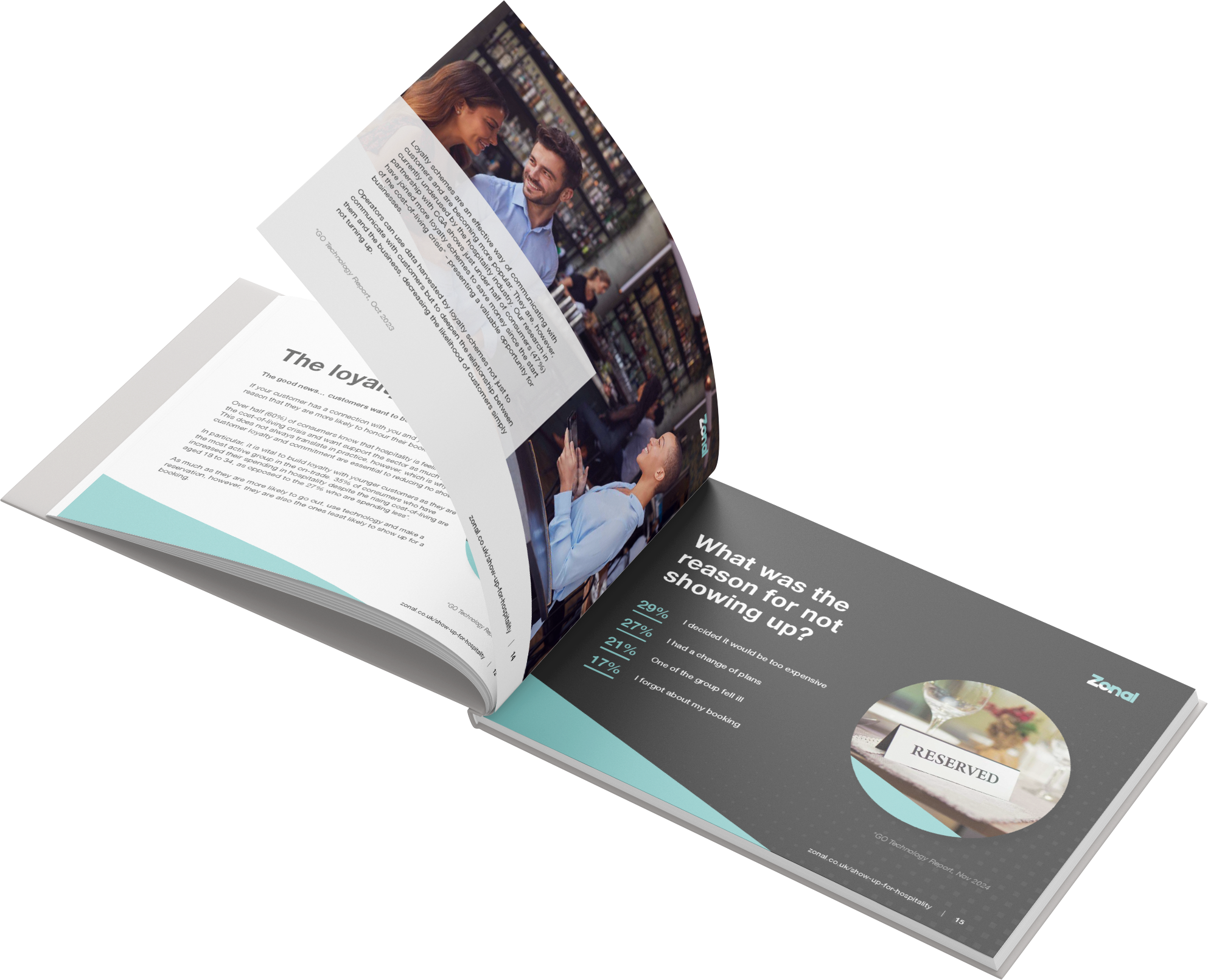
    Previous research revealed a wide variety of reasons for no-shows, led by changes in plans (19%), or someone else in a group cancelling (19%). Other excuses are hard to plan for, like the weather putting people off (14%), or a venue turning out to be too expensive (15%). But other reasons come with potential mitigations for operators, like people forgetting about a booking (16%). “We can’t mitigate all of this, but there are steps that can be taken,” said CGA’s director – hospitality operators and food, EMEA Karl Chessell.

    • Reminders are the most obvious solution

    Previous research uncovered that reminding people about reservations is the first step to reducing no-shows. Of consumers who forgot about a booking, more than a third (36%) would be more likely to show up if the venue reminded them. The timing of reminders is important, and just over a quarter (28%) would like to be reminded on the day, while half prefer a few days in advance (38%) or a week ahead (11%). “Restaurants that reconfirm all their bookings have a far lower no-show rate than ones that don’t,” said Amber Staynings, CEO of Bums on Seats. Establishing automated workflows and timelines can make reminders routine and easy, added Henri Jooste, strategic product manager at Zonal: “It’s just good business process.”

    • Venues need to make it easy to cancel

    The volume of no-shows can also be reduced if operators make it simple and fast to cancel. Understanding how people want to do this is crucial: previous research shows more than half (58%) now prefer to cancel digitally—either via websites (21%), text messages (19%), apps (10%) and email (7%)—so tech must be optimised to make the job easy. It’s also important to remember that two in five (39%) still prefer to cancel a booking by phoning. “It’s all about giving people choice,” said Staynings.

    • Deposits can be effective, but they’re not for everyone

    Deposits have been touted as a possible solution for some time now, and just over half (55%) of consumers say they would be willing to pay one if they didn’t turn up for a booking. But they remain a divisive issue, with other people averse. The solution is to use deposits sparing, and understanding things like occasionality and local demographics. People will also be more open to leaving deposits on busy days or in big groups than on everyday occasions. “If you put blanket deposits across your business you’ll lose sales—you have to use them tactically,” said Staynings. The deposit issue isn’t something that can be tackled in isolation, Chessell agreed. “There’s a risk to being the first person to do it and I can understand why operators are resistant.”

    • Over-booking can help

    Many operators have been hesitant about over-booking venues, but the crisis in no-shows means it might be time to rethink that. Businesses need to analyse their data to see when and by how much they might over-book, Jooste said. “We don’t want to stop people from booking… [so we need to] take more so we can compensate for those that are lost.” This comes with a risk that booked guests may occasionally have to wait, but that can be overcome, Staynings said. “Consumers might get shocked at first, but if it’s something we did as an industry as a whole then people would get used to it.” Staff could be well trained in dealing with over-booking too.

    • Higher loyalty can lower no-shows

    Beyond reminders, cancellations, deposits and over-booking, operators have many opportunities to build guests’ loyalty and make them less likely to miss their visit. “There’s lots we can do to make guests feel special and give them a good experience… and make them feel more loyal about coming into our venues,” Jooste said. Restaurants could learn a thing or two from retail on this, Staynings added. “Retail’s been doing it well for years, but hospitality hasn’t… it’s really new for our sector… about 70% of any sale is about how people feel about you, and that’s what brands need to be working on to get loyalty.

    • Improvements start with awareness

    “The Show Up For Hospitality campaign has started to open people’s eyes to the consequences of no-shows, there’s a lot of love for hospitality out there, and people recognise to an extent the hit that [no-shows] have had—though clearly there’s some way to go. Awareness campaigns are so important, because once people are fully aware of the impact they’re less likely to no-show.” said CGA’s director – hospitality operators and food, EMEA Karl Chessell.

    • This is the moment to act together

    No-shows have always been around, and they always will—but this feels like a good time for the industry to take concerted action on the issue. “People are responsive to doing new things [at the moment] and this is an opportunity… but it’s going to take a long time to fix and it’s going to be a collaborative effort,” Amber Staynings, CEO of Bums on Seats.


    Show Up For Hospitality Logo

    Join the conversation and help us make no-shows a thing of the past

    No-shows cost the hospitality industry an estimated £17.59 billion in lost sales every year. Join our group of passionate industry supporters to help spread the message far and wide and encourage customers to #ShowUpForHospitality.

    Learn about the campaign

      Related resources

      blog icon

      blog

      Your essential no-shows checklist

      Our in-house team of bookings experts have put together a checklist of ideas on how you can eliminate no-shows in your hospitality business.
      Read more
      webinar icon

      webinar

      Tackling the impact of customer no-shows

      Hear from experts at CGA, Bums on Seats and Zonal as they discuss the damaging impact no-shows have on hospitality businesses, and what operators can do to mitigate the impact.
      Watch on-demand
      insight icon

      insight

      No-shows calculator

      How much money are you losing each month due to customers who fail to honour their bookings? Calculate the cost of your no-shows with our handy calculator.
      Open

      Get in touch

      Chat with our sales team to learn about how Zonal products could benefit you.

      Parents: More likely to no-show, less likely to understand the impact

      blog icon

      blog

      Loyalty Hub

      blog icon

      blog

      Room for Growth: How Accommodation Is Driving New Revenue at Upham Inns

      ShowUpForHospitality parents blog header image
      By Olivia FitzGerald, Chief Sales and Marketing Officer, Zonal

      As part of our latest campaign #ShowUpForHospitality, we have taken a deep dive into the whys and wherefores of no-shows in hospitality – a practice that costs the industry an astonishing £17.5bn a year.

      Our research, in partnership with CGA, found that younger consumers are particular offenders but a second group also emerged as more likely to no show than others – parents.

      Since hospitality reopened in April 2021, 15% of parents have failed to turn up for their booking without telling the venue in advance (compared to only 4% of non-parents). Perhaps even more concerning to operators, however, one-fifth (21%) say they are more likely to no-show than they were before the pandemic – much higher than those without children (6%).

      Worryingly, this group is extremely valuable to hospitality. Consumers with children are more frequent visitors to venues, with 37% of parents visiting the trade once a week compared to 24% of non-parents and the research shows they also spend more per month. Yet they are also the least likely to recognise the damage not turning up does to pubs, bars and restaurants, with a mere 35% of parents saying they recognise and understand the impact not turning up has on such business, compared to 47% of non-parents.

      All this demonstrates why it is vital that hospitality businesses put in place tools to allow busy parents to amend or cancel bookings if needed. And this is particularly true now, as we approach Christmas – a key trading period that in 2021 will be even more significant to the industry than it usually is, given that last year Christmas got cancelled.

      With this in mind, here’s some key ideas and advice to help you encourage parents, and indeed anyone likely not to turn up, to #ShowUpForHospitality.

      • Clear communication with parents

      Parents are busy and the research shows that has a knock-on effect to hospitality because 17% of parents said they forget about their reservations. Some 15% say they did not honour a booking due to not being reminded and a further 14% agree that they would be less likely to no-show if they were contacted by the venue ahead of their booking.

      This highlights the importance of keeping in touch with this group in particular. So, we recommend setting up email or text alerts to remind customers about their booking ahead of their arrival.

      • Provide parents with multiple ways to amend a booking

      Providing multiple options for frazzled parents to cancel their reservations is key. Our research has revealed that 45% of parents are more interested in using digital channels to help them cancel and amend bookings vs 36% of non-parents. Bear this mind and make sure you switch on multiple channels to make life easier for them.

      From email, text and app to online functions, ensuring the correct digital tools are in place will help customers inform you that they need to cancel and help you encourage them to amend their booking as opposed to cancelling completely.

      • Consider deposits

      Interestingly, in general consumers have become more willing to pay to secure a booking and even pay a fee if they don’t show up and there’s no evidence to suggest parents feel any differently. In fact, the research shows 51% of UK pub and restaurant goers are happy to pay a deposit to book a table, and even more (55%) are in favour of paying no-show fees.

      Whereas traditionally there has been a scepticism and nervousness around the use of deposits and no-show fees in hospitality, this latest insight shows that, while a blanket approach may not be the optimum way forward for operators, consumers are far more inclined to accept them than we previously thought – and for a wider range of occasions.

      This shows that deposits and no-show fees shouldn’t just be reserved for high-end restaurants or Valentine’s Day and Christmas but are a legitimate tool for reducing no shows during busy trading periods.

      Show Up For Hospitality Logo

      Join the conversation and help us make no-shows a thing of the past

      No-shows cost the hospitality industry an estimated £17.59 billion in lost sales every year. Join our group of passionate industry supporters to help spread the message far and wide and encourage customers to #ShowUpForHospitality.

      Learn about the campaign

      Get in touch

      Chat with our sales team to learn about how Zonal products could benefit you.

      Deposits - Burden or boon?

      blog icon

      blog

      Loyalty Hub

      blog icon

      blog

      Room for Growth: How Accommodation Is Driving New Revenue at Upham Inns

      Henri Jooste, Strategic Product Manager at Zonal, discusses customer sentiment towards deposits based on findings from our recent GO Technology research.

      No-shows will unfortunately always occur to some degree, and whilst our recent #ShowUpForHospitality campaign has been working hard to raise awareness of the issue amongst consumers, there are specific tactics operators can consider to minimise the impact.

      Whilst deposits certainly aren’t a flawless solution and should never be implemented as a blanket approach, the findings from our recent research certainly provide food for thought.

      Asking customers for a deposit ahead of their visit is often considered to go against the casual nature of visits to pubs, bars, and restaurants. However, it seems that consumer attitudes to deposits are changing. 51% of UK pub and restaurant goers say that they would be happy to pay a deposit to book a table, and even more (55%) would be willing to pay a no-show fee.

      We know from the research that 28% of 18–34-year-olds are likely to be a no-show. These guests are also some of the more-frequent visitors to hospitality venues – around 64% eat out weekly; far higher than 29% of the general population who do so. The impact, therefore, of their no-show habits has a much greater impact on an operator’s bottom line.

      However, it’s this younger generation that are more resistant to paying deposits and no-show fees – around 2 in 7 (28%), so operators should absolutely tread carefully when considering implementing a deposit policy for this demographic and think about alternative preventative measures.

      More commonplace over the years has been taking deposits for specific events or days, Christmas or Valentine’s Day for example, with customers recognising that increased demand for hospitality services on these days means a more concrete sign of commitment may be in order. But asking customers about their willingness to lay down a deposit for other outings, whilst lower, yielded some surprising results.

      Deposits for special occasions

      Our GO Technology research shows that around two-thirds (65%) of guests are willing to pay a deposit when booking a special occasion or a special event, compared to 41% for more casual occasions. Again, this is another option worth considering for operators for occasion-led and/or event-led offerings, such as party packages, themed events or optional extras.

      Deposits for large groups

      A large group booking failing to materialise is particularly damaging to both team morale and an operator’s bottom line, and customers appear to recognise this. Over half of consumers are willing to pay a deposit when booking for a larger group (over 6 people), with 58% reporting that they’re comfortable doing so, compared to only 16% who stated that they would not be comfortable with this.

      But the successful implementation of deposits looks different for every venue, meaning operators must strike a balance so as to not deter potential customers whilst still remaining beneficial from an operational standpoint. The ins-and-outs of choosing to implement a deposits policy or not is entirely dependent on what’s right for your business, there is no right or wrong answer. After all, nobody knows your customers like you do!

      About the author

      Strategic Product Manager at Zonal, Henri has over 20 years’ experience in the hospitality industry with skills in stock management, procurement, supplier management, finance & cost control and business process improvement. Henri works closely with Zonal’s R&D teams to help deliver solutions that will not only meet operators needs now but in the future.

      Show Up For Hospitality Logo

      Join the conversation and help us make no-shows a thing of the past

      No-shows cost the hospitality industry an estimated £17.59 billion in lost sales every year. Join our group of passionate industry supporters to help spread the message far and wide and encourage customers to #ShowUpForHospitality.

      Learn about the campaign

      Get in touch

      Chat with our sales team to learn about how Zonal products could benefit you.

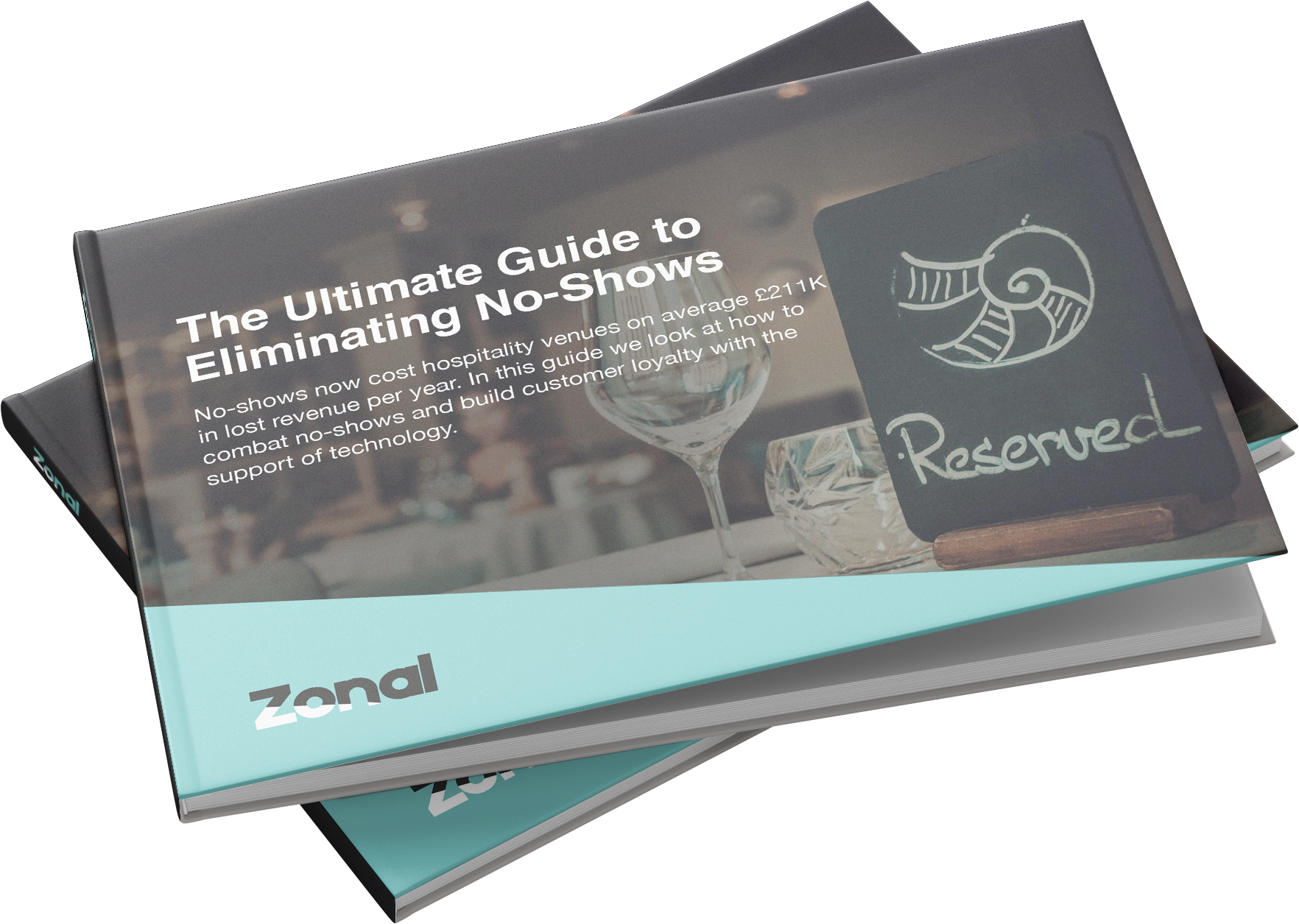
      The Ultimate Guide to Eliminating No-shows

      What factors are causing consumers to no-show? How can hospitality businesses combat the issue? Find out in this free guide.

      The latest figures from Zonal and CGA by NIQ uncovered that the rate of no-shows has risen to a new high of 14% this year, once again costing the hospitality industry an estimated £17.59bn in lost revenue per year.

      This rise comes at a time when every penny counts for hospitality, with rising costs, staffing problems and supply chain issues – all amidst a cost-of-living crisis – creating a difficult trading landscape.

      Educating the public is an ongoing task for those of us working in hospitality, however there are a number of steps that you as operators can begin implementing today to reduce the likelihood of unfulfilled bookings, as well as reduce the impact of those that do unfortunately occur.

      In this guide, we explore some of the approaches and technologies operators can explore today to begin combatting the no-shows issue in their venues – from boosting loyalty and improving communication, to deposits and simple cancellation processes.

      What's in the guide?

      • Key insights from our research into the scale and causes of no-shows
      • Steps you can take to eliminate no-shows in your venue, such as deposits and loyalty schemes
      • Advice on how to implement these solutions to combat the issue

      Show Up For Hospitality Logo

      Join the conversation and help us make no-shows a thing of the past

      No-shows cost the hospitality industry an estimated £17.59 billion in lost sales every year. Join our group of passionate industry supporters to help spread the message far and wide and encourage customers to #ShowUpForHospitality.

      Learn about the campaign