North Brewing Company overhauls front and back-of-house operations with Zonal's tech stack
Introducing North Brewing Company

First site, North Bar, opened in 1997

Acknowledged as the first craft beer bar in the UK

The brewery, North Brewing Company, opened in 2015

11 pubs and bars in the north of England and one in Treviso, Italy
“The reason we needed to look for a new technology solution was just due to the mounting challenges that our industry faces at the moment.”Head of Systems & Continuous Improvement, North Brewing Company
The business challenge
Faced with an existing system that was unreliable and failing to meet the requirements of their expanding business, as well as the mounting challenges caused by the ongoing cost-of-living crisis, North Brewing Company sought out a new technology partner to help streamline operations across their collection of taprooms and bars.
The North Brewing team knew they needed an established, fit-for-purpose system that already met their requirements without needing to wait for additional functionality to be implemented. The team also wanted a system that would provide them with robust, accurate data that would enable them to quickly and effectively make decisions and respond to trends.
Amidst a difficult trading environment, the team also wanted greater control over their stock management, helping to both save their teams time, as well as reduce costs and protect their GPs at each site.
Dedicated support was also key for the team at North Brewing, with their incumbent system frequently experiencing crashes and no available support to help, leading to trading downtime and sub-optimal experiences for their customers.


“If there are any operators out there that think they might not be big enough to switch to Zonal, I would say don’t be put off by the big names. Our experience was that Zonal tailored a package that was built just for us, was really specific to us, and was designed around our needs and our drive for great hospitality.”Head of Systems & Continuous Improvement, North Brewing Company
The solution
Aware of Zonal’s pedigree in the sector, the North Brewing team worked closely with the Zonal team to put together a package of connected solutions that would elevate their operations and deliver outstanding guest experiences across the business. Zonal’s extensive experience with multi-site estate rollouts meant that upgrading their system was a smooth process, with our dedicated onboarding teams supporting every step of the way, including on-site support on go-live day, resulting in minimal disruption to trading and a smooth transition for staff. The North Brewing team also benefit from unlimited ongoing access to Zonal’s industry-leading, UK-based support, meaning our team are always on hand to keep their sites up and running when needed.
By implementing a range of fully-integrated Zonal solutions, the team have also been able to streamline their operational processes and the way they serve their guests. Zonal’s handheld iServe ordering devices enable North Brewing’s teams to easily take guests’ orders at the tableside and send them through to the bar without the need for any re-keying; and their inventory management has been transformed with more efficient and accurate stock control facilitated by Zonal’s Mobile Stocks solution – providing significant time savings, as well as cutting down on paper usage.
Zonal’s ecosystem of technology also provides the team with centralised, real-time data and reporting, enabling North Brewing to quickly and easily analyse trends from across the business, resulting in more informed decision making to help drive the business forwards.
Since implementing Zonal’s technology across their estate, North Brewing have benefitted from:
- An established, fit-for-purpose enterprise EPoS solution, enabling greater control at both head office and site level
- Robust, feature-rich stock management solution included as standard – no extra costs or hidden functionality
- Handheld ordering devices for staff with no re-keying required, speeding up service times and reducing mistakes
- Mobile Stock management solution, fully integrated with the EPoS stock solution, eliminating the need for printed count sheets and manual count entries
- Centralised, real-time reporting, enabling North Brewing to better track and act upon trends from across the business
- Full integrations to Airship & Toggle, enabling them to track customer loyalty and drive additional revenue
“The customer support from Zonal has been fantastic, not only did we have everyone on-hand on the day, but after the installations we’ve been able to get in touch with people from head office. The helpline is so useful.”Stacey Godward, General Manager: North Taproom – Sovereign Street, North Brewing Company
Results


Featured solutions


Subscribe to get the latest news, product announcements and industry updates
How can hospitality businesses combat no-shows?
With no-shows once again costing the hospitality industry an estimated £17.59bn in lost revenue per year, it’s important for hospitality businesses to ensure they’re doing everything they can to both reduce the likelihood of guests not showing up for their booking, as well as mitigating the impact of those that do.
In this webinar, we’re joined by industry experts from Mitchells & Butlers and Bums on Seats to explore the current bookings landscape, the impact of consumer loyalty on no-shows, the importance of real-time booking availability, and share their advice on processes and procedures operators can start implementing today to start tackling no-shows in their business.
Watch this webinar for actionable expert advice, including:
- Current consumer bookings trends
- Actionable advice on reducing no-shows in your business
- The impact of loyalty on consumer no-shows
- Advice for driving sales during off-peak times
Subscribe to get the latest news, product announcements and industry updates
Guest blog by Mission Group
The hospitality sector has disproportionately suffered the cost-of-living crisis since 2021, causing many industry leaders to revisit the old management maxim that it’s cheaper to keep current customers happy than to find new ones. Increasingly, data-oriented management teams have been interrogating their loyalty programmes in search of new insights and ideas for innovation. And now there’s new research available: a study by Zonal and CGA which asked 5,000 British people their opinions on loyalty in the context of eating and drinking out.
The findings are fascinating, and I hope will help industry leaders get back to basics in their efforts to turn customer KPIs green.
Vision – what’s your brand promise?
The report reveals the diverse range of factors that influence loyalty, emphasising that it can only be achieved by delivering the fundamentals of hospitality consistently over time. At the top of the list, by a substantial margin, is “value for money,” a factor that resonates with nearly half (47%) of all consumers. Importantly, value doesn’t necessarily equate to cheap; it’s about offering quality and satisfaction that align with the price – also known as keeping a ‘brand promise’.
Brand promises make up our rich consumer landscape. For instance, if I go to the local Community Club, I expect a pocket-full of change from my round of drinks in a friendly, local environment – and not much else. When I go to Gordon Ker’s Blacklock I expect a steak dinner experience that blows the local pub away, without forcing me to remortgage at the latest Bank of England interest rate. If I occasionally dare to take my wife to a Michelin Starred restaurant for Valentine’s, I expect the experience to impress her for longer than it takes to subsequently pay down my credit card. You get the idea – my loyalty to these brands is relative to how well they keep the unique brand promises they make to me as a customer – not who’s the cheapest.
It is the leader’s (or leadership team’s) responsibility in a hospitality business to nurture a clear and compelling vision for their brand promise. And, when the vision is clear, it is their further responsibility to ensure that it is shared by all, so that the entire organisation can work coherently to deliver it. In my examples above, it would be no good if half the Blacklock team spent their days cutting costs to match those of a Community Club and the other half worked on a £250 per head Michelin-Star-style tasting menu. That would result in chaos internally and customer confusion (and disappointment) externally.
Traction – delivering your brand promise through each and every employee
Whereas vision is all about getting your team 100% on the same page with where you’re going, traction means actually getting there. This is where most hospitality leadership teams fall down and their companies pay a particularly heavy price for poor employee execution in times of economic uncertainty, when consumer loyalty comes under increased scrutiny.
According to Zonal and CGA’s recent report, 52% of consumers now admit to having higher expectations of the brands they are loyal to. This figure jumps to a remarkable 64% among the 18- to 24-year-old demographic.
Consider a boutique hotel brand, committed to delivering a “home away from home” experience for travellers seeking authentic local encounters. Their vision might be to transform every guest’s stay into a unique story about the locale. To achieve traction for this vision, the hotel might initiate weekly sessions focusing on KPIs like guest feedback on curated local experiences, staff training on regional history and customs, or partnerships with local artisans and businesses. By ensuring that each department’s daily activities actively contribute to crafting these individual guest stories, the hotel can bring its brand vision to life, consistently and effectively.
Healthy relationships – bringing everything together with a customer-centric culture
Even with a clear vision and the right habits for traction, it’s team harmony which forms the real backbone of a thriving hospitality business. And harmony doesn’t simply mean avoiding conflict; it’s about addressing and resolving issues constructively, fostering open communication, and building an environment of trust and mutual respect.
In the case of our boutique hotel, this might mean ensuring that the front desk collaborates seamlessly with housekeeping, that the kitchen and service staff operate in unison, and that every team member feels valued, heard, and empowered.
Great leaders promote the idea of vulnerability-based trust within teams. For example, imagine a further scenario where a chef at our hotel feels comfortable admitting to a mistake in ordering supplies without the fear of retribution. This open admission allows the team to quickly adjust and find solutions. It also fosters an environment where learning and growth are prioritised over blame. When each member of the hotel staff takes ownership of their responsibilities and commitments, the result is a smoother guest experience.
Whether it’s ensuring that a guest’s special request is met or promptly addressing feedback, a healthy team that holds itself accountable ensures that the brand’s promise is consistently delivered and customer loyalty is earned day in day out.
The hospitality industry’s path forward
In conclusion, the hospitality industry’s path forward hinges on the simple yet profound principle of keeping promises. The Zonal and CGA study underscores the need for brands to understand and deliver on what ‘value for money’ truly means to their customers. It’s about aligning every aspect of service with the brand’s core promise, from the boardroom to the front line. As consumer expectations climb, especially among the younger demographic, the margin for error narrows. Authentic experiences, not price wars, are the new battleground for customer loyalty. For leaders in the industry, the mission is clear: cultivate a culture that prioritizes a consistent and genuine delivery of the brand promise. When every employee understands and contributes to this mission, customer loyalty will follow. Let’s not just chase the green on spreadsheets, but foster the kind of loyalty that comes from customers who leave as satisfied storytellers of the unique experiences they’ve had.

By Rob Liddiard
Managing Director at Mission Group
Rob Liddiard is a professional implementer of the Entrepreneurial Operating System (EOS), working with forward-thinking leadership teams through his company, Mission Group. Rob was the Founding CEO of Yapster, working with a diverse range of customers including BrewDog, Caffe Nero, CH&CO, Firmdale Hotels, Flat Iron, Marstons plc, Nobu, Popeyes Chicken, Wagamama and many more.


blog
Five tips for growing your loyalty scheme with ad-hoc rewards
Loyalty schemes can be a great way of increasing visit frequency among your guests, and increasing guest spend when they do visit. But how can you utilise ad-hoc rewards to grow your loyalty scheme? Discover five tips for growing your loyalty scheme with ad-hoc rewards.
Subscribe to get the latest news, product announcements and industry updates
Provenance Inns transforms guest experiences and operations with Zonal's PMS
Introducing The Provenance Collection

Founded in 2010

9 distinctive venues across North Yorkshire

Ranging from village pubs and inns to 25-room boutique hotels and private shooting lodges
Emphasis on locally sourced, fresh produce
“We wanted something user-friendly with a good support network and ultimately the ability to manage remotely. With the head-office function, we can set pricing, analyse sales data and manage everything back-of-house centrally.”Chris Cartledge, Former Head of Operations, Provenance Collection
The business challenge
With a commitment to excellence in customer service, accessibility, and the delivery of exceptional value to their guests and community, the Provenance team needed a solution that could replace three separate systems to manage their accommodation operating across all nine sites.
It became evident that they required a versatile and robust PMS that could meet their needs, including the provision of reliable data, the standardisation of pricing structures across all nine of their diverse venues, the centralisation of essential data, and the simplification of user management processes.
A strong support element was also a must for the Provenance team, as was the ability to manage the system remotely, enabling their head office team to manage pricing, access detailed reporting on sales performance and control back-of-house operations.
By embracing Zonal’s High-Level Property Management System, Provenance aimed to streamline their operations, ensuring that they could consistently deliver top-tier experiences to their guests.
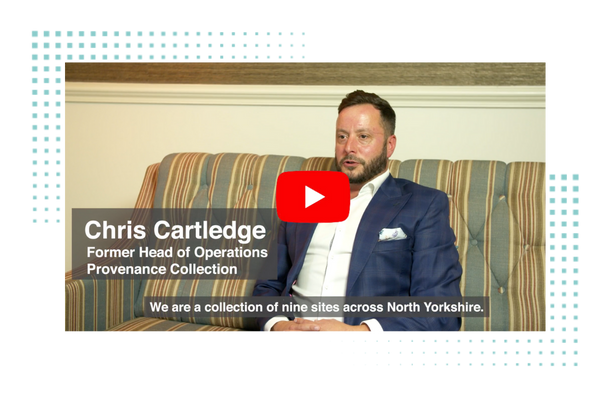
“Having a fully integrated tech stack is really useful, it helps us share data across different departments within the business, but more importantly, allows us to move that data towards marketing and attracting new guests.”Chris Cartledge, Former Head of Operations, Provenance Collection
The solution
As an established Zonal EPoS customer, the adoption of Zonal’s PMS solution was a straightforward and seamless process for the Provenance Collection, with support from the HLS team throughout the transition resulting in a smooth rollout with no issues for their front-of-house staff. The integration of Zonal’s PMS with their existing Zonal EPoS system and Airship CRM allowed them to easily capture and utilise data centrally, enabling them to deliver more effective, targeted marketing to their guests.
This transition enabled them to overcome the complexities that can arise with multiple and diverse venues to manage, providing them with a unified and efficient approach to property management, pricing, and user administration across their expanding estate.
With their integrated suite of solutions now in place, the Provenance team has benefitted from centralised reporting across the entire business, enabling them to forecast, budget, and identify data trends for smarter decision making.
The Provenance Collection now benefit from:
- A powerful integrated EPoS system with robust reporting functionality utilised across their entire estate
- A fully integrated PMS with reporting used to manage accommodation across nine venues
- A scalable and user-friendly solution
- Detailed reporting and analytics that can be shared easily with key stakeholders within the business
- A fully integrated hospitality CRM that enables greater usage of customer data to drive more effective digital marketing campaigns. Data is collated centrally from EPoS, PMS, Bookings, and even guest WiFi.
- Full access to dedicated support, available 7 days a week, 365 days a year, 8am – 12pm
“The ability to share data across all of our sites and use it centrally was important to us. We have the full suite of Zonal products, we have been users of Zonal’s EPoS system and Airship for several years now, implementing HLS has really tied the whole piece together.”Chris Cartledge, Former Head of Operations, Provenance Collection
Results


Featured solutions



Subscribe to get the latest news, product announcements and industry updates
Ask the Expert: Creating a successful hotel social media strategy
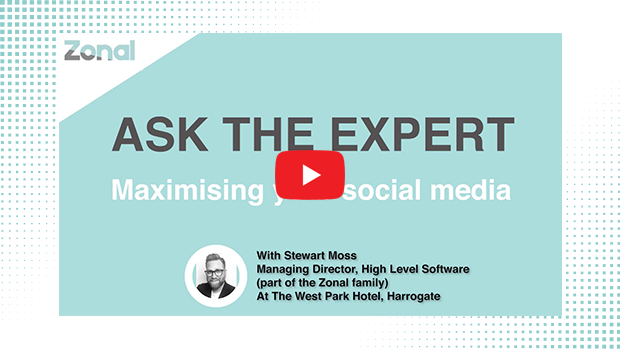
With 60% of consumers aged 18 to 34 checking a hotel’s social media accounts before they book, and 43% of overall consumers stating that being able to make a booking through social media would make their booking journey easier, social media presents a massive opportunity for hoteliers looking to drive increase occupancy and drive RevPAR.
We sat down with Stewart Moss, Managing Director at High Level Software, part of the Zonal family, to explore how hoteliers can ensure they’re capitalising on the opportunities social media brings, from engaging with your audience and responding to queries and feedback, to leveraging your social platforms as a revenue driving channel.
- How important is social media for hoteliers?
Social media is extremely important for hoteliers in 2023. It’s become an integral part of the hospitality industry, playing a significant role in shaping the guest experience and influencing bookings.
Social media provides a direct line of communication between hoteliers and guests, both current and future, enabling hotels to engage with their audience before or after they stay, respond to reviews (both positive and negative) in a consistent tone, and really demonstrate their commitment to guest satisfaction before you get there as it puts a safety net around the booking.
Reputation management is a really important part of social media as well. Hoteliers really should be responding quickly and in a consistent tone of voice to anything that customers leave on their pages, and the opportunities to drive direct bookings are sizeable from there – especially with people using Facebook to book their hotels, and researching hotels through Instagram prior to staying.
- What role does social media channels play in the booking journey?
The fact that 60% of those 18 to 34 year olds are visiting social media pages before they’ve even made their decision highlights the importance of these platforms.
People are now gathering information and assessing your reputation before they stay with you, and when you talk about Gen Z in particular, they want to see different things from your business than what’s been highlighted before. They want to know about sustainability, they want your venue to be accessible at all levels, and they want to know how it’s going to extend their wellness or improve their lives in some way.
So people are gathering information and assessing what you’re about before they’re staying and the you’re giving them some authenticity to really add credence to their search, and this does really influence decision making. Positive reviews, engaging content, and captivating visuals on social media can really greatly influence the decision-making process. Showcasing the hotel’s unique features and highlighting the positive experiences guests can have, really helps provide guests with peace of mind knowing that they’ve made the right choice before they even arrive to stay with you.
- What should a hotel’s social media strategy look like?
Hoteliers should have a well-defined social media strategy that aligns with their overall marketing goals. This strategy should include clear objectives about target audience identification, content themes, posting schedules and performance metrics. Think “what are we aiming to do with all this time and work?”.
Share compelling visual content, and especially make sure to leverage user-generated content. If a guest has stayed in a lovely hotel and then posts about their experience, the hotel should then be responding and re-sharing this content, again lending credence to future guests that they will have a great experience staying here and giving them a prescription of how they can spend their time at the hotel, and that they won’t be let down.
Taking The West Park Hotel in Harrogate, part of the Provenance Collection, as an example – it’s very close to the Yorkshire Dales, so I’d be looking to target groups with an interest in walking and hiking, as well as dog owners and walkers as it’s a dog-friendly hotel. I wouldn’t be selling, I’d be communicating or engaging with the audience to show how great the property is and that the experiences offered here align perfectly with their interests.
Creating points of interest that encourage guests to share their experiences at the hotel can be another great pillar of your social media strategy. Taking The West Park Hotel as an example again, they’ve put a living wall in their excellent F&B area, putting something in place that encourages guests to engage with you and talk about you – which essentially results in free marketing.
People want to talk about the great stay they’ve had, and giving them a series of things to ‘tick off’ throughout their stay increases the likelihood they’ll share their experience of staying with you with their networks.
- How should you respond to comments on social media?
It’s extremely important to be responsive to both the good and bad comments you get on social media, because the guests that may be looking to book with you in future will be reading what you’re saying and how you respond to those questions.
The areas where we think it’s especially important is brand visibility and awareness, social media allows you to reach a wider range of people than ever before so it’s key to ensure you’re presenting the best version of yourself; and customer engagement and relationship building, always think about having maybe two or three members of staff responding rather than a lot of different people to build that authentic, consistent tone of voice, as well as show potential guests how much you care about their feedback about your business and the time they’ve spent with you.
If you’d like to find out more about how Zonal’s hotel technology can deliver success in your business, get in touch today for a technology consultation and one of our experts will be happy to talk you through what’s possible!

By Stewart Moss
Managing Director at High Level Software
With an intensive understanding and passion for the hotel sector and more than 20 years' of hotel knowledge and expertise in hotel management, operations as well as sales and marketing for brands, Stewart leads Zonal's hotel division.

Subscribe to get the latest news, product announcements and industry updates
The New Loyalty Landscape: How the cost-of-living crisis impacts hospitality

Exclusive consumer research into guest loyalty towards hospitality brands, and how this has been affected by the rising cost of living
Loyal customers are an incredibly valuable asset for any hospitality business, providing a lucrative source of repeat business and resulting revenue as well as brand advocacy that entices new guests in through your doors.
Maintaining a loyal customer-base has always been a key objective for operators, however amidst a cost-of-living crisis resulting in tighter consumer budgets, the criteria leading to a customer becoming, and remaining, loyal have changed. How does loyalty differ between generations? And what role do loyalty schemes play in all of this?
Produced in partnership with CGA by NIQ, we surveyed 5,000 GB hospitality consumers to find the answers.

What's in the report?
- What makes, and breaks, loyalty?
- Differences in loyalty between generations
- How guest loyalty to hospitality has changed as a result of the cost-of-living crisis
- The role loyalty schemes play in maintaining guests’ loyalty to hospitality brands
Subscribe to get the latest news, product announcements and industry updates
Assessment 5:
Improving the guest experience and driving loyalty
Zonal’s Improving the Guest Experience and Driving Loyalty self-assessment
Answer a few short questions to identify how well your tech helps you to deliver incredible guest experiences that keep your customers coming back time and time again. At the end you’ll get personalised guidance which explains how you can leverage your customer data to offer personalised customer experiences.
Take our other self-assessments to see if you score just as well across other key areas.
1: Reducing administration tasks

Find out if your tech helps you remove manual tasks that sap time and resources, and enables you to improve speed and…
2: Driving revenue
Let’s focus on your bottom line, and examine how your tech helps you to drive additional revenue. In this quick but…

Assessment 3:
Speeding up service

Zonal’s Speeding Up Service self-assessment
Answer a few short questions to identify whether your tech helps you deliver the consistently high levels of service that your customers expect. At the end you’ll get personalised guidance to help you turn more tables and generate maximum yield.
Take our other self-assessments to see if you score just as well across other key areas.
1: Reducing administration tasks
Find out if your tech helps you remove manual tasks that sap time and resources, and enables you to improve speed and…
2: Driving revenue
Let’s focus on your bottom line, and examine how your tech helps you to drive additional revenue. In this quick but…
Assessment 2:
Driving revenue
Zonal’s Driving Revenue self-assessment
Answer a few short questions to identify whether your tech helps you increase upsell opportunities and open up new revenue streams. At the end you’ll get personalised guidance to help you boost customer spend, both in-venue and at their homes.
Take our other self-assessments to see if you score just as well across other key areas.
1: Reducing administration tasks
Find out if your tech helps you remove manual tasks that sap time and resources, and enables you to improve speed and…
3: Speeding up service
Fast service is a key factor in improving the customer experience and turning more tables. Our third 5-minute…