

-

Research
GO Technology: The social value of hospitality
The end of 2024 saw the first-ever joint session of Tourism Ministers in Azerbaijan, where The World Sustainable Hospitality Alliance launched its groundbreaking list of universal sustainability KPIs for the world’s hospitality industry.
Focusing on CO2 emissions, water and energy usage and waste management, the first wave of KPIs emphasised transparent and consistent methods of reporting for businesses to assess their performances.
The initiative is part of the COP29 Declaration on Enhanced Climate Action in Tourism, which set out to emphasise the importance of action within the hospitality industry to help tackle the global climate crisis while retaining economic sustainability.
The KPIs aim to drive consumers to make more sustainable travel choices and help hospitality businesses create positive change for the environment.
So, what does this mean for our customers? And how can we work together to make significant steps towards a sustainable future for the industry?
At Zonal Hotel Solutions, we are truly committed to helping our customers achieve the targets set out for them by organisations such as The World Sustainable Hospitality Alliance. Here, we discuss how our integrations and products can help hoteliers reach their sustainability goals.
The hospitality sector accounts for up to 15% of UK greenhouse gases, and with growing concern amongst guests about sustainability, it’s never been more important for businesses to uphold their environmental promises. In fact, the latest findings by YouGov show that 64% of British consumers are willing to pay up to 10% more for sustainable foods and drinks and Visit Britain reports that 58% of people want to stay in accommodation with green awards and environmentally friendly practices.
Zonal’s host of environmental integrations are designed to boost your tech stack, and help your hotel go green.
Net Zero Now helps hospitality businesses reach the carbon emissions KPI set out by the alliance, with automated carbon accounting, tailored emissions reduction plans and a trusted Certification Mark.
The software automatically generates reports for all relevant disclosures and provides clear strategies for businesses on how to cut their emissions, while enhancing their brand reputation and building trust with green-conscious customers.
It’s been found that 81% of consumers believe companies should help to improve the environment, so Play It Green supports hospitality businesses to actively demonstrate positive change.
This integration offers diners in your hotel’s restaurant the chance to rebalance the carbon impact of their meals and gift to charity whilst paying their bill. Each automatically added (but non-fixed) £1 plants two trees and regifts 10p to charity. Play it Green also provides staff training on sustainable culture within the workplace and educational articles for hotels and restaurants.
With our Gift Trees integration, it costs you nothing to help offset the environmental impact of meals from your hotel and help lift people out of extreme poverty. Diners in your hotel’s restaurants can opt into a small fee of £1.23 on their final bill to help provide farming families with food, income, access to education, clothing, medicine, and safe homes.
GiftTrees is seamlessly integrated with Zonal’s EPoS, allowing hoteliers to easily boost their societal impact and benefit the environment through investment in agroforestry systems.
By helping businesses to drill down into their specific brand, site, supplier or ingredient-level emissions on a granular level, Zero Carbon Forum provides industry benchmarks to help each individual team member recognise the carbon impact of their daily practices whilst working at your hotel.
Through easily accessible and detailed data reports, this integration helps hospitality businesses identify the depth of their carbon footprint and put actionable processes into place to cut emissions and financial losses.
Restaurants and hotels lose a huge £2.6 billion to 1 million tonnes of food waste each year in the UK, 75% of which could be avoided. The World Sustainable Hospitality Alliance has calculated that 18% of all world food waste is created by the hospitality industry, citing it as a ‘priority’ within its recent KPIs.
To enable hoteliers to tackle this, Zonal’s Purchase-to-Pay system alerts kitchen staff when stock is running low and gives real-time recommendations for re-ordering and menu planning based on individual requirements and guest behaviour.
The software automatically sends an order to suppliers for fulfilment, saving chefs precious time and streamlining kitchen operations. This process significantly reduces food waste and over-ordering, greatly cutting costs and helping the environment.
As we move into 2025, it’s evident that sustainability must be at the forefront of every hotelier’s business plan. With help from Zonal’s comprehensive suite of technology, hitting sustainability KPIs will become more accessible, streamlined and comprehensive than ever.
To read more about the World Sustainable Hospitality Alliance and COP29 Declaration on Enhanced Climate Action in Tourism, visit: https://sustainablehospitalityalliance.org/universal-sustainability-kpis-cop29/.

Recent research reveals that 90% of the top booked dates for 2024 were Sundays, with only two exceptions: Valentine’s Day and the Saturday before Mother’s Day. Of the top 20 dates which had the most bookings, 18 fell on Sundays.
Taking Christmas/December bookings out of the equation, Mother’s Day emerged as the most popular date for bookings followed by Father’s Day and Easter Sunday. The top 10 booking dates were revealed as the following:
The data also showed a trend in consumers booking last minute, with all of the top 10 booking dates, having a substantial amount of reservations made on the day itself. When looking at which day drove the most last-minute reservations, Sunday 26th May tops the list with nearly half of bookings being made on the day. Easter Sunday, also saw a surprisingly high-number of on the day bookings, with over a quarter (26%) of people booking on the day.
The research also revealed that over 50% of all Sunday bookings in those top 10 dates, were lunchtime bookings, demonstrating the priorities for key occasions and Sunday bookings.
This emphasises the importance of having robust systems in place to handle bookings efficiently. A digital booking platform with real-time table availability can help operators streamline operations, better manage table covers and staff schedules, and handle last-minute booking adjustments. Such tools are crucial for maximising revenue, especially during high-demand periods.
Commenting on the findings, Tim Chapman, Chief Commercial Officer, Zonal, said: “Our research shows that Sundays dominate the top booking dates for 2024, highlighting the importance of these days for the hospitality industry. Our GO Technology research with CGA by NIQ and UKHospitality earlier this year, revealed that 44% of Britons wanting to spend time in hospitality venues to celebrate a special occasion, so it’s no surprise that key occasions like Mother’s Day and Father’s Day lead the list, reflecting how integral these moments are to customer dining habits.
“By leveraging tools that provide real-time table availability and streamline the booking process, operators can ensure they’re well-prepared to capitalise on these high-demand dates and drive revenue throughout the year.”
New figures from Zonal and CGA by NIQ, reveals significant regional differences in hospitality no-shows across the UK, with London home to more than a quarter of Britain’s no-shows, double the national average.
With Zonal’s recent GO Technology report showing that no-shows were back to a record high, it’s no surprise that the problem in London has worsened. London stands out as a major hotspot for no-shows, accounting for 28% of the total—a noticeable rise from 24% in mid-2021. With London having a 14% share of the population, this means that Londoners are twice as likely not to fulfil a booking than anywhere else in the country.
When it comes to the rest of the UK, after London the North West is the worst offending region for no-shows (14%), followed by the South East (12%), and the East Midlands, Scotland, and the West Midlands, each accounting for 8% of no-shows. Notably, Yorkshire and Humber is the region with the least no-shows, representing only 4% of the no-show demographic.
Britain’s Top Regions for No-Shows:
1 – London: 28% (14% of total population)
2 – North West: 14% (11% of total population)
3 – South East: 12% (15% of total population)
4 = East Midlands: 8% (8% of total population)
4 = Scotland: 8% (9% of total population)
4 = West Midlands: 8% (9% of total population)
5 – Yorkshire and Humber: 4% (9% of the population)
The survey of more than 5,000 British adults highlights that whilst more than two thirds (68%) of consumers who make bookings say they turn up for all of them, 18% cancel in advance, with one in seven (14%) of guests admitting to failing to turn up without telling their venue. Since the launch of the industry-wide #ShowUpForHospitality campaign in 2021, GO Technology data had measured no-shows as decreasing. However, recent insight shows they have now returned to the same level as three years ago, highlighting the significant and persistent problem they present.
Commenting on the findings, Tim Chapman, Chief Commercial Officer at Zonal said: “No-shows are a £17.59bn problem for the hospitality sector and the issue does not seem to be going away.
“It’s essential for guests, both in the capital and in wider regions, to understand the significant impact that no-shows can have on a venue’s business. If you need to cancel a booking, please notify the venue as early as possible so they can make the table available to others. By fostering better communication and raising awareness, we can all contribute to supporting the hospitality industry and minimising the challenges caused by no-shows.”
Kate Nicholls, Chief Executive of UKHospitality, said: “This recent research from Zonal reinforces that no-shows remain incredibly damaging for local pubs and restaurants, and it’s crucial people are aware of the impact they have when they don’t show up for a booking.
“It’s not just the lost sales from those who haven’t turned up but also the lost revenue from those that were turned away, not to mention the wasted food and extra staff taken on.
“With Christmas such a key trading period for pubs, restaurants, and bars, it is so important that customers show up and play their part in supporting the local businesses this festive season.”

Join the conversation and help us make no-shows a thing of the past
No-shows cost the hospitality industry an estimated £17.59 billion in lost sales every year. Join our group of passionate industry supporters to help spread the message far and wide and encourage customers to #ShowUpForHospitality.

Despite 2024 remaining another challenging year for both consumers and the hospitality industry, it’s not all doom and gloom.
Consumers continue to recognise the important roles their favourite pubs, bars and restaurants play in both their social lives and their local communities, and are still keeping eating and drinking out on their list of priorities – despite cost-of-living pressures.
In this review of our 2024 consumer research series, we explore the top factors influencing guest behaviour amidst the cost-of-living crisis, as well as the opportunities, and challenges, these present for hospitality businesses; from the importance of avoiding points of friction during the customer journey, and getting your hospitality fundamentals right, to how loyal guests are to their favourite hospitality brands and the factors causing guests to not honour their bookings. Discover all of this, and more, with insights from 5,000 GB consumers.

Research
GO Technology: The social value of hospitality

Research
GO Technology: More Than a Meal

Research
GO Technology: Why 6:12pm is the new 8pm

Research
Pub Accommodation Review 2025

Research
GO Technology: Hotels and consumers – Guest expectations and how to meet them

Research
GO Technology: Consumers and hospitality: 2024 in review

Research
GO Technology: The truth behind no-shows

Research
GO Technology: Brand loyalty in hospitality
Hospitality loyalty programmes are booming – with big names such as Wagamama and Leon both recently launching their own schemes. Operators are increasingly adopting diverse methods to cultivate customer loyalty, leading to creative and engaging experiences for their customers. As part of our Loyalty Collective, where we gather top industry names to discuss all things loyalty in an open and honest conversation, we spoke with some of the industry’s top operators to explore various loyalty schemes they are implementing.
In March this year, Gusto become the UK’s first casual dining brand to launch a subscription-based membership programme. The Gusto Platinum Club is £65 a year or £6 monthly, and members receive 40% off food from Sunday-Thursday for themselves and up to three guests. Members also receive a complimentary bottle of Prosecco to take home upon sign-up and exclusive invites to menu launches.
This model not only rewards loyal customers but also encourages dining out during quieter days of the week.
And how is this working out for Gusto? Well, Kat Schofield, Marketing Director at Gusto, told us that the subscription model is boding well. Since launching, they’re seeing frequency of visits double, along with a noticeable increase in upsells. Kat says that customers are opting for nicer bottles of wine, or going for two rounds of cocktails, all thanks to the 40% discount off food.
Flat Iron has taken a unique approach with its Carcass Club, which is a series of exclusive one-off events that highlight rare types/cuts of beef.
For £20 per person, attendees receive a delicious meal that includes a special steak, beef dripping chips, sauce, a glass of wine, and Flat Iron’s signature popcorn and Tahitian vanilla ice cream. This event is walk-in only and operates on a first-come, first-served basis, adding an element of excitement and exclusivity.
Darren Smith, Head of Operations at Flat Iron, said that by offering a slightly elevated experience, Flat Iron are cultivating customer loyalty without relying on a cut and paste offer. This approach makes each visit feel special and effectively showcases and promotes a particular restaurant.
At Cosy, loyalty takes on a tangible form with their Penny Club. Customers receive a physical coin that grants them access to a special offer: 2-for-1 house cocktails from Tuesday to Saturday. Membership is by invitation only, creating a sense of exclusivity. Customers share their name and favourite cocktail, which is recorded in a physical book at the cocktail bar, enhancing the personal touch of the experience.
Rosie Lewis-Marsh, Hospitality Sales and Marketing Consultant for Yummy Collection, emphasises the importance of having a compelling story behind loyalty programmes, rather than simply offering free points. She observes that the younger generation, who have always accessed music online through platforms like Spotify, are now rediscovering CDs and vinyl records. Rosie says that people crave something tangible and want to feel connected, like being part of a club, and this approach to loyalty schemes can create that club-like atmosphere, making customers feel truly involved.
These innovative loyalty schemes illustrate how hospitality operators are thinking outside the box to engage customers and foster lasting relationships. By offering unique experiences and personalised rewards, they are not just retaining customers but creating a community that keeps returning for more.

New figures from Zonal’s latest GO Technology report, in partnership with CGA by NIQ, reveals that the number of consumers not showing up for their reservations in pubs, bars and restaurants is back to a record high, with 14% of guests not honouring reservations or informing venues in advance that they need to cancel.
The survey of more than 5,000 British adults, highlights that whilst more than two thirds (68%) of consumers who make bookings say they turn up for all of them, 18% cancel in advance and one in seven (14%) admit to failing to turn up without telling their venue. Since the launch of the industry-wide #ShowUpForHospitality campaign in 2021, GO Technology data had measured no-shows as decreasing. However, this latest insight shows they have now returned to the same level as three years ago, highlighting the significant and persistent problem they present.
When looking at the reasoning for no-shows, the findings revealed a direct link between the current financial landscape and the rise in no-shows, with 57% saying that they are severely or moderately affected by the cost-of-living crisis, and over a quarter (29%) of those who didn’t follow through on a booking, citing that they decided it would be too expensive, as their number one reason for not showing up.
To prevent no-shows and help keep revenue flowing, understanding what would encourage people to show up or cancel a booking in advance and then implementing the necessary tools to achieve this, is key. When asked what would make guests less likely to miss a booking, the following came out on top:
Commenting on the findings, Tim Chapman, Chief Commercial Officer at Zonal said: “No-shows are a £17.59bn problem for the hospitality sector and the issue does not seem to be going away – in fact, this research suggests it has been exacerbated recently by the cost-of-living crisis.
“The report also reveals that those most likely to no-show are high-spenders and frequent visitors, which makes them very valuable customers to the sector. It is imperative that we get to grips with the problem, putting in measures to help customers keep in touch and working together to educate consumers about the damage not showing up can do to their much-loved local pubs, restaurants and bars.”
Karl Chessell, Director – Hospitality Operators and Food, EMEA, CGA by NIQ added: “Our research shows no-shows remain a hugely frustrating issue for restaurants, pubs and bars. Bookings are a double-edged sword for hospitality, helping venues to plan better and fill tables but bringing the risk of substantial missed sales, at a time when margins and growth are under pressure.
“Fixing the problem is easier said than done but there are steps that all venues can take to mitigate losses, and technology has a major role to play in making the bookings process more effective for operators and guests alike. As we approach the crucial Christmas period, reducing no-shows is going to be a top priority for everyone in the sector.”
Join the conversation and help us make no-shows a thing of the past
No-shows cost the hospitality industry an estimated £17.59 billion in lost sales every year. Join our group of passionate industry supporters to help spread the message far and wide and encourage customers to #ShowUpForHospitality.
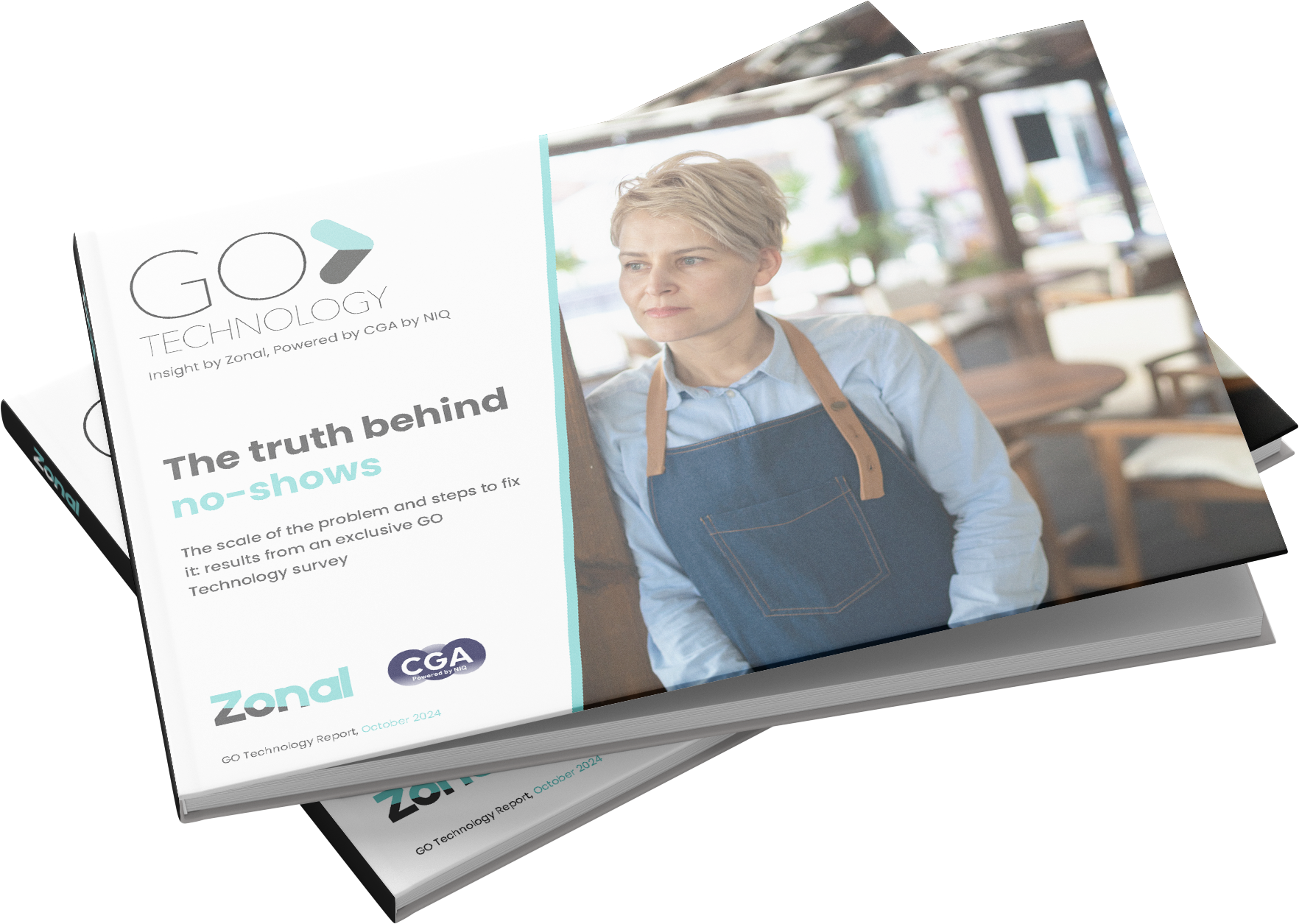
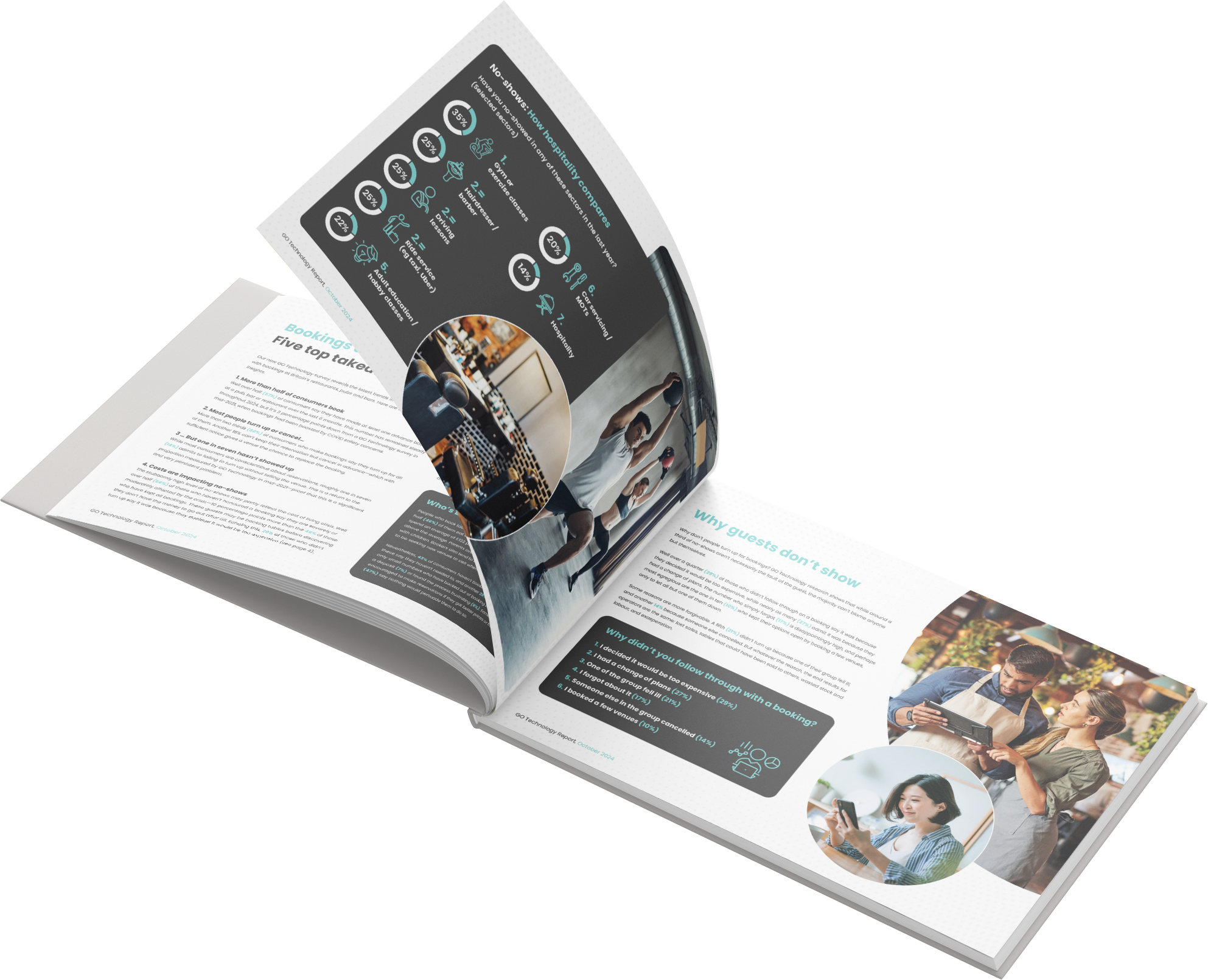
No-shows remain an ongoing challenge for the hospitality industry, costing UK hospitality a collective £17.6bn a year in lost sales.
Previous research in 2024 revealed that 60% of consumers want to support the hospitality sector in light of the cost-of-living crisis, however despite this the rate of no-shows has risen from 12 to 14% over the course of the year. With increased cost pressures already presenting a difficult trading environment for hospitality, it’s vital for operators to understand why these no-shows are occurring, as well as exploring potential solutions to combat the issue.
In this report, we reveal the extent of the no-shows problem, including current consumer booking behaviours and the factors influencing no-show rates, as well as how likely consumers are to show up for their booking in hospitality compared to other sectors.
“No-Shows is a really big problem for the industry. At our restaurant Faber, we charge a £20 per head pre-authorisation (the money is only taken in the event of no show) on every booking, as we have to protect our business. Hospitality is unique in the sense that unlike many other industries, you pay after you’ve received the service. When people don’t show up, not only is the money from the booking lost, but the costs incurred from the stock which was ordered in that we now have to waste and the additional staff which were put in place to support the booking, all add up. It all has a negative effect on business.”

Join the conversation and help us make no-shows a thing of the past
No-shows cost the hospitality industry an estimated £17.59 billion in lost sales every year. Join our group of passionate industry supporters to help spread the message far and wide and encourage customers to #ShowUpForHospitality.
What with Wagamama and Mowgli recently launching loyalty schemes, Deliveroo investing in an advertising campaign to promote its Deliveroo Plus scheme this autumn and the news earlier this year that Pret A Manger was to ditch its much-feted subscription model, customer loyalty is a hot topic in hospitality right now.
But I don’t believe customer loyalty exists. Recently, I was approached by hospitality tech firm Zonal to see if I’d like to work with it on a project around this very subject. I started by telling a story about my love for Honest Burgers. We have an Honest Burgers right opposite our office. In fact, if the fire alarm goes off, it’s our designated meeting point. We have a lot of fire drills.
I loved going in there. The staff were friendly, the music was perfect, and it had plants everywhere that gave a really nice feel to the place. And I had a rather specific, rather odd order. I liked to have the plant burger, but I really like bacon, so I’d always add some of that on top, too. The vegan plus meat combination could have easily been a cause for confusion, but rather than causing issues, it simply became: “Would you like the usual, sir?”
Then, near Christmas, the manager of that restaurant left to go elsewhere. And when I next went in, everything had changed. The staff were still lovely, but the music had changed. She chose the playlists, apparently. The plants were all gone – also hers, brought in from home. And, when I put in my usual order, the waiter reappeared ten minutes later with a question from the chef: “Sir, just to check, did you really mean real bacon with that?”
Loyalty is an overused term in organisations and hospitality, and it’s a dangerous one. Because if leaders believe their customers are loyal they stop trying to impress them, focusing on winning them in the first place, then gradually taking their custom for granted.
Quite simply, if you stay more useful to your customers than the competitors and alternatives, your customers will stay with you. But if someone else becomes more useful – a better product, better price, better experience, more socially desirable brand – then they’ll go elsewhere. But where you can build some sense of loyalty is through your people – as Octopus, AO and First Direct show.
Octopus Energy is taking the highly regulated energy industry by storm by empowering its team to come up with creative ways to solve its customers’ problems. Customers hated the hold music, and so now, should you be put on hold by Octopus, you’ll hear a song from the year you turned 14 – the age that, on average, a person first engages with music. Another example is the Octopus Wheel of Fortune. Every time an Octopus customer enters a meter reading, they can spin the “wheel of fortune” to win anything from 1p to £512 credit on their account, and more than 100,000 of them a month do so. This shows an understanding of the inconvenience of submitting meter readings for customers and actively recognising and rewarding them for doing so.
Another industry you may not think to look at for loyal customers is white goods, but online retailer AO is one of the highest rated UK retailers of any kind on Trustpilot. That’s in no small part down to the fact that one of its core values is: “Treat every customer like your own gran.” But, more than this, staff are supported to deliver on this promise. Stories are manifold, from delivery drivers paying for pizzas when a new oven can’t be fitted in time for dinner to local teams arranging for an AO branded van to visit a six-year-old van fan on his birthday.
Likewise, banks are about as well known for building loyalty among customers as utility firms and white goods retailers, but talk to any customer of First Direct and most will extoll its virtues. Again, this is down to first-class customer service delivered by teams supported to do so. First Direct famously “hires for the smile, trains for skill”, and then enables its teams to listen to customers and act with empathy – no scripts, no call handling time targets and calls answered by real people.
The hospitality industry has a huge advantage over others in this, as a people-focused sector with colleagues who know that customer experience is crucial to delivering a great experience. There are other complexities to this, of course (the ambition of the leadership to provide excellent customer experiences, great training, a fundamental understanding of what drives your customers’ decision making, a recognition that not everything in good business must deliver an immediate return on investment).
However, while I maintain that customers are not loyal to businesses, I do believe they are loyal to other people – and these can be your people, assuming you give them the correct support and tools.

Managing Partner at The Foundation
John Sills is the author of Leadership Book of the Year 2023, The Human Experience and Managing Partner at customer-led growth consultancy, The Foundation.
We’re excited to announce the launch of our new cost-effective and user-friendly platform designed to revolutionise how businesses manage their delivery service providers.
Zonal Delivery offers seamless integration into the three major online -delivery service providers, Uber Eats, Deliveroo, and Just Eat and simplifies multi-channel and multi-unit menu management. This enables operators to enhance their delivery services efficiently, with key features including:
Zonal Delivery is designed for businesses of any size, enabling operators to manage single or multiple locations and delivery service providers effortlessly from one interface. The platform allows for instant publication of changes to menus and pricing with just one click, streamlining operations and enhancing service quality while improving the bottom line.
Commenting on the launch, Tim Chapman, Chief Commercial Officer, Zonal, “With the launch of Zonal Delivery, we are giving our customers the opportunity to capitalise on this growing market and enhance their delivery operations, increase efficiency in their hospitality venues and drive profits through delivery channels.
“We are committed to helping our customers thrive in a competitive landscape by providing them with the technology they need to succeed.”
Jonny Findlay, Commercial Manager at Hub Box said, “I would definitely recommend Zonal Delivery to other operators, the direct integration into our EPoS has made receiving orders much easier. We can manage this depending on the demand in the kitchen meaning an improved customer experience and reduced pressures on our staff.”

Guides
The Loyalty Landscape
Research
GO Technology: The social value of hospitality

Webinars & podcasts
People Make The Experience: How Your Staff Drive Customer Loyalty

Webinars & podcasts
It Should Feel Like Magic, Not Marketing: Personalisation, Loyalty & Data in Hospitality

Webinars & podcasts
Loyalty That Lasts: Growing with Guests, Not Just Points

Webinars & podcasts
What Diners Want: The New Rules of Loyalty in Hospitality


Blog
How hospitality businesses can create ‘Superfans’

Blog
How loyalty can help tackle no shows
We are excited to share that Zonal has topped not one, but two categories at the Restaurant Readers’ Choice Award winning both the EPoS and Technology categories.
Restaurant Readers’ Choice Awards are a result of an extensive survey sent to their restaurateur audience, asking them to vote for their favourite suppliers to the trade. The winners are the companies which their readers believe offer the best customer service, reliability, offer the best product range and go the extra mile.
Zonal was recognised for its EPoS system and wider technology suite, which are used in over 17,000 hospitality businesses.
Zonal’s CEO, Stuart McLean said: “It’s fantastic to receive this vote of public approval. The recognition reflects our ongoing commitment to delivering reliable and effective solutions that meet the needs of our customers. This award is a testament to the dedication and hard work of the entire Zonal team, their focus on providing exceptional customer service and maintaining high standards has been essential to our success.’
Guides
The Loyalty Landscape
Research
GO Technology: The social value of hospitality
Webinars & podcasts
People Make The Experience: How Your Staff Drive Customer Loyalty
Webinars & podcasts
It Should Feel Like Magic, Not Marketing: Personalisation, Loyalty & Data in Hospitality
Webinars & podcasts
Loyalty That Lasts: Growing with Guests, Not Just Points
Webinars & podcasts
What Diners Want: The New Rules of Loyalty in Hospitality
Blog
How hospitality businesses can create ‘Superfans’
Blog
How loyalty can help tackle no shows