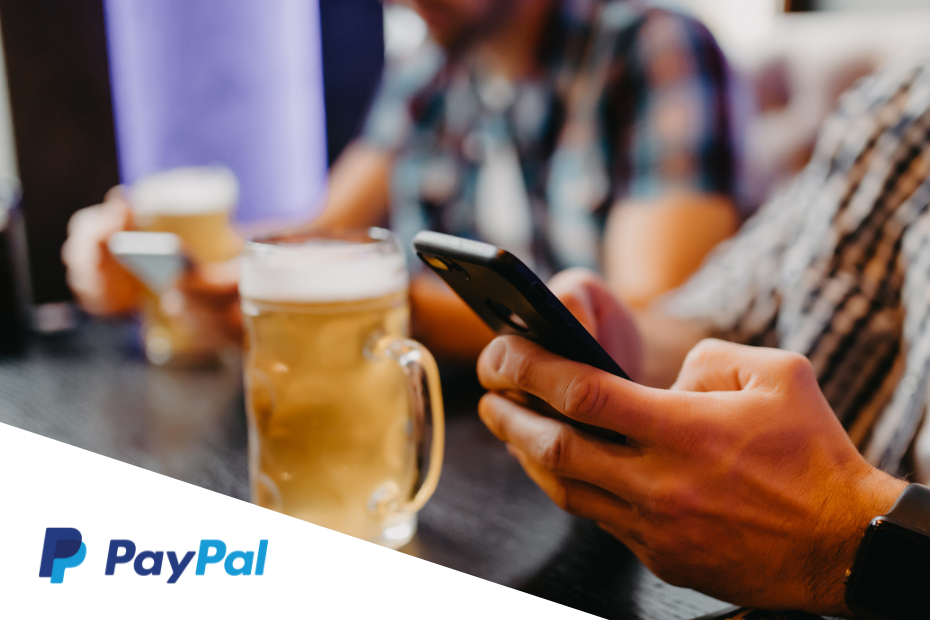
3 reasons why you should embrace in-venue order and payment apps

blog icon

blog

Loyalty Hub

blog icon

blog

Room for Growth: How Accommodation Is Driving New Revenue at Upham Inns

Guest blog by PayPal

The in-venue stage of the customer journey  your customers’ experience from arrival to ordering and paying for their food – has irreversibly changed over the past 18 months, with digital solutions being placed centre stage. Most notable of these has been order and pay at table solutions, from apps to web ordering, which have now become second nature to many. 

Whilst they may not be the preference of all, stats from Zonal and CGA’s GO Technology research programme show that in-venue order and pay apps are here to stay. Customers increasingly expect them, and they can also improve your operational efficiency too.

Restaurants and pubs are hoping for a busy autumn and winter of in-venue diners and drinkers. As Covid restrictions ease, customers may be eager to spend their lockdown savings on eating, drinking and socialising.

According to research by Lumina Intelligence, the UK market for eating out will grow by 33.4% in 2021 and will have exceeded pre-pandemic levels by the end of 2022.

But, this isn’t a return to “the before times”. It’s clear that customers’ service expectations have changed, especially with regard to ordering and paying.

Some of us with a career in full-service hospitality may find it hard to imagine why customers could wish to sit in a restaurant and order on their phones. Why not interact with a human professional? As Zonal’s research shows, there are good reasons why people prefer their screens.

What’s more, embracing the preference can work to your advantage in more ways than simply giving customers what they want (always a good thing to do).

Let’s take a look.

3 reasons to offer in-venue order and payment apps.

While Covid-19 certainly accelerated uptake of the in-venue app or web-ordering experience, it’s a trend that’s been growing for several years and will continue to grow as customers pour back to your venue.

If you thought offering an app was just a stop-gap solution, think again.

1. Customers increasingly expect and value the app or web experience.

In Zonal’s research, two out of five people said that contactless ordering and payment was more important to them than 12 months ago.

Why? Half say it’s because of convenience and nearly half (47%) say it’s about ease of payment.

That’s not surprising when respondents also say that their top three frustrations when ordering in pubs, bars or restaurants are:

  • struggling to get servers’ attention (cited by 30%)
  • Items not being available (22%)
  • Being rushed to place an order (18%).

With a mobile app or web-ordering solution, customers can choose from an up-to-date menu at their convenience.

2. In-venue apps reduce unprofitable dwell-time.

Time spent waiting for a server – either to place an order, or to ask for the bill and pay – is frustrating for customers and could be unprofitable for your operation.

What’s more, last impressions count. The final minutes of any experience have a disproportionate effect on our overall memory, so billing and payment are important steps to get right.

The Zonal report shows that customers’ two top priorities at the end of a visit are:

  • Being able to pay immediately, and
  • Having a wide choice of payment options.

Their top frustrations at this stage, alongside the automatic addition of a service charge (cited by 18%), include:

  • An incorrect bill (14%)
  • Struggling to get a server’s attention (14%)
  • Having to wait to get their bill (11%).

Again, it is clear how an order and payment solution can help – enabling the customer to receive and settle an accurate bill (no room for human error) as soon as they’re ready to go.

And, as the world is increasingly cashless and contactless, a mobile-based solution opens the way to offer a wide range of payment options including cards, the PayPal wallet, Apple Pay and Google Pay.

Offering digital payment solutions can also make it simpler for guests to divide and settle bills between themselves.

3. Free your valuable staff to focus on other tasks.

What about the human touch? What about professional service? Providing an in-venue order and payment solution is not about removing the human element. It’s about making the most of your valuable staff.

Unsurprisingly, more than half of customers (51%) prefer to be welcomed in person and a third say that friendly and helpful service is the most important aspect of placing orders.

But, in an environment where the hospitality sector faces recruitment challenges and staff shortages, it makes sense to place your people where they can be of greatest value and to support them with the information that digital solutions can provide.

Remember to add PayPal

Offering customers an excellent, on-mobile, in-venue ordering and payment solution can help bring clear benefits to your customers and your operations.

As you design or enhance your app, remember to include PayPal as a payment option. Zonal’s research shows that consumers rank a wide choice of payment options as being one of the most important aspects of settling bills and PayPal, with over 400 million customers worldwide, is widely trusted as a payment method both online and in person.

With PayPal, customers can pay how they please – by credit or debit card, using their PayPal account, or with increasingly popular alternative payment methods.

What’s more, PayPal makes it simple for guests to transfer money to each other to simplify bill-splitting and sharing using their account.

In fact, across the entertainment & leisure and food sectors, PayPal users are more likely to have a favourable online experience than non-PayPal users.

Customer satisfaction is also strong with PayPal. Net Promoter Scores (NPS) in the entertainment & leisure sector are four points higher when paying with PayPal.

PayPal’s advanced fraud protection technology also helps to protect venues by minimising fraudulent payments.

To read more about how PayPal could support your hospitality operations, visit enterprise.

 

About PayPal

PayPal has remained at the forefront of the digital payment revolution for more than 20 years. PayPal allows any business or individual with an email address to securely, conveniently and cost-effectively send and receive payments online. Our network builds on the existing financial infrastructure of bank accounts and credit cards to create a global, real-time payment solution. By leveraging technology to make financial services and commerce more convenient, affordable, and secure, the PayPal platform is empowering more than 400 million consumers and merchants in more than 200 markets to join and thrive in the global economy.

For more information, visit our website.

Get in touch

Chat with our sales team to learn about how Zonal products could benefit you.

Deposits - Burden or boon?

blog icon

blog

Loyalty Hub

blog icon

blog

Room for Growth: How Accommodation Is Driving New Revenue at Upham Inns

Henri Jooste, Strategic Product Manager at Zonal, discusses customer sentiment towards deposits based on findings from our recent GO Technology research.

No-shows will unfortunately always occur to some degree, and whilst our recent #ShowUpForHospitality campaign has been working hard to raise awareness of the issue amongst consumers, there are specific tactics operators can consider to minimise the impact.

Whilst deposits certainly aren’t a flawless solution and should never be implemented as a blanket approach, the findings from our recent research certainly provide food for thought.

Asking customers for a deposit ahead of their visit is often considered to go against the casual nature of visits to pubs, bars, and restaurants. However, it seems that consumer attitudes to deposits are changing. 51% of UK pub and restaurant goers say that they would be happy to pay a deposit to book a table, and even more (55%) would be willing to pay a no-show fee.

We know from the research that 28% of 18–34-year-olds are likely to be a no-show. These guests are also some of the more-frequent visitors to hospitality venues – around 64% eat out weekly; far higher than 29% of the general population who do so. The impact, therefore, of their no-show habits has a much greater impact on an operator’s bottom line.

However, it’s this younger generation that are more resistant to paying deposits and no-show fees – around 2 in 7 (28%), so operators should absolutely tread carefully when considering implementing a deposit policy for this demographic and think about alternative preventative measures.

More commonplace over the years has been taking deposits for specific events or days, Christmas or Valentine’s Day for example, with customers recognising that increased demand for hospitality services on these days means a more concrete sign of commitment may be in order. But asking customers about their willingness to lay down a deposit for other outings, whilst lower, yielded some surprising results.

Deposits for special occasions

Our GO Technology research shows that around two-thirds (65%) of guests are willing to pay a deposit when booking a special occasion or a special event, compared to 41% for more casual occasions. Again, this is another option worth considering for operators for occasion-led and/or event-led offerings, such as party packages, themed events or optional extras.

Deposits for large groups

A large group booking failing to materialise is particularly damaging to both team morale and an operator’s bottom line, and customers appear to recognise this. Over half of consumers are willing to pay a deposit when booking for a larger group (over 6 people), with 58% reporting that they’re comfortable doing so, compared to only 16% who stated that they would not be comfortable with this.

But the successful implementation of deposits looks different for every venue, meaning operators must strike a balance so as to not deter potential customers whilst still remaining beneficial from an operational standpoint. The ins-and-outs of choosing to implement a deposits policy or not is entirely dependent on what’s right for your business, there is no right or wrong answer. After all, nobody knows your customers like you do!

About the author

Strategic Product Manager at Zonal, Henri has over 20 years’ experience in the hospitality industry with skills in stock management, procurement, supplier management, finance & cost control and business process improvement. Henri works closely with Zonal’s R&D teams to help deliver solutions that will not only meet operators needs now but in the future.

Show Up For Hospitality Logo

Join the conversation and help us make no-shows a thing of the past

No-shows cost the hospitality industry an estimated £17.59 billion in lost sales every year. Join our group of passionate industry supporters to help spread the message far and wide and encourage customers to #ShowUpForHospitality.

Learn about the campaign

Get in touch

Chat with our sales team to learn about how Zonal products could benefit you.

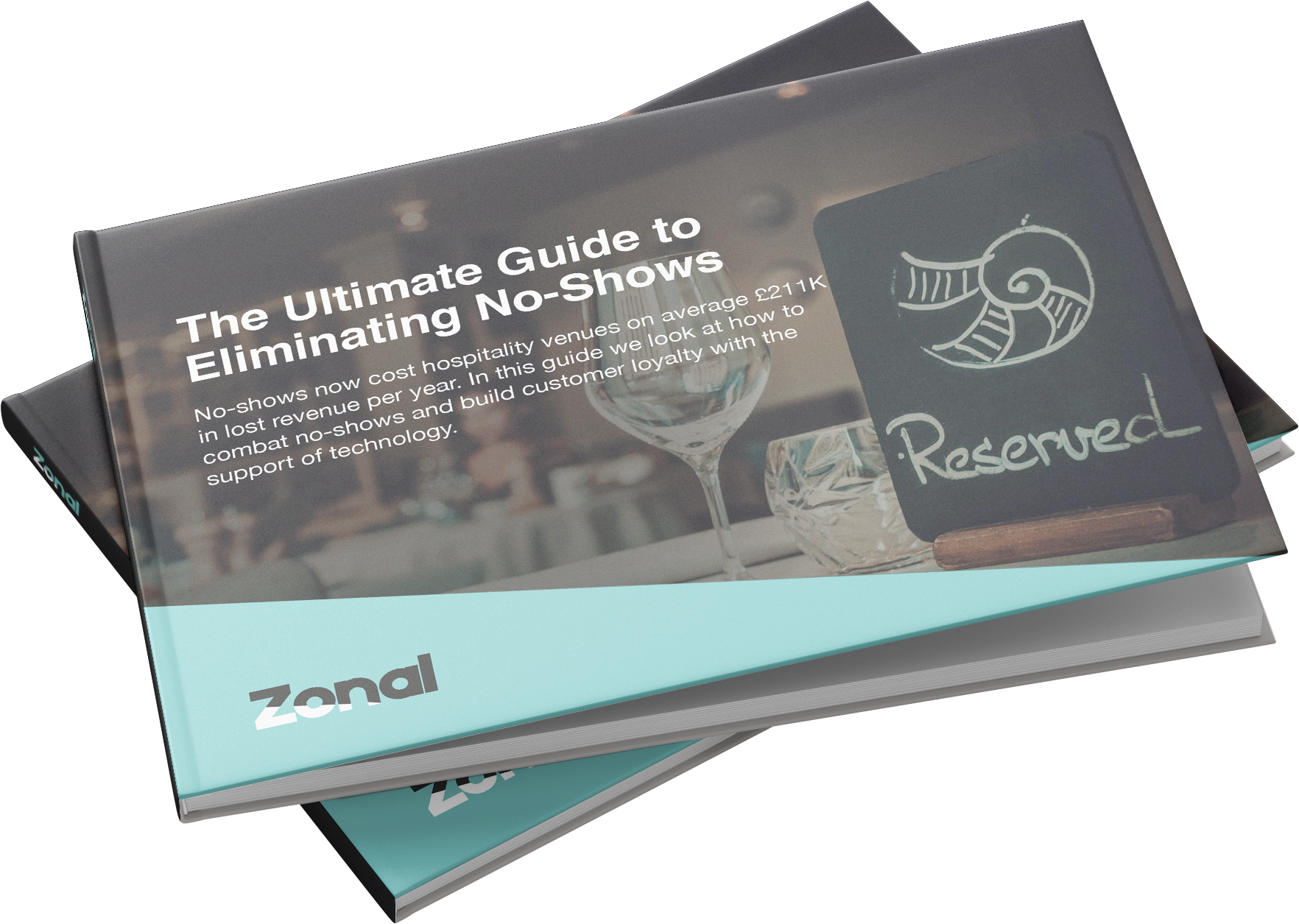
The Ultimate Guide to Eliminating No-shows

What factors are causing consumers to no-show? How can hospitality businesses combat the issue? Find out in this free guide.

The latest figures from Zonal and CGA by NIQ uncovered that the rate of no-shows has risen to a new high of 14% this year, once again costing the hospitality industry an estimated £17.59bn in lost revenue per year.

This rise comes at a time when every penny counts for hospitality, with rising costs, staffing problems and supply chain issues – all amidst a cost-of-living crisis – creating a difficult trading landscape.

Educating the public is an ongoing task for those of us working in hospitality, however there are a number of steps that you as operators can begin implementing today to reduce the likelihood of unfulfilled bookings, as well as reduce the impact of those that do unfortunately occur.

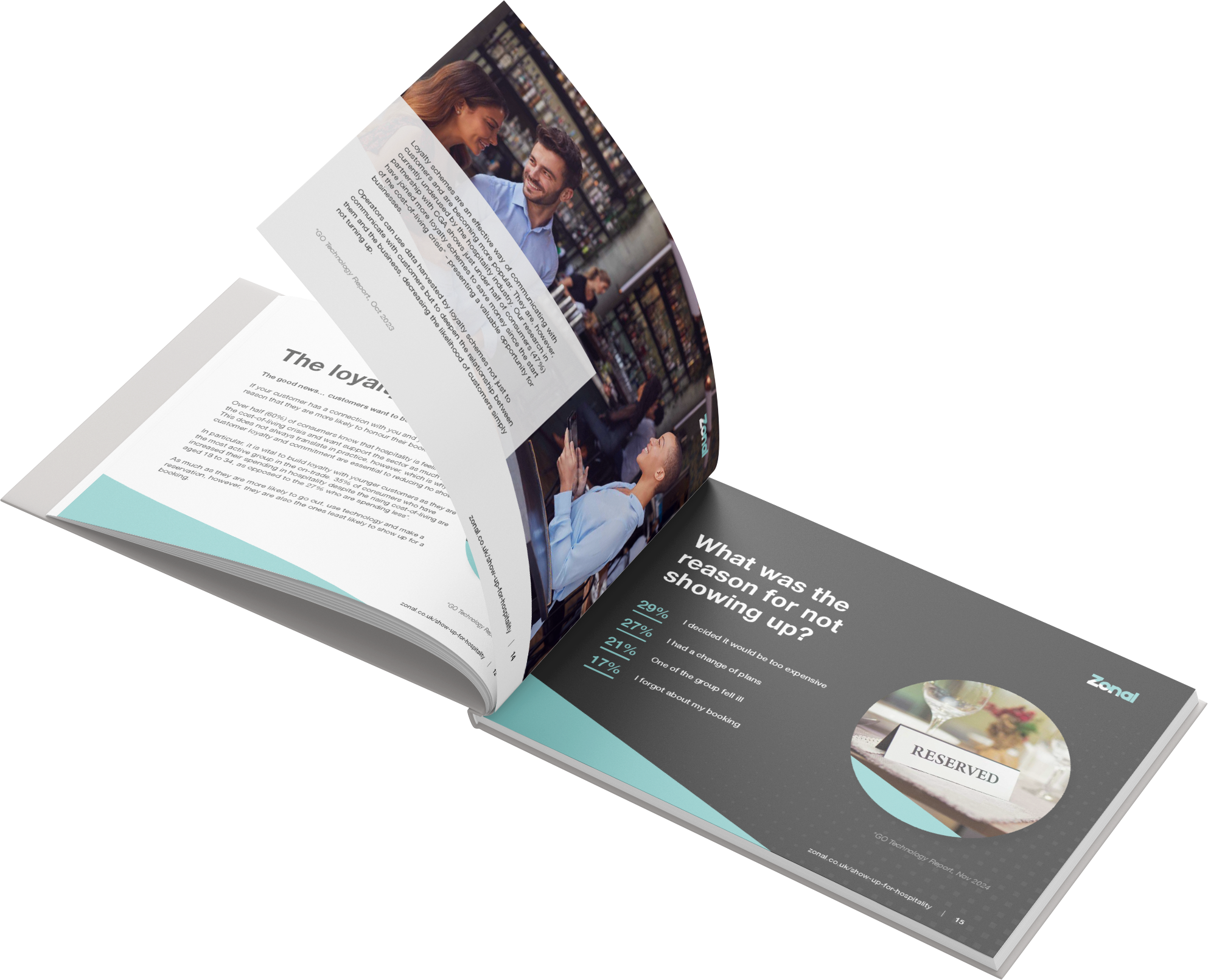
In this guide, we explore some of the approaches and technologies operators can explore today to begin combatting the no-shows issue in their venues – from boosting loyalty and improving communication, to deposits and simple cancellation processes.

What's in the guide?

  • Key insights from our research into the scale and causes of no-shows
  • Steps you can take to eliminate no-shows in your venue, such as deposits and loyalty schemes
  • Advice on how to implement these solutions to combat the issue

Show Up For Hospitality Logo

Join the conversation and help us make no-shows a thing of the past

No-shows cost the hospitality industry an estimated £17.59 billion in lost sales every year. Join our group of passionate industry supporters to help spread the message far and wide and encourage customers to #ShowUpForHospitality.

Learn about the campaign

#ShowUpForHospitality

No-shows are on the rise again. The number of customers not turning up for bookings risen to a new high of 14%, costing the industry an estimated £17.59bn per year..

A nation divided? How no-shows vary across the UK

blog icon

blog

Loyalty Hub

blog icon

blog

Room for Growth: How Accommodation Is Driving New Revenue at Upham Inns

Our #ShowUpForHospitality campaign is shining a light on an issue that has been a blight on the sector for far too long – our research reveals that customer no-shows collectively cost the hospitality sector a staggering £17.6bn per year. No matter where a venue is situated from Lands’ End to John O’Groats, they will have been impacted by no-shows.

However, by digging deeper and breaking down the research by region, we can bring to light trends and attitudes driving this consumer behaviour and, importantly, insights which can help operators put a stop to no-shows.

A nation divided?

From your favourite pub food, to whether you prefer coffee or tea, there are many lines you can divide the UK down, but are no-shows one of them? Well, not quite. While there are certainly differences in consumer attitudes, it’s not so easy to split the UK down the middle when it comes to the prevalence and reasons for no-shows.

What does stand out however, is that people living in London are by far the worst offenders’ with nearly a quarter of Londoners admitting to no-showing since the hospitality sector reopened in April 2021. Next in the ‘league of shame’ is the West Midlands (17%), followed by the East Midlands (16%) and the North West (15%).

However, there’s no obvious North-South divide when it comes to consumer behaviour around no shows, neither is their obvious difference between guests in England compared to those in Wales and Scotland. Consumers in the South West and South East are just as likely to show up for a reservation as they are in Scotland and Wales.

The No-Show league of shame

  • London (24% admit to being a no-show)
  • West Midlands (17%)
  • East Midlands (16%)
  • North West (15%)
  • North East (13%)
  • East of England (12%)
  • Yorkshire & Humber (12%)
  • Wales (11%)
  • South West (10%)
  • South East (10%)
  • Scotland (10%)

Urban vs Rural

Looking closer at the worst offenders, London, the West Midlands, the East Midlands and the North West – all these regions have significant urban populations. London is by far our biggest city and capital, the West Midlands comprises our second city Birmingham as well as Coventry, the East Midlands has Nottingham, Leicester, Derby and the North West with Liverpool and Manchester.

So, it’s not a great leap to conclude that consumers in city or even town centres are more likely to no show and the data backs this up. Our research shows that 14% of consumers in city centres have no showed this year, rising to 18% for consumers in town centres. The comparison with consumers in rural or suburban areas is also stark – only 5% of pub and restaurant goers in rural areas have not shown up to a booking and not told the venue in advance. The figure is just 3% for consumers in suburban areas.

There is an understandable logic to these differences as those in city and town centres have a faster-paced lifestyle, greater degree of choice and, perhaps, a more transactional relationship with pubs and restaurants. Customers are far less likely to not show up for a booking at their local village pub, than a booking at a mainstream city centre restaurant.

There’s also likely an assumption that these centrally-located venues are far more likely to be able to fill empty tables with walk-ins. However, with significantly reduced footfall in these locations as a result of the pandemic and people increasingly staying local, that opportunity has been dramatically reduced. This means no-shows are having an even greater impact on operators who are desperately trying to rebuild after a devastating 18 months.

Using tech to tackle no-shows

Communicating with customers, reminding them of their booking and giving them the means to cancel if necessary are crucial tools for operators in tackling the problem. However, there are some interesting nuances when it comes to consumer attitudes to these approaches. Over half (58%) of consumers prefer to cancel digitally, either via a website (21%), text (19%), app (10%), email (7%) social media (1%). However we are seeing that the worst offending regions are also the most tech-savvy. Londoners are the most likely to prefer to cancel digitally (69%), again followed the West Midlands (60%). The correlation between these regions and consumers in city and town centres also continues. Some 68% of city centre and town centre consumers prefer to cancel digitally compared to 49% in rural and 53% in suburban areas.

For businesses that operate venues in city or town centre locations, a frictionless and easy-to-use online booking system is crucial to reducing no-shows. However, no matter where a venue is located, providing customers with multiple options to amend or cancel their reservation whether that be via SMS, online or app, should be part of an operator’s toolkit.

The #ShowUpForHospitality campaign aims to bring to attention the huge impact no shows and to try and change consumer behaviour, but also to understand what drives that behaviour. Pubs, bars and restaurants play a vital role in our communities and while the pandemic has prompted a new-found appreciation and understanding of hospitality among many consumers, there is still more to be done in encouraging them to always honour their booking or tell the venue in advance.

We want to spread this message far and wide and keep the conversation going, so to get involved simply visit the campaign page to join the conversation and encourage customers to #ShowUpForHospitality via LinkedIn, Instagram and Twitter.

Show Up For Hospitality Logo

Join the conversation and help us make no-shows a thing of the past

No-shows cost the hospitality industry an estimated £17.59 billion in lost sales every year. Join our group of passionate industry supporters to help spread the message far and wide and encourage customers to #ShowUpForHospitality.

Learn about the campaign

Get in touch

Chat with our sales team to learn about how Zonal products could benefit you.

Webinar: Using tech to help grow your business | Zonal & BII Technology Masterclass

In the ever-evolving, ever-demanding hospitality industry, it’s increasingly important for hospitality venues of all sizes to keep up with technology. From enhancing customer experience in-venue to driving loyalty, the benefits are numerous. But how can operators ensure they’re making the most of the solutions available to them and where should they prioritise time and budget?

In this webinar, industry experts from Anglian Country Inns, the British Institute of Innkeeping and Zonal discuss how hospitality businesses of all sizes can use technology to grow and develop their business in the modern market.

In this webinar you will find out: 

  • How technology can help venues deliver a seamless customer experience
  • Future developments in hospitality technology
  • Advice for operators who are thinking of adopting new technology into their business
  • First-hand experience and top tips from Anglian Country Inns

Speakers: 

  • Hannah Solomons – Head of Membership Development, BII
  • Alison Vasey – Group Product Director, Zonal
  • Ruth Nye – Anglian Country Inns

Access this free webinar

Resources Icon

Your Essential No-shows Checklist

No-shows remain a thorn in the side of the hospitality industry across the UK with the national no-shows rate rising to 14%, again costing the industry an estimated £17.59bn in lost revenue every year.

Changing the behaviour of customers for the long term will take a huge collective effort from the industry, and as operators, there are many things that you can do in the interim to reduce the impact of no-shows on your venue.

Our in-house team of bookings experts have put together a checklist of ideas on how you can eliminate no-shows in your hospitality business:

  • Create a robust booking policy  cover all your terms and conditions surrounding cancellations and no-shows, and ensure it’s clearly communicated to your customers.
  • Send multiple reminders to customers about their booking – a week before, a few days and the day of their booking. Each message can contain different information and gives you an opportunity to build loyalty.
  • Consider all the channels of communication available to liaise with customers about their booking – email, SMS, WhatsApp, social media or phone call – to cover all demographics and the way they prefer to communicate.
  • Educate customers on the impact of no-shows – explain in customer friendly terms how it impacts the business.
  • Consider requesting deposits or a redeemable no-show fee if it’s relevant for your  Previous research found that 55% of consumers say they are happy to pay a no-show fee and 51% are happy to pay a deposit to secure a booking.
  • Implement effective booking incentives throughout your customer’s booking journey special offers for bookings or discounts can be effective tools to ensure customers honor their bookings. Offering a voucher to try new menu items, or a free drink on arrival, will decrease the likelihood of no-show’s.
  • Give them the option to cancel in the way they prefer – provide ample opportunity to cancel, across multiple communication channels. Make it as easy as possible!

By following these steps, you’ll be able to convert no-show-ers to always go-ers, meaning more revenue for your business and happier customers!

Show Up For Hospitality Logo

Join the conversation and help us make no-shows a thing of the past

No-shows cost the hospitality industry an estimated £17.59 billion in lost sales every year. Join our group of passionate industry supporters to help spread the message far and wide and encourage customers to #ShowUpForHospitality.

Learn about the campaign

    Related resources

    insight icon

    insight

    Ultimate guide to eliminating no-shows

    Discover how to combat no-shows in your venue, as well as key insights from our recent research with CGA into the scale and causes of no-shows within hospitality.
    Download guide
    insight icon

    insight

    No-shows calculator

    How much money are you losing each month due to customers who fail to honour their bookings? Calculate the cost of your no-shows with our handy calculator.
    Open
    blog icon

    blog

    5 ways to prevent no-shows this Christmas

    In this article, we explore five approaches operators can take to encourage guests to turn up for their reservations ahead of Christmas.
    Read more

    Get in touch

    Chat with our sales team to learn about how Zonal products could benefit you.

    #ShowUpForHospitality

    No-shows are on the rise again. The number of customers not turning up for bookings risen to a new high of 14%, costing the industry an estimated £17.59bn per year..

    On-demand webinar:
    Tackling the impact of customer no-shows

    The latest GO Technology report from Zonal and CGA revealed that one in seven people admit to failing to honour their reservations since hospitality reopened in April. But what do we know about these no-shows, and what can you do about it?

    In this webinar industry experts from CGA, Bums on Seats and Zonal discuss the damaging impact customer no-shows have on operators and what you can do to tackle them.

    Key insights include:

    • Overview of the recent GO Technology consumer research
    • Analysis into the scale and causes of no-shows, as well as the worst offenders
    • Top tips on you can prevent them from happening

    Speakers:

    • Karl Chessell, Business Unit Director – Hospitality Operators and Food, EMEA, CGA
    • Amber Staynings, CEO, Bums on Seats
    • Henri Jooste, Strategic Product Manager, Zonal

    Show Up For Hospitality Logo

    Join the campaign to make no-shows a thing of the past

    No-shows cost the hospitality industry an estimated £17.6 billion in lost sales every year. Join our group of passionate industry supporters to help spread the message far and wide and encourage customers to #ShowUpForHospitality.

    Learn about the campaign

    Watch on-demand

    #ShowUpForHospitality

    No-shows are on the rise again. The number of customers not turning up for bookings risen to a new high of 14%, costing the industry an estimated £17.59bn per year..

    Bums on Seats Logo

    The issue of no-shows and how to reduce them

    Guest blog by Amber Staynings, CEO & Founder, Bums on Seats

    blog icon

    blog

    Loyalty Hub

    blog icon

    blog

    Room for Growth: How Accommodation Is Driving New Revenue at Upham Inns

    Ah, the old ‘No-show’ debate. No-shows have been an ongoing problem in hospitality ever since I can remember. I’ve conducted audits upon audits for businesses in our sector and in most cases, they all have one thing in common: an incredibly high no-show rate, with few processes to minimise its’ impact.

    To put a more positive spin on it, minimising no-shows means more accurate financial forecasting and -more importantly- a far better guest experience which encourages loyalty and repeat business. But how can you reduce no-shows for your business?

    Implement a deposit system

    The first option for any operator is introducing deposits to secure bookings. I understand the apprehensions around introducing deposits – will it put customers off? Put it this way: do I really believe a customer will book elsewhere because we ask for a £5pp deposit to secure a booking when it’s redeemable? No, I don’t- not anymore. Customers want security when they book- by asking for a deposit you’re simply giving them the reassurance they want.

    If the whole sector agreed to tackle no-shows in the same way and implement a deposit system, then this issue would resolve itself to everyone’s satisfaction: customers would commit to one venue (rather than booking 2 or 3 places and only turning up to 1), no-shows would drop dramatically and those who don’t want to put down a deposit can become your more casual ‘walk-in’ diners.  The action of introducing deposits alone will go a long way to reassuring our staff, protect revenue, and give us the confidence to up-sell packages and experiences.

    Build a relationship with your customers

    Another contributing factor to no-shows is a lack of relationship between the business and the customer. Our sector prides itself on providing customers with truly wonderful memories and experiences with their friends and loved ones, but this doesn’t just start when the customers walk through the door – it’s the minute they first submit that online enquiry or pick up the phone to book.

    Securing sales and improving guest loyalty requires the quality of your relationship to be scrutinised and put centre stage. Treat your customers as you would your close friends: by doing this, you create that all-important emotional connection. Customers will cancel in advance if they can’t come because they’ll feel bad: you’re not a building with a kitchen to them anymore. You’re family.

    My job at Bums on Seats is increasingly to help established sales teams or individuals to acquire the skills to build and capitalise on these important relationships, without which hospitality cannot reduce no-shows substantially and go on to grow the bottom line through repeat business, new revenue streams, and ongoing customer loyalty. It is perfectly feasible with the right guidance, training and support to achieve a no-show rate of less than 10%, followed by accurate pre-bookings and more advance spending through up-selling packages and bolt-ons. This investment is needed – and justifiable – now more than ever.

    Prepare for busy periods

    As we’re about to enter our busiest period of the year, Christmas, now is the time to put these processes in place, effectively. Start by pulling together to invest in the right booking system for online payments, pre-orders and packages. Re-write your terms and conditions to reflect your own brand culture and language, and include a commitment to refund the deposit if a customer cancels within 24 hours of the event/table. Use SMS texts (where affordable) or personal calls which are proven to work by prompting customers and helping to avoid ‘no shows’, as well as building up a crucial relationship which encourages loyalty. By treating your customer as a friend and making it easier for them to cancel if they have to, you will have put your business back on the front foot and can look forward with increasing confidence.

    Amber Staynings

    By Amber Staynings

    CEO & Founder, Bums on Seats
    LinkedIn Icon

    With over 20 years’ experience in the hospitality industry, Amber formed Bums on Seats in January 2019 from a culmination of hard work, learning from others including many exceptional mentors, and self-belief. She takes every opportunity to progress and embrace ideas and is passionate about making a positive impact in the hospitality sector. She has also recently been nominated for the Best Business Woman Award 2020!

    About Bums on Seats

    Bums on Seats is a team of highly experienced sales and marketing experts passionate about identifying sales opportunities, driving organic growth, and increasing your customer loyalty for hospitality operators UK wide. They offer strategic sales audits, industry leading sales training, sales planning, consultancy, and white label sales teams to pubs, restaurants and bars.

    Show Up For Hospitality Logo

    Join the conversation and help us make no-shows a thing of the past

    No-shows cost the hospitality industry an estimated £17.59 billion in lost sales every year. Join our group of passionate industry supporters to help spread the message far and wide and encourage customers to #ShowUpForHospitality.

    Learn about the campaign

    Get in touch

    Chat with our sales team to learn about how Zonal products could benefit you.

    #ShowUpForHospitality

    No-shows are on the rise again. The number of customers not turning up for bookings risen to a new high of 14%, costing the industry an estimated £17.59bn per year..

    GO Technology Consumer Research: Scale and causes of no-shows after lockdown

    The latest GO Technology report from Zonal and CGA reveals that no-shows are now costing the industry a staggering £17.6bn a year and rising, exacerbating the devastating financial impact of the pandemic.

    Since hospitality venues reopened in April 2021, the report identifies 14% of consumers have failed to turn up for a reservation without telling the venue, with one in eight (12%) people saying they are more likely to no-show than they were before the pandemic.

    The research also highlights a strong correlation between no shows and age, with 18–34-year-olds being the worst offenders when it comes to no-shows. Over a quarter (28%) of 18-34-year-olds have not honoured their bookings, compared to just 1% of those aged 55 or over.

    Discover more about the true scale of the problem, why consumers aren’t fulfilling their bookings as well as their current views on deposits, reminders and cancellations.

    Download the full report using the form on the right to discover all the findings.

    Show Up For Hospitality Logo

    Join the campaign to make no-shows a thing of the past

    No-shows cost the hospitality industry an estimated £17.6 billion in lost sales every year. Join our group of passionate industry supporters to help spread the message far and wide and encourage customers to #ShowUpForHospitality.

    Learn about the campaign

    About the data

    This report is based on figures from Zonal and CGA’s GO Technology survey, a sample of 5,000 nationally representative British consumers. All figures are taken from the 2021 editions of the survey.

    Download the full report

    Segmentation and the power of personalised comms

    blog icon

    blog

    Loyalty Hub

    blog icon

    blog

    Room for Growth: How Accommodation Is Driving New Revenue at Upham Inns

    Hospitality has now fully reopened at maximum capacity, so for all operators in the sector, getting your marketing plan right and communicating with your loyal guests is more important than ever.

    The possibilities of segmentation are endless, with most third-party software solutions now hooked into company CRMs via API, there is a wealth of knowledge about guests and their behaviour. How often they go out, what time of day, and even what they order.

    Here are the best uses of segmentation to entice guests back to your business again and again:

    1. Visit frequency triggered emails

    Often simple is best, there’s no need to immediately jump into complicated logic-flow automation. Visit frequency is a piece of data that is available for most guests through a number of tech systems, such as Wi-Fi logins, loyalty card usage, pre-booking information, or an Order & Pay app.

    Let guests know you appreciate their loyalty and drop them a note on their 5th visit, and if you include a voucher to treat them to a free dessert or drink on their next visit, this is likely to shorten the length of time between visits.

    2. Birthday wishes

    This is a super simple way to surprise and delight your guests. Also, a ‘it’s your birthday soon…’ email 1 or 2 weeks before the actual date is a great way to put your venue foremost in their mind when booking a place to celebrate with their family and friends.

    3. Time and day of visit

    Knowing what time guests usually visit your venue is very valuable, as it gives you the opportunity to promote other offerings and convert them to not only guests who visit for breakfast once a month, but guests who now also visit for dinner and drinks every other week with 3 friends.

    4. Interests

    There are multiple ways of getting to know your customers and their interests, for example, via Facebook data when logging into the venue Wi-Fi, or through booking data to see what events and themed nights they may have previously attended.

    Facebook like data is particularly valuable, as it can be used to target Facebook ads to specific guests who ‘like’, for example, Katy Perry’s page. When Katy’s live tour stops in the nearby town or city, why not run a social campaign targeting all her fans who have previously visited your venue, offering a free Katy-cocktail to all guests who show their ticket before the show.

    Maximise your data collection and better understand your guests with Wireless Social Wi-Fi. Automatically push all these data points into your CRM and social accounts to target guests with relevant, timely and personalised messages with connectors.

    Get in touch

    Chat with our sales team to learn about how Zonal products could benefit you.