
-

Guides
The Loyalty Landscape
Valentine’s Day looks to have been a success for hospitality this year, with our latest figures showing that overall bookings were up 8% compared to 2024, providing a much needed boost for the sector at a time when every cover counts.
However Mother’s Day is fast approaching, and we still have a full year of occasions to look forward to and plan ahead for. With this in mind, what learnings can we take from guests’ booking behaviour on Valentine’s Day, and what can we as hospitality businesses do to adapt to customer behaviour, and increase bookings?
Whilst overall bookings were up 8% compared to last year, we did see some interesting changes in consumer behaviour when looking at how far in advance of the day they made their bookings.
Valentines Day itself, as well as the day before, saw the most bookings made, with a combined 55% of the total bookings in 2025 being made last minute. This is lower when compared to 2024, however, where last minute bookings made up 66% of the total.
The biggest shift in behaviour appeared for those booking 4, 5, or 6 days in advance. Whilst these bookings only made up 13% of the total number, we did see a 40% increase in bookings made in this timeframe compared to 2024. This was closely followed by bookings made over a week in advance, with a 22% increase on last year.
Combined with reduction in consumers booking last minute, all signs point towards a shift towards booking earlier this year.
Broken down by session, dinner reservations were the most popular, making up 81% of bookings, followed by reservations for lunch at 17%. This breakdown is almost exactly the same as 2024, when Valentines Day also fell during the working week. Whilst a significant skew towards a post-work meal out is to be expected, it does still show a not insignificant demand for lunchtime reservations on special occasions, even if they happen to fall on a weekday.
During the evening, the hour between 18:30 and 19:30 was the most popular time to book for, making up 40% of bookings, and 19:00 itself coming out as the overall most popular time to book.
Despite these trends indicating a shift towards booking earlier, the majority of bookings are still made last minute, presenting both a challenge and opportunity for operators looking to capitalise on occasions.
Firstly, real-time table availability is a must-have for any business’s bookings system. With the majority of guests booking either last minute or in the few days leading up to an event, and significant demand for tables during the peak hour on the day, it’s important to make sure your system isn’t making you miss out on any potential bookings. Our reservations and table management platform, Zonal Bookings, always displays live table availability on your website, allowing guests to immediately find a date and time that meets their requirements, and allowing them to book with confidence. This also eliminates any possibility of double bookings, and minimises the chances of a guest choosing to go elsewhere if your system wasn’t displaying the correct availability.
With tight integration into Zonal’s EPoS, automated updates also allow you to eliminate manual table updating processes that take up staff time, as well as free up tables to be sold again quicker. Once a table has paid their bill, the table’s status is automatically updated in Zonal Bookings and can then be released after a set period of time, allowing your team to set it up for the next set of guests and eliminate any delays in marking the table as available again – helping to better cater to guests looking for last minute table availability – as well as helping you to serve more covers!
Despite the last minute bookings rush, customers are increasingly looking to make their bookings earlier, and the right tech can help you capitalise on this trend. Setting up and promoting any special offers well in advance can be a great approach to encourage guests to book earlier, helping you to better plan staff and stock requirements; whilst adding upselling opportunities to both your booking journey, and any reminder comms, can help you boost revenue and increase spend per head from guests ahead of their visit.
Click here to find out more about Zonal Bookings, or alternatively get in touch to speak to one of our experts.
We understand that managing finances is a critical part of your business, and our finance module is designed to make it as seamless as possible. Below, you’ll find answers to some of the most frequently asked questions from our customers. Whether you’re looking for guidance on correcting a float, refunding a guest or completing daily sign off, we’ve got you covered.
If you can’t find what you’re looking for, our support team is always on hand to help, get in touch today!
How do I correct a float?
*If you have floated the wrong insert or money belt, you will need to complete this process for both the insert you floated, and the correct one, to make sure they are both correct. If in any doubt, manually re-count both to confirm what money is in them and check this against the floated amount.
How do I correct a misc income or expense after a daily sign off?
*You will need to create a new entry for either a misc income or misc expense dependant on where the error has been identified.
How do I edit or delete a cash management entry before daily sign off?
*All entries made that day will be displayed, under the relevant heading.
*If you select ‘Edit’, you will be taken through all relevant screens for that entry. Work through the screens, making the required changes, until finished.
*If you select ‘Delete’, you will be asked to confirm. Once confirmed, the entry will be removed from the system.
How do I preform a safe transfer
How do I refund a guest after daily sign off?
How do I refund a guest on the same day?
* The right hand-side of the screen will show a list of tabs/tables that have been cashed off. The purple buttons in the centre of the screen can be used to filter this list to enable you to find the correct tab/table.
Select the tab/table requiring the refund from the list on the right-hand side, this will then be highlighted in yellow
*The tab/table details will be displayed on the left
A – If You Are Refunding the Entire Bill
B – If You Are Refunding Selected Items from the Bill
A – If You Are Refunding the Entire Bill
*If the guest originally paid by cash, you can now remove this from the cash drawer and return to them. If they paid by card, their card payment will now have automatically been refunded, and a customer and merchant copy refund slip will be printed.
The tab/table will now still be open with the items, and will need to be closed in one of the following ways:
B – If You Are Refunding Selected Items from the Bill
*If the guest requires a card refund, they will need to reinsert their card and follow the instructions on the EFT.
The tab/table will then be closed.
How do I reverse a walkout payment after daily sign off?
I cannot complete my daily sign off, what can I do?
Try the below options:
A – All Closed Sessions Declared
B – All Safes Counted
C – No Open Sessions
Daily operations: Start of day

Creating effective booking availability templates to manage covers, time intervals, and peak vs. off-peak periods is key to running a smooth and profitable restaurant.
The goal is simple: maximise table turnover while encouraging more bookings during quieter shoulder periods (like mid-afternoon and early evening), all while making the most of your busiest times (lunchtime and dinner rush).
From our experience in the hospitality industry, particularly in casual dining, having a well-structured system in place makes all the difference. The right technology should handle the heavy lifting, ensuring smooth operations and optimised capacity.
Our recent research found that, aside from Christmas/December bookings, Mother’s Day is the most popular date for reservations in 2024. With that in mind, let’s explore four key steps to help you fine-tune your strategy and make your booking system work harder for you.
Step 1: Define Your Table Layout & Flexibility
Understanding your space is crucial. Can your tables be moved around, or are they fixed?
During the week, you may have more flexibility to rearrange layouts—such as shifting table 20 from the back of the restaurant to join up with table 7. However, on weekends, moving tables might be impractical. Knowing when to be flexible and when to lock layouts in place will help streamline operations.
Example Table Breakdown for 50 Covers:
Total: 50 covers
Step 2: Determine Your Turnover Rates
Your turnover rate depends on the type of dining experience you offer. Are you a relaxed, full-service venue where guests linger over multiple courses and upsells? Or a fast-casual spot where guests grab a quick meal and move on?
Peak times often mean faster turnover, while guests may stay longer during quieter periods.
Recommended Turnover Rates:
Step 3: Peak vs. Off-Peak Trading Times
Understanding when your customers prefer to dine helps balance high-demand periods and spread reservations across quieter slots.
By strategically encouraging bookings in shoulder periods (e.g., early-bird offers or promotions), you can maintain a more consistent service flow throughout the day.
Step 4: Setting Covers per Time Slot
Once you’ve defined peak times and turnover rates, you can calculate how many covers to allocate per 15-minute slot.
Example Calculations:
Peak Periods (12:00–14:00 & 18:00–20:00)
Off-Peak Periods (14:00–18:00 & 20:00–22:00)
By mapping this out, you’ll see clear peaks and troughs in your availability template. Regularly check your data to adjust accordingly!
Key Takeaways for Smarter Booking Management
By following these steps, you’ll create a dynamic booking system that enhances guest experience while optimising revenue.
Head of Customer Success at Zonal at Zonal
Natalie is the Head of Customer Success at Zonal. Having worked in the hospitality sector for 17 years, in roles ranging from front of house, business development, event co-ordination and leading a project team, it brings an understanding of how various teams operate. Specialising in Bookings, Natalie is passionate at ensuring users get the most out their systems and ultimately driving operational efficiency as well as bottom line. In her spare time, Natalie is on the management committee of a Community Owned Pub in North Wales, which brings with it a wealth of knowledge in experiencing the day to day issues and challenges faced within a business.

Sustainability has been a hot topic for the hospitality industry in recent years and for good reason. With the industry accounting for 15% of our country’s greenhouse gas emissions, it’s essential that hoteliers take action to show accountability, build consumer trust and make a positive change for our environment.
The industry has been set a collective target of net zero carbon emissions by 2050, with a complete elimination of single-use packaging and a 50% reduction in food waste. Here, we discuss 5 ways in which your hotel can reach these targets to become more sustainable and save you money.
The average hotel room uses between 60,000 and 120,000 litres of water each year and with over 10,000 hotels in this country, the impact is huge.
The World Hospitality Sustainability Alliance has launched a Hotel Water Measurement Initiative methodology and calculator, enabling hoteliers to more accurately measure their water usage per room per day, benchmark their performance and set targets to reduce it.
For tangible ways to reduce water usage, hoteliers should consider each area of the hotel:
Kitchens
Laundry
Rooms
Leaks can add thousands of litres of water to your usage every week, so proper maintenance in rooms, bathrooms, pools and kitchens will be essential for your hotel to save water.
Focussing on seasonal British produce within hotel menus will reduce the need for air miles, but hotels can drive their food emissions down even further by going ‘hyper-local’ with the food products they use.
According to government data, transporting food around the UK produces 109 million tonnes of CO2 annually; a huge 26% of our total greenhouse gas emissions.
Try to reduce UK food miles by focusing on sustainable local produce. Encourage chefs to seek out the best local producers in your area and showcase their products within your menus to delight guests, build meaningful relationships with your local community and reduce road emissions.
In one year, UK hotels use enough energy to power a staggering 45 million homes. Identifying where energy is being wasted, and gaining control over costs, will help hoteliers to facilitate the implementation of more sustainable practices. Methods can include:
The World Sustainable Hospitality Alliance has calculated that 18% of all world food waste is created by the hospitality industry, with £2.6 billion being lost to waste each year in the UK.
As hotels look to increase their sustainability and put a green foot forward, they must look to their kitchens to create positive change.
Zonal’s Purchase-to-Pay system alerts kitchen staff when stock is running low and gives real-time recommendations for re-ordering and menu planning based on individual requirements and guest behaviour.
The software automatically sends an order to suppliers for fulfilment, saving chefs precious time and streamlining kitchen operations. This process significantly reduces food waste and over-ordering, greatly cutting costs and helping the environment.
UK Hospitality has set a target to eliminate single-use packaging in the industry and with that will come a huge change in the way hotels provide gifts for their guests. With an estimated 200 million mini-plastic toiletries going to landfill every year, the industry must look to more sustainable alternatives.
Solid toiletries
Bars of soap, shampoo and conditioner in recyclable packaging are becoming more popular as an alternative to liquids and make nice eco-friendly gifts for guests to take away.
Bulk dispensers
Bulk dispensers in hotel bathrooms for shampoo, conditioner and body wash are perhaps the most effective way to go greener with toiletries. Dispensers can be filled with high-quality products and negate the use of individual toiletries saving time, money and the planet.
Toiletries on request
Hotels can eliminate single-use mini toiletries in rooms altogether with a simple message to guests that toiletries are available upon request. By setting out your hotel’s quest for sustainability, guests will be more likely to bring their own toiletries, helping to reduce your plastic waste.
The UK’s ambitious net zero target has brought the environment to the forefront of Hotelier’s business practices and will continue to dominate decision-making. With small changes and the implementation of technology, hoteliers can find the balance between a great customer experience and real sustainability.

Big data plays a crucial role in the hotel industry by enabling businesses to analyse vast amounts of customer information, market trends and operational insights to make informed business decisions.
By leveraging big data, hoteliers can enhance customer experiences through personalised services, optimise pricing strategies, improve marketing efforts and streamline operations to boost revenue and maintain a competitive edge in the ever-evolving hospitality market
As technology continues to advance, the importance of big data in the hotel industry will only grow, making it a key factor in driving business success. In this article, we explain what big data is and the benefits it brings to hotel businesses all over the world.
‘Big Data’ is the huge volume of information produced by our digital activity in the modern, technological world. In the hospitality industry, this data is helping hoteliers to structure the way they operate, optimise profits and provide the best possible customer service with smart insights generated through structured and unstructured information.
Unstructured data includes social media comments, reviews, video footage, chatbot conversations and even requests made through smart speakers in hotel rooms. Structured data consists of guest logins, check-ins, transactions and booking details.
This information is captured from a wide variety of sources such as phones, computers, sensors, CCTV cameras and even door keycards, to provide tangible insights for decision-makers.
Software like Zonal Hotel Solutions uses intelligent integrations to pull together this big data from all areas of the hospitality business for analysis, helping to shape the business operations and guest experience in real time. Here are the main benefits:
Clear and engaging graphs and charts create much-needed visuals for business owners and stakeholders to efficiently review any data collected.
With trends and guest preferences clearly set out in front of them, hoteliers are empowered to make strategic decisions and manage revenue effectively. Whether it’s seasonal changes or in response to local events, decision-makers can adjust prices, staffing and marketing activity to reflect what’s happening at that moment, by using real-time information.
For longer-term planning, big data allows hoteliers to accurately forecast for the future using data patterns from past events. For example, room occupancy over the festive period or restaurant profits from Saturday nights. This business intelligence empowers management to tweak staff rotas, change menus, adjust room rates and introduce special offers, months in advance, all in response to accurate analytics.
When it comes to hospitality, guest experience is the key to business success. Now with valuable insights into guest preferences and behaviours, hoteliers can skilfully forward-plan to provide visitors with what they truly want, when they want it, on a personal basis.
For example, if a guest enjoys visiting the spa throughout their stay, booking and payment data will enable hoteliers to recognise their preferences, providing the opportunity to upsell other spa experiences and offers to them via email or text in the future. This personalised treatment builds trust with guests, who feel acknowledged and valued, rather than sending out one-size-fits-all marketing materials.
Data can be used to apply this approach across the whole hotel; from room service preferences and special allergy requirements to business travel bookings and much more, to boost brand loyalty with guests and increase repeat bookings.
On top of this structured data, social media posts, online feedback and reviews allow hoteliers to better gauge guest sentiment. This anecdotal evidence gives decision-makers more in-depth observations of guests’ likes and dislikes, to make changes and improve future experiences.
Data can help hoteliers keep on top of their operations and optimise their team’s time. Accurate check-in/check-out information can create more efficient housekeeping routines, by letting staff know which rooms need to be turned over and when, saving precious time and labour costs.
Supply-chain management data streamlines the ordering process for departments across the hotel to reduce waste and keep costs down. For example, accurate stock-take information helps kitchen staff reduce food waste and plan menus around what produce needs to be used.
Likewise, energy-saving software can also collate heating, water and waste data, enabling hoteliers to implement more sustainable systems and achieve environmental targets set out by external governing bodies.
As the hospitality industry finds its feet in an uncertain economic landscape, hoteliers and stakeholders must embrace technology to stay afloat amongst the competition.
By harnessing this powerful data that is available to them through smart software such as Zonal, hoteliers can make real changes to optimise their operations, maximise their staff’s time and expertise and give guests the exceptional service and experience they expect from a hotel.
Alternative accommodations, made popular through sites such as Airbnb, have boomed over the last decade, as guests seek more unconventional and budget-friendly holidays.
Sites offering house swaps, camper vans, glamping and serviced apartments allow guests to gain unique experiences in this latest vacation trend.
So, how can hotels compete? With business and labour costs rising, hoteliers need to stay ahead of the curve to contend with the likes of Airbnb. But as alternative accommodations continue to maximise the boom with increasing prices and inflexible booking conditions, there are various ways in which hotels can retain the interest of guests travelling for both business and leisure.
Hotels have the power of autonomy, allowing them to create last-minute deals and implement flexible cancellation policies. Unlike many apartments or rental houses, hotels can give guests options around their booking, without big security deposits or payment upfront. This flexibility sets hotels apart, giving guests that extra reassurance to make a booking.
Zonal’s intuitive PMS connects to over 450+ OTAs and provides real-time channel management allowing flexible pricing depending on seasons and local events. The fully customisable built-in booking engine is user-friendly and provides real-time availability, further driving direct bookings and giving hoteliers more control over their profits.
In today’s world where consumers expect instant information and seamless service, personalisation is key. A hotel’s USP is often their people; talented teams of hospitality professionals who can provide guests with the best possible service and a human connection.
There’s no need for key handovers or pick-up points – through Zonal’s suite of technology, hoteliers can save time and streamline their operations, providing seamless digital check-in/check-out and integrated payments for guests to make their stays as stress-free as possible.
On a personal level, Zonal’s technology can create one-of-a-kind experiences for each guest based on their preferences.
For example, promotions can be customised to meet individual needs by analysing visit history, spending patterns and data gathered from various touchpoints during past visits. Staff can then leverage this information to create and deliver a more personalised and enhanced guest experience.
By working together with cutting-edge technology, staff have more time to cater for guests throughout their stay, providing the excellent service that is only available at hotels.
With most alternative accommodations only providing bed and breakfast or self-catering options, hotels can capitalise on their unique amenities to set them apart.
From spa facilities and gyms to buffet breakfasts and award-winning restaurants, hotels can stand out to luxury-seeking guests by promoting amenities that aren’t available at most other types of accommodation.
For business travel, Zonal’s booking software can help hoteliers manage designated meeting spaces, oversee F&B arrangements and easily coordinate group room bookings for corporate events. Hoteliers can ensure all bills are processed under a single guest or company, resulting in a slicker experience that businesses could only expect from a hotel.
Similarly to Airbnb, hotels are often located in tourist hot spots. Partnerships with local attractions, including discounts and offers, can further boost hotel bookings over alternative accommodation.
Zonal’s multi-channel marketing capabilities mean that hoteliers can stay in touch with guests through hyper-personalised communications, which provide offers, room rates and information on an individual basis.
Hotels can drive further bookings through promotions about new facilities, gift cards and upcoming events to increase repeat bookings. What’s more, hoteliers can reward customers through loyalty schemes, that can be built using Zonal’s smart technology and easily incorporated into email marketing campaigns.
Through personalised communications, hoteliers can gather valuable feedback and ensure guests feel listened to and appreciated, boosting customer loyalty to increase profits.
It’s evident that the hospitality market has become more competitive in recent years, with online bookings facilitating a shift towards different types of accommodation. As prices rise and alternative accommodations fail to provide guests with the customer service they expect, hotels now have the opportunity to take back dominance.
With the implementation of technology and a focus on consistency of stand-out service, hotels can boost sales and compete with other options on the market.
AI is revolutionising the world of hospitality. Whether hoteliers are ready or not, change is happening, and the industry must embrace it to stay ahead of the curve, keep guests happy and stay profitable.
In recent years AI chatbots have evolved to become a key component of our hospitality teams, enhancing guest experience and helping staff to deliver the best possible service. But with this evolution comes steepening guest expectations. So, how do we maximise AI whilst keeping the all-important personal touch?
The brand-new Zonal Hotel Solutions integration, HiJiffy, can answer 85% of your guests’ queries instantly, via your website, social media, or WhatsApp. Pre-stay, the Chatbot can answer FAQs, manage direct bookings and arrange upgrades and additional extras, streamlining the booking experience for guests.
For your team, HiJiffy provides notifications, assigns priority status to requests and enquiries and improves internal communications, ensuring staff are providing the best possible customer service whilst cutting operational costs.
Here are some of the ways that Chatbots such as HiJiffy can help your hotel run more smoothly.
Chatbots are becoming a celebrity member of staff for some hotels, such as ‘Connie’, Hilton’s robot concierge service and ‘Rose’ the Cosmopolitan of Las Vegas’ customer service bot. These instantly recognisable ‘characters’ provide an ultra-personalised and sometimes comedic service for guests, bringing an element of fun to the customer service experience.
Alongside the entertainment value of AI, the technology creates the opportunity for a more personalised hotel stay with special touches and room settings. Specially designed lighting, temperature, pillows and toiletries can be added to rooms depending on guest preferences and chatbots can communicate with staff to create reminders about dietary and access requirements throughout each stay.
These personalised communications through text or WhatsApp mean that whether guests want answers to a question, to book a table or need assistance, fast and reliable service is just a click away 24 hours a day, 7 days a week.
AI can act as your front-of-house service, with effective check-in and check-out services. This contactless service streamlines the process and eliminates busy queues and crowded foyers.
Automated checkout services alert staff when a room needs turning over, enabling slick housekeeping routines and saving staff time throughout their busy shifts.
AI communications can also analyse accurate stock data and create alerts when items are running low. Notifications to staff will help your teams to keep on top of inventory management and ordering across all areas of the hotel, ensuring customers are always well-catered throughout every step of their stay.
There’s no denying that staff shortages are one of the biggest challenges facing the hospitality industry right now and AI is fast becoming a great solution. Chatbots can take on time-consuming tasks, to let your talented hospitality staff get on with doing what they do best, all while keeping costs down.
By answering questions, taking requests and organising check-in/check-out, Chatbots can give accurate, timely information to guests, giving your front-of-house staff more time to create human connections and relationships with customers, providing the service that is required to promote repeat bookings.
Chatbots can play a vital role in collecting valuable feedback once guests have checked out. Through targeted links and personalised messages on WhatsApp, text and email, Chatbots make the process of reviews quick and easy for guests, who can provide feedback via their phones in an instant.
Chatbots such as HiJiffy centralise information, preserve history and create guest segmentation, remembering guest information and preferences with each stay at your hotel. This process creates a predictive service, helping to build customer loyalty by creating familiarity during each stay.
What’s more, guest data is stored and used within marketing decision-making to produce ultra-personalised email follow-ups, with offers, events and room rates refined for the individual based on past experiences.
Within this ever-changing technological climate, guests are growing to expect instant access to the information and services they need, putting increasing pressure on the hospitality industry to cater for this demand. By working in partnership with AI tools, and embracing the technology, hotels can boost operational efficiency, optimise their time and keep guests happy, all while bringing costs down.
Loyalty was one of the big topics in the hospitality sector last year and, with our research showing nearly one in three restaurant, pub, and bar patrons are very or somewhat likely to switch which venues they choose to be loyal to, we can expect it to be the same in 2025.
At the same time, the industry faces another pressing issue: no-shows. During 2024, these surged to a record high of 14%, reflecting both the volatility of consumer behaviour and the pressure on operators to deliver consistent value. To thrive in this landscape, hospitality venues must redefine loyalty strategies by balancing in-venue excellence with targeted, data-driven outreach.
A bespoke approach
The reality of changing habits means that consumers are becoming more adventurous and less tethered to specific brands. Our research, in partnership with CGA by NIQ, found that nearly 34% of restaurant customers are likely to switch venues, compared to 29% for pubs and 30% for bars. This is especially true for the younger generation, with adults aged 18-44 exhibiting the highest tendency for switching, driven by a desire for variety and new experiences.
On the other side, older consumers and parents tend to exhibit more loyalty. Older adults, having spent decades forming relationships with venues, value consistency and familiarity. Similarly, parents prioritise venues they trust to deliver reliable service for their families. These differences underline the need for tailored strategies to foster loyalty across diverse demographics.
Loyalty schemes: what works and what doesn’t
While loyalty schemes have proven effective in some other sectors, their success in hospitality hinges on their ability to address consumers’ key motivations — primarily financial savings. Our GO Technology report revealed that members-only pricing is the most appealing type of loyalty programme, favoured by nearly half of respondents. Points-based systems, cashback offers, and deals on frequently purchased items also ranked highly.
However, barriers to adoption remain significant. Upfront membership costs, subscription commitments, and perceived lack of value deter many potential participants. Operators must design schemes that are simple, transparent, and directly aligned with guest expectations. This could include eliminating upfront costs or introducing flexible, opt-in programmes that demonstrate clear, immediate benefits.
Combatting No-Shows
No-shows continue to be a persistent issue for operators and the recent rise to a record 14% no-show rate exacerbates the financial strain on operators already grappling with tight margins. Addressing no-shows is not just about mitigating financial loss; it’s also about maintaining customer trust and operational efficiency, both of which are integral to building long-term loyalty.
Fixing the issue is obviously easier said than done. However, operators can look to mitigate the issue by putting in place measures such as ensuring the cancellation process is as simple as possible (our insight shows that 30% of UK consumers say this would encourage them not to no-show without notifying the venue). More than a quarter (28%) meanwhile, said rewards and incentives for turning up would help, and 21% said the same of deposits.
The power of personalisation and communication
Beyond loyalty schemes, personalised communication plays a pivotal role in keeping guests engaged. According to our GO Technology research, 90% of consumers are open to joining a loyalty programme, and 73% want to hear about deals and rewards from their favourite venues.
Email remains the most preferred communication channel, followed by social media and text messaging. Regardless of the chosen channel, personalisation is key. Segmenting audiences by demographics, preferences, and behaviours allows operators to tailor their outreach. Younger consumers, for example, may respond well to frequent, visually engaging updates on social media, while older patrons might prefer concise emails highlighting value-driven offers.
Moreover, timing matters. While 30% of consumers welcome weekly communications, a slightly higher percentage prefer monthly updates. Striking the right balance ensures that communication feels relevant rather than intrusive.
A holistic approach to building loyalty
While technology and data-driven strategies are crucial, they are not substitutes for the fundamentals of hospitality: exceptional food, drink, service, and atmosphere. Poor experiences can quickly erode trust and loyalty, especially given the high expectations of today’s consumers. Operators need to continue to invest in staff training, and quality control, to ensure guests consistently leave with positive impressions.
Loyalty in hospitality is no longer about simply retaining customers — it’s about creating advocates. By combining exceptional in-venue experiences with thoughtful, targeted communication and well-designed loyalty programmes, operators can nurture deeper connections with their guests.
To address challenges like high no-show rates and shifting consumer preferences, venues must adopt a proactive, flexible approach. This includes leveraging customer data to understand behaviours, tailoring offerings to meet diverse needs, and fostering trust through transparency and value.
In an era where competition is fierce and spending power is limited, loyalty is hard-earned. However, by focusing on what truly matters to their guests, hospitality venues can turn fleeting visits into lasting relationships.

Group Marketing Director at Zonal
When it comes to promotions, ‘buy one, get one free’ is often the first that comes to mind. While it’s a great option for drinks, promotions can go beyond that. For instance, offering ‘buy one main course, get one half price,’ can increase footfall while protecting your margins.
To help you get ready for upcoming hospitality events, we’ve created six quick and easy steps to guide you through setting up promotions in Aztec.
Step 1: Decide where in your estate the promotion will run. Promotions can be applied across your entire estate or targeted to a specific sales area within your site.
Step 2: Sales Groups and Quantities. By specifying a quantity within a sales group, you determine how many times a product from that group needs to be selected to trigger the promotion.
Step 3: When choosing the products to include in each group from the product structure hierarchy, any item in the hierarchy can be selected. For example, in a ‘Buy one main course, get one half price’ promotion, both Group One and Group Two would need to include main courses.
*Remember, for promotions on specific portions, such as a glass of wine, be sure to filter down to the product portion.
Step 4: Select the days and times for your promotion. For all-day promotions, leave the days selected. To set specific times, uncheck ‘Promotion runs at all times’ and define the time range. You can also set a start and end date.
Step 5: Now price the products for each group in the promotion. For a ‘Buy one main course, get one half price’ promotion, set Group 1 to price entry and Group 2 to a 50% discount.
Step 6: The final step shows an overview of the amended prices. Here, you can adjust any prices if needed. Enhanced buy one, get one free, will allow you to make any child products associated to a product free.
Let’s now dive into two proven promotion types…
Multibuy Promotions
Multibuy promotions are perfect for occasions with a set menu such as Valentines Day or Christmas. A multibuy promotion offers a bundled price for a group of products, like a supermarket meal deal or a set-price menu. For example, a starter main, and dessert for a fixed price.
Firstly, follow the earlier steps for setup. Then when you reach the pricing screen, assign a single reward price. Once set, the promotion will trigger automatically at the till when the required products are selected.
Timed Promotions
Timed promotions are ideal for events such as happy hour. Setting them up follows the same steps as before, with one key difference – a timed promotion includes only a single group. You can add as few or as many products to this group as needed.
For more information on setting up promotions, please visit the Product Portal
Earlier this month, our Head of Relationships, Pete Saunders, had the opportunity to present to the North Yorkshire Hospitality Junior Board, a board of talented young managers aged 20-26 from pubs, hotels and restaurants across the region.
Pete discussed the evolution of technology and its adoption in the hospitality industry, as well as the challenges and opportunities he expects over the next five years.
The meeting in Malham, North Yorkshire, consisted of 11 leading young Managers from the Hospitality Junior Board, an organisation designed to support, develop and advocate for young people working in the industry in the UK. The member’s mission is to make hospitality the career of choice for young people by identifying future leaders, helping them to build life skills, promoting the industry and influencing decision makers in the sector.
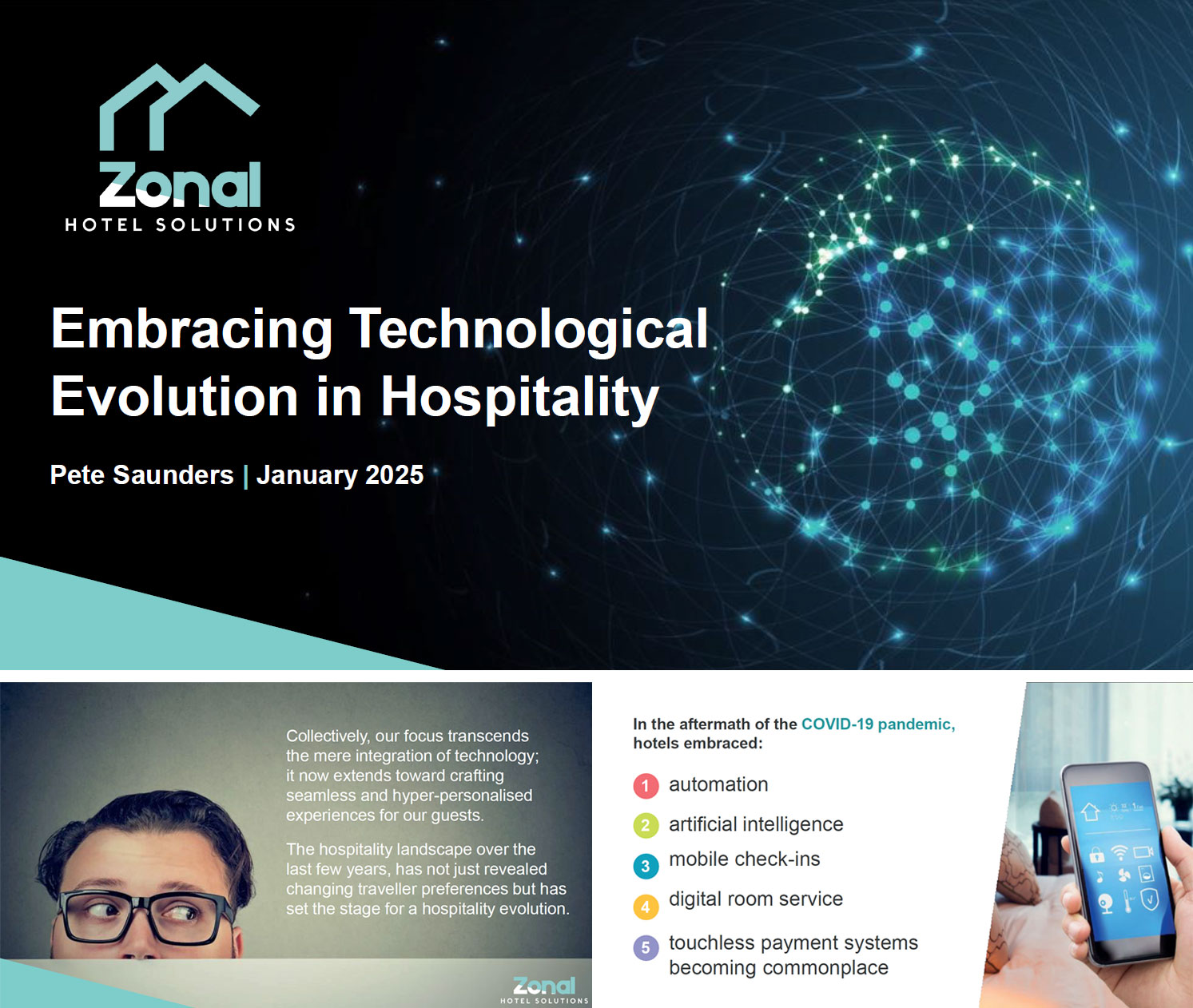
Pete spoke with board members about the growing role of technology within the hospitality industry and the huge benefits of software for all team members both front and back of house. He also discussed the opportunities software can provide and the challenges facing the sector over the coming years.
He said: “When I was asked to present at the Hospitality Junior Board meeting, I jumped at the opportunity. It was inspiring to meet the next generation of hospitality professionals and gain insight into their mission to support and advocate for young people as they progress with their careers.
“The development of tech in this sector will directly impact these Managers and their teams, so it was great to discuss Zonal, our software products and our ethos and hear their thoughts and concerns on topics such as AI, and the changes technology will inevitably bring about for them.”
Guides
The Loyalty Landscape


Research
GO Technology: The social value of hospitality

Webinars & podcasts
People Make The Experience: How Your Staff Drive Customer Loyalty

Webinars & podcasts
It Should Feel Like Magic, Not Marketing: Personalisation, Loyalty & Data in Hospitality

Webinars & podcasts
Loyalty That Lasts: Growing with Guests, Not Just Points

Webinars & podcasts
What Diners Want: The New Rules of Loyalty in Hospitality


Blog
How hospitality businesses can create ‘Superfans’
Blog
How loyalty can help tackle no shows