The evolution of pub technology

blog icon

blog

Loyalty Hub

blog icon

blog

Room for Growth: How Accommodation Is Driving New Revenue at Upham Inns

The pub of today is totally different from that of just 20 years ago.  Many of us will remember the days when the only food you’d find in your local was a packet of crisps with the odd pickled onion and egg, with a plastic cup for the takings, or a giant cash register on the bar.

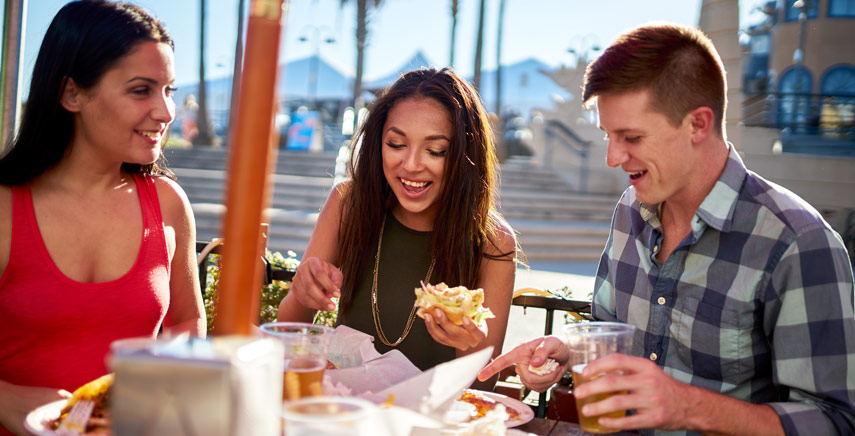
It is still the original social network, but just like the advent of social media, the pub has also evolved from a boozer serving beer to a predominantly male audience.  Today’s venues are more diverse businesses, with extensive food and drink menus catering for a range of audiences from children to grandparents.

It’s been 40 years since our first EPoS solution was developed and over the past four decades the system has evolved from being a rare, luxury item to a must-have device.  Walk down any high street or village and there are very few pubs and bars that do not use an EPoS system.

Originally designed for takings and stock control, today’s EPoS is so much more than a glorified cash register.  It’s not just the size that has shrunk, so it no longer takes-over the footprint of a bar, EPoS functionality can be achieved in a smartphone, possessing at least 10 x the digital power and business benefits of its original incarnation.

This means that the days of taking paper order pads are almost extinct.  As the pub food phenomena has taken off, so has table service, closely followed by the demand for handheld ordering using EPoS functionality from a smartphone or tablet, that also feeds directly into the kitchen, where orders are printed and actioned.  The follow-on experience is a positive one for both staff and their customers as the number of complaints about slow food service and incorrect orders are less frequent, which is good news all round.

Today’s pubs also could not survive without card payment – once a cash only enterprise, not only have card payments overtaken cash transactions, but the last two years has seen the move to mobile tech payment, either via the likes of ApplePay or a pub’s own pre-order and pay app.

At Zonal we have seen a 400% increase in enquiries for our Order & Pay app, from both multi-site and single site operators, as pre-order and pay have quickly become mainstream as part of the drinking and eating out experience.

Where we’ll be in another 225 years is impossible to predict, but I very much doubt that for all the benefits that technology can bring to running a pub from both an operational and customer experience, we’ll have robots behind the bar. As the social hub of the community, the human touch will be one vital ingredient that can’t be eradicated; it is after all what gives a pub its personality and point of difference.

Get in touch

Chat with our sales team to learn about how Zonal products could benefit you.

5 tips to get more party bookings at your venue

blog icon

blog

Loyalty Hub

blog icon

blog

Room for Growth: How Accommodation Is Driving New Revenue at Upham Inns

Whether it’s office drinks or children’s birthdays, parties and event bookings can be a lucrative source of revenue for hospitality businesses. No doubt you’ve already started receiving Christmas bookings, but of course parties are the gifts that keep giving all year round: they fill venues and they’re a very effective way to meet new customers and drive new business too.

Here are five key ways to make your venue the go-to place for parties.

1. Be part of it

Parties and events are a huge part of the hospitality industry. Not only that, we’ve all been guests at parties and events, so you and your team collectively already have the knowledge to make any party go with a bang!

So why not monetise that knowledge by upselling party packages? You could parcel up services for all manner of events, from office parties to golden anniversary celebrations.

It’s a win/win: your guests get the benefit of your team’s wisdom, and you get to upsell extras such as drinks packages, birthday cakes, and other related and relevant items that not only boost revenue but enhance the overall experience.

2. Be there

It sounds obvious, but you can’t be involved if you aren’t available. Imagine you’d booked a party, but your follow-up emails were unanswered, your phone messages went unreturned, and you were greeted with blank stares when you popped in to check some details.

Such behaviour might not be deliberate, but you’d quickly lose confidence in the venue. And whether by accident or omission the results are the same: a poor customer experience and sometimes, the customer finding a more accommodating venue.

Technology can help with that. A dedicated events management portal offered by solutions such as Zonal Bookings makes it easy for customers to fine-tune their bookings, notify you of any requests and so on – and it can share that data with everyone who needs access to it. There’s no risk of a message not being passed on to the right person, or of special dietary requirements or serious allergies not being notified to the kitchen.

You get your own portal with Zonal Bookings too. It’s a secure place for you to manage all the details of your bookings, correspond with guests, and send any requests for payments.

3. Feel the fear and book it anyway

Many venues are apprehensive when it comes to accepting really big group bookings: no-shows are bad enough when they mean an empty table for two, but when it’s a table for twenty-two it’s a financial disaster. But equally, refusing to take a big booking is handing your rivals what’s likely to be a nice bit of income.

The solution? Accept the booking, but make it easy to accept deposits and payments in advance. For example, Zonal Bookings gives your guests a secure platform to pay their deposit, with any additional payments automatically requested on pre-selected dates.

The trick is to get the size of the deposit just right: not so big that it frightens off the bookers but not so little that they won’t miss it if they don’t show up. You might find that it’s best to vary the deposit to reflect the risk: a no-show on a quiet Tuesday is damaging, but less damaging than on a busy Saturday night.

Zonal Bookings also allows you to effortlessly communicate with your customers through a dedicated portal, so you can quickly build a relationship and greatly reduce the likelihood of them letting you down!

4. Take out the pain points

Time spent waiting to order meals or to get the bill is no fun. When there’s a big group, it can take a while to walk around taking everyone’s orders. Likewise, when guests are tired and ready to go home, the last thing they want to do is hang around waiting to settle their tab.

Why not remove the pain completely by encouraging your guests to order and pay in advance? Not only does it help improve the guests’ enjoyment on the night, but it helps with your stock ordering and kitchen planning as well.

You can ensure you have all the ingredients you need to fulfil all orders without risking any wastage from over ordering, and there’s less likelihood of a shortage of any key ingredients.

Manually managing all this would be painstakingly monotonous and time consuming. But why would you do it yourself when Zonal Bookings can do it for you? It’s operational efficiency at its finest.

Zonal Bookings gives you the technology you need to remove other pain points too – for both your customers and your staff. For example, the innovative solution can also accept staged payments, enabling your guests to spread the costs over time and avoid any bill shock at the event.

Simply put, Zonal Bookings makes it easier for your guests, and easier for your venue.

5. Do what you do best

Many of the guests may be new to your venue, so this is an excellent opportunity to wow them and turn them into loyal customers.

recent GO Technology research report from Zonal and CGA analysed customer feedback and found that happy customers like to share their joy with others: on average, a happy customer tells nine other people about their experience.

As for the unhappy ones, just one in 27 would complain on the night. That’s because they’d much rather go home and post a bad review on TripAdvisor.

By delivering the exceptional customer service you excel at, facilitated by smart events booking and pre-order technology, you’re creating lots of new customers for your venue. Now that’s something worth celebrating.

Get in touch

Chat with our sales team to learn about how Zonal products could benefit you.

blog icon

blog

Loyalty Hub

blog icon

blog

Room for Growth: How Accommodation Is Driving New Revenue at Upham Inns

Predicting the future is always a challenge, especially when it comes to technology trends.  The way we use technology in our daily lives – whether social or business – is a constant moving feast.

David Charlton, Commercial Director for Zonal Marketing Technologies looks at the trends for the year ahead.  I am confident that consumers will expect to use their mobile devices to order food and drinks and speed up payment.   The figures say it all.  In under two years the number of consumers who use mobile devices to speed up payment has increased from 2.4 million to 3.1 million [source: GO Technology by Zonal and CGA].


APP TECHNOLOGY

Driving the app revolution is consumer hunger for speed.  Two in five (41%) of GO Technology respondents cite the ability to pay quicker and avoid waiting to settle bills as the main advantage of apps.  Almost as many respondents mention the ability to skip queues.

And this year at Zonal, we have witnessed a 400% increase in enquiries from operators for our Order & Pay app as they recognise mobile ordering is no longer an option but fast becoming a necessity to attract and retain customers.


DELIVERY

I also have no doubt that our appetite for food delivery from our favourite high street food brands will also continue to see rapid growth in 2019, with voice based ordering and food tracking devices taking it to the next level.  Last year, there was a 28% jump in food delivery orders from the previous year and with almost a third of consumers wanting to know the exact delivery time of their meal, this is where I predict GPS tracking technology will be part of the solution.

Furthermore, as the restaurant sector hots up to win the customer pound, they will continue to seek additional ways to optimise sales and food delivery will be high on the to do list.  This is supported by GO Technology, whereby two in five (40%) of consumers believe more restaurants will start to offer delivery direct from their own websites, as they are viewed as the best source of information about delivery.  In In comparison, only 29% predict a growth in third party mobile delivery apps.


ARTIFICIAL INTELLIGENCE

I also expect to see significant growth in the use of Artificial Intelligence (AI), such as chatbot technology, which has become a staple in our homes thanks to the likes of Alexa, Apple HomePod and Google Home.

In the last 12 months we have been supporting operators to optimise the opportunity of chatbots within channels such as Facebook’s Messenger.  This form of communication is changing the way that bookings and orders are being taken and will become mainstream this year as chatbot technology becomes even more familiar in our everyday lives.

There is no doubt that technology is changing the way we conduct our lives, and the traditional way of doing things has gone out the window, so brands should have a tech strategy for 2019.

Get in touch

Chat with our sales team to learn about how Zonal products could benefit you.

Customer feedback: the value of listening

blog icon

blog

Loyalty Hub

blog icon

blog

Room for Growth: How Accommodation Is Driving New Revenue at Upham Inns

Customer feedback is vital to the success of your business: helping you to give people what they want the most, while also helping to promote your venue to other would-be customers. Feedback can also play a pivotal role by giving you insights that help you understand which specific parts of your service may not be striking the right note with your customers, allowing you to uncover – and fix – potential bottlenecks and gaps in your customer experience.

It’s not just the direct revenue customers bring in, but the value they add to your business through their feedback. And the danger of not listening to feedback can be catastrophic…

Get in touch

Chat with our sales team to learn about how Zonal products could benefit you.

Learn how covert loyalty campaigns could help you win over customers

blog icon

blog

Loyalty Hub

blog icon

blog

Room for Growth: How Accommodation Is Driving New Revenue at Upham Inns

The use of discounts for all threatens your brand and profit margins. Instead, you need to look at building personalised deals and discount schemes to keep existing customers coming back for more.

Hospitality is an ancient tradition, but the ways in which hospitality is shown have naturally evolved over time. For example, while in biblical times it was customary to wash the feet of visitors, nowadays we’ll probably give them the WiFi password instead.

In other words, customs change – although not always as obviously as the above example. For instance, loyalty schemes have developed over the years to become more complex and more intelligent, leaving a number of venues lagging behind.

Too many venues still offer generic bulk discounts to anyone who downloads an electronic voucher, or clips a coupon from a magazine. These “deals” completely ignore customers as individuals – they do not accommodate tastes, habits or preferences.

In an era when customers demand personalisation, the continued use of generic advertising is a waste of time and money – and could potentially cause significant long-term problems for your business.

Covert vs Overt – the future of loyalty deals

There are two distinct models of customer loyalty programs emerging – “overt” and “covert”.

Overt schemes are – as the name implies – easily seen. These are generic, untargeted deals that are open to everyone: £5 off vouchers, BOGOF deals, 2 steaks and a bottle of wine for £20… The kind of deals that clog up your inbox every day.

Historically, overt deals have delivered a degree of success – which is why many brands continue to use them. But your customers now expect personalised services, which means tailoring offers to their preferences and interests.

There are two significant problems with the overt deal model.

  1. If these “deals” are open to everyone, they don’t feel special in any way; there is no emotional connection.
  2. Overt deals are taken for granted; as QSR magazine once remarked:

As these promotions become long-term tactics, consumers go from thinking that they’re getting a deal to wondering why meals at these places cost so darn much in the first place. Short-term gains for getting more butts in the seats become long-term damage to the brand. Furthermore, this emphasises the lack of past value in consumers’ minds.”

The scattergun approach of overt deals means that they are often used by people who were going to visit your establishment anyway – which means that you are simply cannibalising your own income.

Covert deals take a different tack, using analytics and intelligence to create offers that are tailored to the specific preferences of individual customers. Each offer is personally addressed – and restricted to “known” individuals, thereby increasing their perceived value.

Your customers are used to a high degree of personalisation – indeed, most now demand it. For example, 63% of people wish brands treated them like a friend instead of a consumer. And if you can’t deliver personalisation, most will leave – 66% of consumers say they’re likely to switch brands if they feel treated like a number, not an individual.

Losing two-thirds of your customer-base would be catastrophic. On the contrary, investment in customer loyalty systems pay significant dividends. One study by econsultancy found those businesses implementing personalisation saw a 14% uplift in sales. A similar report from Monetate is even more positive, pointing to an average sales upturn of 19%.

At a time when margins are being eroded by the rising cost of food, minimum wage bills and new apprenticeship levies, an increase in sales is extremely welcome.

Not a huge technical challenge

The Tesco Clubcard scheme may still steal all the headlines when it comes to loyalty programs, but it’s perfectly possible to delight your customers without the same massive outlays. By doing little more than integrating your EPoS terminals with other backend systems, you can begin to generate similar insights to those created by Tesco’s Big Data behemoth.

A smart EPoS platform allows you to capture and analyse valuable customer data with every transaction; what they ordered, how much it cost, and how many times they’ve visited previously. These insights form the basis of a powerful, effective loyalty program – and when deployed correctly, can be operated with a limited marketing team and budget.

Collecting data allows you to build a single customer view that tells a unique story – and allows you to connect with individuals on a more meaningful level.

Conclusion

Covert deals work because they connect on a more personal level with your customer. Whether you send them vouchers, discounts or loyalty cards, the fact that you can tailor the specifics of each to their preferences “speaks” to their needs.

By using technology to understand customers, you can build a rapport with your customers and make them feel more welcome and comfortable when they visit your venues. All of which means they’re much more likely to come back – and keep spending.

Takeaways

  • Overt deals are becoming less effective.
  • Overt deals have the potential to damage your brand and offer little for building customer loyalty.
  • Covert deals are tailored to the interests and preferences of your customers.
  • Personalised deals are powerful motivators to bring customers back into your venue.
  • Customer loyalty programs start with your EPoS.
  • Effective customer loyalty programs do not have to be big, expensive, or heavily resourced.

Get in touch

Chat with our sales team to learn about how Zonal products could benefit you.

Increase visibility, decrease waste

blog icon

blog

Loyalty Hub

blog icon

blog

Room for Growth: How Accommodation Is Driving New Revenue at Upham Inns

It’s revealed that the hospitality industry wastes 1 million tonnes of food per year, but are businesses A) aware and B) educated on how and what can be done to decrease this?

Without an efficient system in place to provide visibility to all areas of the business it can be hard for a fast-paced restaurant or pub to monitor how much waste they are generating on a month by month basis. As the saying goes, ‘if you can’t measure it, you can’t manage it’, but not only is this an extraordinary waste of food, it’s also acting as a slow puncture in company profit margins.

With a sophisticated stock management solution tailored to fit the requirements of your business you can say goodbye to unexplained food waste and stock count estimations. Zonal’s Aztec solution can streamline the entire process, providing tighter controls and real time reports on stock holding, usage, portion size and recipe ingredients across multiple venues.

The intuitive nature of a stock management system enables suggested orders to be made based on your current stock count and average performance of individual orders. Real time reporting also provides low stock alerts to ensure you never disappoint your customer by running out of their favourite sticky toffee pudding.

So invest in a stock management system today and quickly see the measurable improvements in speed, control and efficiency whilst making valuable savings for your business. Zonal is the UK’s No1 hospitality business solutions provider, offering you a tool for each step of the customer journey. Contact us today and find out how we can help you.

Get in touch

Chat with our sales team to learn about how Zonal products could benefit you.

Increase customer retention by making it personal

blog icon

blog

Loyalty Hub

blog icon

blog

Room for Growth: How Accommodation Is Driving New Revenue at Upham Inns

In today’s competitive market where customers have so much choice, hospitality operators need to be smarter and find cost-effective ways of attracting – and retaining – customers.

With more choice than ever on the high street and online, hospitality businesses are finding it increasingly challenging to attract and retain customers. The home delivery market in particular has grown an astonishing 73% over the last decade, driven by the Netflix generation who want instant access and on-demand service, and is now worth a whopping £4.2 billion.

Advances in technology are providing new ways to address these challenges however, allowing businesses to become smarter and more cost-effective. Here are six ways that technology can help you not only solve customer-facing issues, but also establish an advantage over your less digitally-aware competitors.

1. The booking experience

Flexible working and 24×7 lifestyles means that your customers are no longer bound by the 9-to-5 workday routine. Even the out-of-hours operations of the hospitality industry are insufficient to keep up with consumer demand.

Customers like to book on the go, make a spontaneous reservation while they’re out and about. Crucially, they expect real-time availability to get the assurance of a confirmed booking.

By deploying an online booking system that shows real-time availability, your business can better meet the 24×7 expectations of customers. Any venues that can’t offer a confirmed booking will leave would-be customers disappointed.

There are a number of booking systems available to meet customers’ preferences, such as Bookings by Phone powered by IOVOX and intelligent chatbots. Billed under a flat monthly fee with no commission to pay for each booking you receive, these platforms offer exceptional value for money.

An online booking system also allows your business to begin building a GDPR-compliant customer loyalty database. This information can then be used to better understand clients, and to tailor offers and promotions to their preferences.

2. Pay and go/payment convenience

Time and convenience are powerful motivators for customers. Any business that can create easy time savings is on to a winner, particularly in relation to leisure activities.

Order & Pay gives customers greater control of their own experience. A specialised smartphone app allows customers to order food and drink, and the order is sent direct to the kitchen. The app also allows them to pay for their meal upfront.

Importantly, this entire process is completely frictionless – no more waiting at bars or trying to catch the server’s attention when they want to pay. This convenience is particularly important for busy venues and a range of different customers, such as those who are less mobile and customers with children.

By empowering the customer to take care of the “administrative” tasks, your front-of-house staff are able to devote more time and attention to making their visit more enjoyable and personable. And don’t underestimate your customers’ technical ability – 69% have already placed food orders using mobile devices.

3. Customer spend habits

Understanding client spending habits is crucial to building loyalty. Your EPoS system allows you to review and analyse a customer’s entire purchase history and build up a better understanding of them as an individual.

This profile is invaluable, giving you actionable insights that allow you to better serve each customer. Putting that information to work allows you to create specific, relevant communications and deals that speak directly to the customer’s preferences, helping to tempt them back. For example, if a customer always drinks the same red wine when she’s in your venue but hasn’t visited for over a month, an email offering a free glass of that wine when she next visits is more likely to encourage her to make a booking than a generic ‘10% discount’ email.

Do not underestimate the importance of personalisation either. Seventy-two percent of consumers say they expect companies to understand their unique needs and expectations. What happens if you don’t personalise? 66% say they’re likely to switch brands if they feel they are not being treated as an individual.

4. Giving customers a voice

Data and analytics are incredibly useful for understanding your customers – but there will still be gaps, particularly when you’re dealing with first-time visitors. The best way to capture information about their experience is simply to ask them.

Feed it Back provides a quick and easy way to find out what customers think about their experience in your establishment. Thanks to the system’s integration with EPoS, their feedback is then combined with their order data to give a complete picture of what they ordered and how much they spent.

Feedback is crucial to identifying areas of potential improvement, prioritised by the people who matter the most – your customers. The streamlined survey process takes no more than a few seconds, but it shows that your business really does care about what its customers think – another key in helping to build brand loyalty.

5. Fostering customer loyalty

We’ve touched on it several times already, but building customer loyalty should be the ultimate goal of any technology project. In-venue technology needs to be put to use, rewarding your customers for their loyalty.

Everyone loves a freebie, but those that are tailored to their individual tastes and preferences are without doubt more successful. Your EPoS data allows you to identify their preferred food and drink – so why not offer them a discount on their favourite meal next visit.

Studies show that positive emotions toward a brand have far greater influence on consumer loyalty than trust and other judgments which are based on a brand’s attributes. If you can convince clients to like you, they’re much more likely to come back again.

6. Increasing operational simplicity

Technology has always been intended to simplify routine tasks, and hospitality systems are no different. Order & Pay may help to streamline the purchasing process for your customers, but there are efficiencies for your business too. Applied correctly, technology allows you to do more with fewer resources.

That means independent venues can achieve more and operate like big brands, while multi-venue operators can dedicate more staff to improving the customer experience. In both scenarios, the quality of service provided to customers is the key end result.

It’s not just front-of-house who benefit though. Intelligent technology can sift through the data and feedback collected automatically. Segmentation of marketing campaigns can be automated, allowing your marketing and sales teams to focus on the content of future campaigns; marketing complexity with operational simplicity.

By offering a personalised experience that delights your customers at every step of their journey, you’re sure to be more successful and more profitable. And technology has a key role to play in achieving those goals.

Takeaways

  • Ensure customers can make a confirmed booking with real-time availability 24x7x365
  • Order & Pay functionality creates a seamless, more convenient experience for customers
  • Observing spending habits helps you offer rewards and benefits that match their preferences
  • Collecting feedback helps improve your offering – and shows customers you care
  • Identifying and more importantly rewarding customer loyalty is crucial to bringing them back
  • Streamlining in-store operations allows your team to do more with less

Get in touch

Chat with our sales team to learn about how Zonal products could benefit you.

Impactful marketing SMS: it’s all in the timing

blog icon

blog

Loyalty Hub

blog icon

blog

Room for Growth: How Accommodation Is Driving New Revenue at Upham Inns

This is a guest post from James Scott of Text Marketer

We all know that timing is imperative to lots of things, and none more so than marketing messages.

Depending on what the content of your marketing message is, what you are selling or promoting, there are more effective times to send those messages than others.

No one will want to be woken up in the middle of the night to hear about your new menu. Likewise, no one wants to buy a pizza at 9:30am (normally!). So it’s really important that you think about the timing of your message.

Ask yourself these two important questions:

  1. What will your customers be doing at the time they receive your message?
  2. Is the content of your message appropriate for the time you are sending it?

When it comes to food, we all know there are typically three meals in the average day, so depending what you’re promoting you’ll be safe sending in and around those times.

However extensive research by Text Marketer lifts the lid in much greater detail on the best and most popular times to send, to ensure your marketing text messages really hit the spot.

Best time

The best time of day for restaurants to send marketing messages, regardless of the day of the week, is between 5pm and 6pm.

“3 times as many SMS campaigns go out during 5:00pm – 6:00pm than any other time of the week” – Text Marketer

Best day

The best day of the week to send marketing messages is Saturday, with Friday the second best.

Weekdays

Between 3pm and 6pm seems to be the sweet spot for restaurants sending messages during the week. Just about when our minds turn to what’s for dinner and our taste buds start tingling, or we start to make plans for what we are going to have.

Weekends

At the weekend the results don’t vary too much, however there is a slightly earlier time that seems popular and successful, and that is between 11am – 12pm. A spot of weekend lunch somewhere is appealing to many.

Test test test

Your most effective days may differ depending on your business and customers, so it’s important to test and see what time and day works best for you.

James Scott is a Digital Marketer at Text Marketer. He is passionate about all things marketing and has an extensive knowledge of SMS marketing. James has worked closely alongside big brands to implement and manage SMS campaigns.

Get in touch

Chat with our sales team to learn about how Zonal products could benefit you.

What can hospitality learn about CX from other industries?

blog icon

blog

Loyalty Hub

blog icon

blog

Room for Growth: How Accommodation Is Driving New Revenue at Upham Inns

Delivering an exceptional end-to-end customer experience is becoming increasingly important in hospitality. But it’s an issue that’s also affecting many different industries – and some of those sectors have already found new ways to delight their customers.

In this SlideShare we’ll look at what retail, travel, and financial companies are doing to improve the customer experience, and ask what lessons can be learnt for hospitality.

Get in touch

Chat with our sales team to learn about how Zonal products could benefit you.

iServe, earning you additional revenue in this heatwave

blog icon

blog

Loyalty Hub

blog icon

blog

Room for Growth: How Accommodation Is Driving New Revenue at Upham Inns

With last year’s snow filled winter going on for what felt like a decade, I think it’s safe to say us Brits have earned our long hot summer. Highs of 32, flip flops being an essential part of day to day life and the local pub garden being the most logical place to congregate and do what we do best moan that perhaps “it’s too hot” whilst sipping on a nice cold beverage.

Let’s face it the most imperative aspect of all decisions based on eating and drinking out during the summer months are centred around “do they have a garden”. Whilst that is fantastic for your customers it can be operationally challenging if your pub or restaurant hasn’t got the technology available to cater for outdoor dining and drinking.

With the longer and warmer summer days, people tend to drink more and if they are being looked after and not having to physically leave where they are sat they are likely to spend more, therefore, a solution like iServe could bring you additional revenue.

A dedicated EPoS handheld solution can streamline the entire process from taking orders to delivering them and collecting payment all without the customer needing to leave their seat. The comprehensive solution can be installed on any iOS device and work from anywhere in your venue, so not only is the process quicker it also reduces staff visits to the bar and kitchen, leaving your team more time to deliver a fantastic customer experience.

Speed of service paired with convenience is essential for diners, the GO Technology report found that 72% stated food not coming fast enough was their number one frustration followed by 45% who stated incorrect orders as a major annoyance when eating out. Therefore, an intuitive solution such as iServe is a must, with the capability to prompt staff with suggested ordering due to offers, stock availability and pricing ensures serving and kitchen staff work in harmony and a customer doesn’t have to worry about order mistakes or food delays.

One in six (17%) 25 to 34 year olds, according to GO Technology, say that not being able to pay quickly and move on is a major frustration. Once that last crumb and drop of wine has gone the consumer tends to be naturally ready to move on and therefore, having a quick handheld device that caters for integrated chip and pin payment as well as contactless functionality, including Apple Pay and Android Pay technology is the key to a satisfied customer.

At Zonal, we are constantly researching into the latest hospitality trends and utilising our quarterly consumer research to make sure we are always one step ahead and future gazing the newest technology solutions to bring to the market. Our core product offering is to install products that manage cumbersome tasks, so your bar and restaurant staff can focus on providing an all-round excellent experience for the customer.

So, make sure your EPoS is up to scratch and has the functionality to manage the summer influx of customers wanting to bask in the sunshine. Find out more here.

Get in touch

Chat with our sales team to learn about how Zonal products could benefit you.