Join us for another series of podcasts exploring every aspect of running a pub to help you grow your business and, ultimately, boost the bottom line, featuring some of 2023’s best pub operators! Fill your ears with advice, tips and ideas from some of the best pub operators in the business with this podcast series for publicans from Zonal and the British Institute of Innkeeping.
Missed our 2022 series? Dive into the entire podcast series now!
Episode 6 - Joe Buckley and Flo Pearce, The Tollemache Arms
In the first episode of our Pioneering Pub People 2023 podcast series in partnership with the BII, we sit down with this year’s BII Licensee of the Year champions – Joe and Flo from The Tollemache Arms – to talk about all things Tolly. From Tolly Fest and running effective pub marketing campaigns, to sharing their experience entering the BII Licensee of the Year Award for a second year running, discover what makes The Tolly the hub of the local community.
Episode 7 - Michelle Gilmour, The Old Windmill
In the second episode of our Pioneering Pub People 2023 podcast series in partnership with the BII, Molly is joined by 2023 Licensee of the Year Award finalist Michelle Gilmour of The Old Windmill in Coventry to talk about how she got started in the industry, what keeps people coming back to The Old Windmill, her approach to managing staff, and the challenge of keeping hungry customers in-venue whilst still remaining a wet-led pub.
Episode 8 - Ollie Coulombeau, The Turk's Head
In this episode of the Pioneering Pub People Podcast, Molly is joined by Licensee of the Year Award 2023 finalist Ollie Coulombeau of The Turk’s Head in Twickenham to talk through what makes his pub such a success! From the differences in managing different customer-bases between locals and visitors for Twickenham Rugby, to his career in hospitality, developing his team and what’s in store for the coming years!
Episode 9 - Keris De Villiers, The Pig & Whistle
In this episode of the Pioneering Pub People Podcast, we’re joined by Licensee of the Year Award 2023 Finalist Keris De Villiers to explore what makes her pubs so great – from sustainability, to putting together, managing and developing a great team, and sponsoring local sports teams!
Zonal has a wide range of technology solutions designed to make life easier and businesses more profitable. Find out more about our range designed specifically with pub tenants and licensees in mind, here!



Subscribe to get the latest news, product announcements and industry updates
Subscribe to get the latest news, product announcements and industry updates
People vs Tech: What guests want in 2023
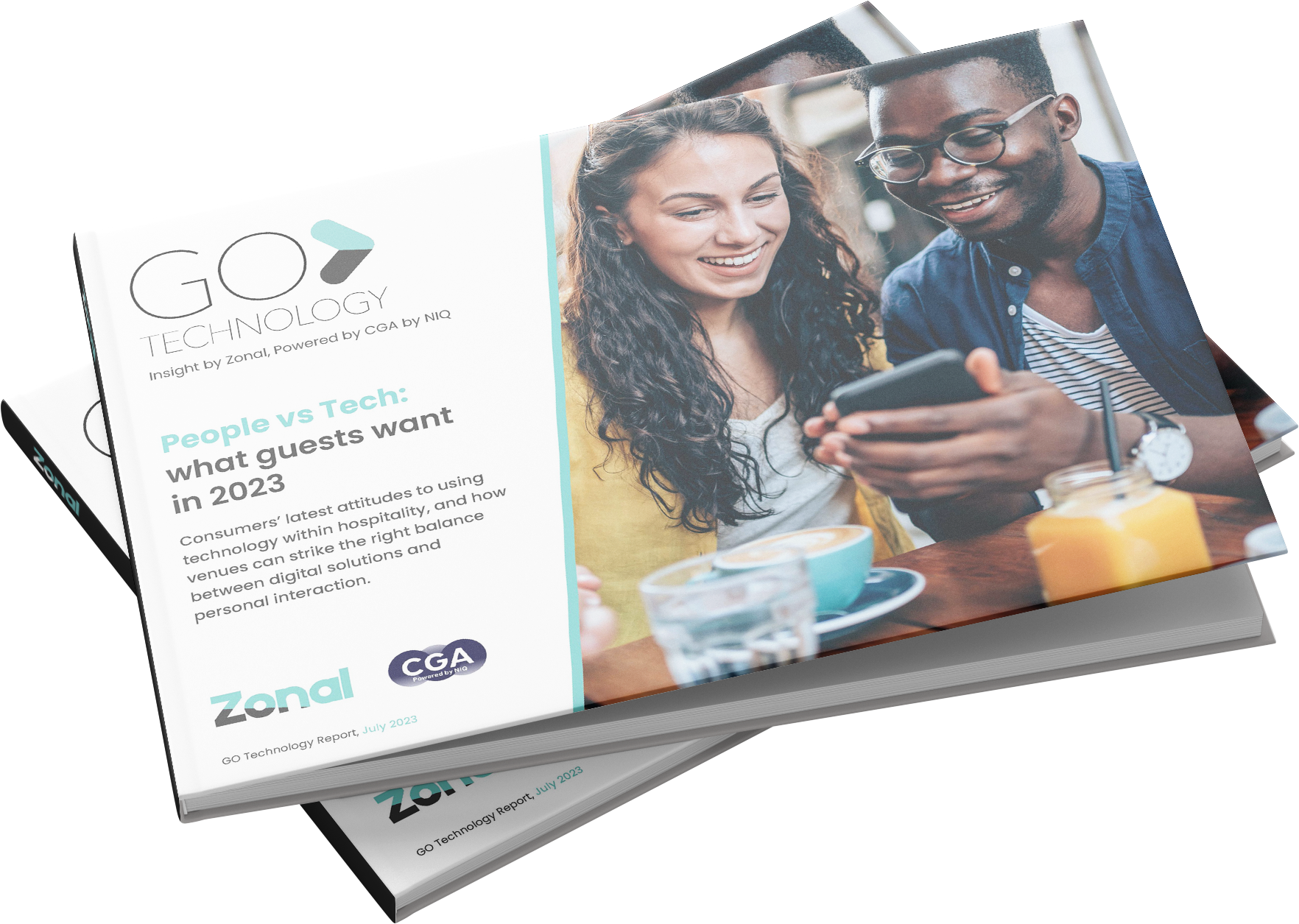
Exclusive research into hospitality consumer attitudes towards technology as part of the overall guest experience
The role of technology in hospitality is evolving – not only are guests used to seeing technology in-venue, they now expect it to be present. But the importance of human connection for which the hospitality industry is known and loved so well, is not to be underestimated.
Produced in partnership with CGA by NielsenIQ, we asked 5,000 UK hospitality consumers to find out their views on technology in hospitality.
With 55% of those surveyed believing that a balance between technology and a human touch delivers the best hospitality experiences, ensuring you’re meeting the expectations of ever-increasingly digitally-savvy guests, will be key for success now, and in the future.
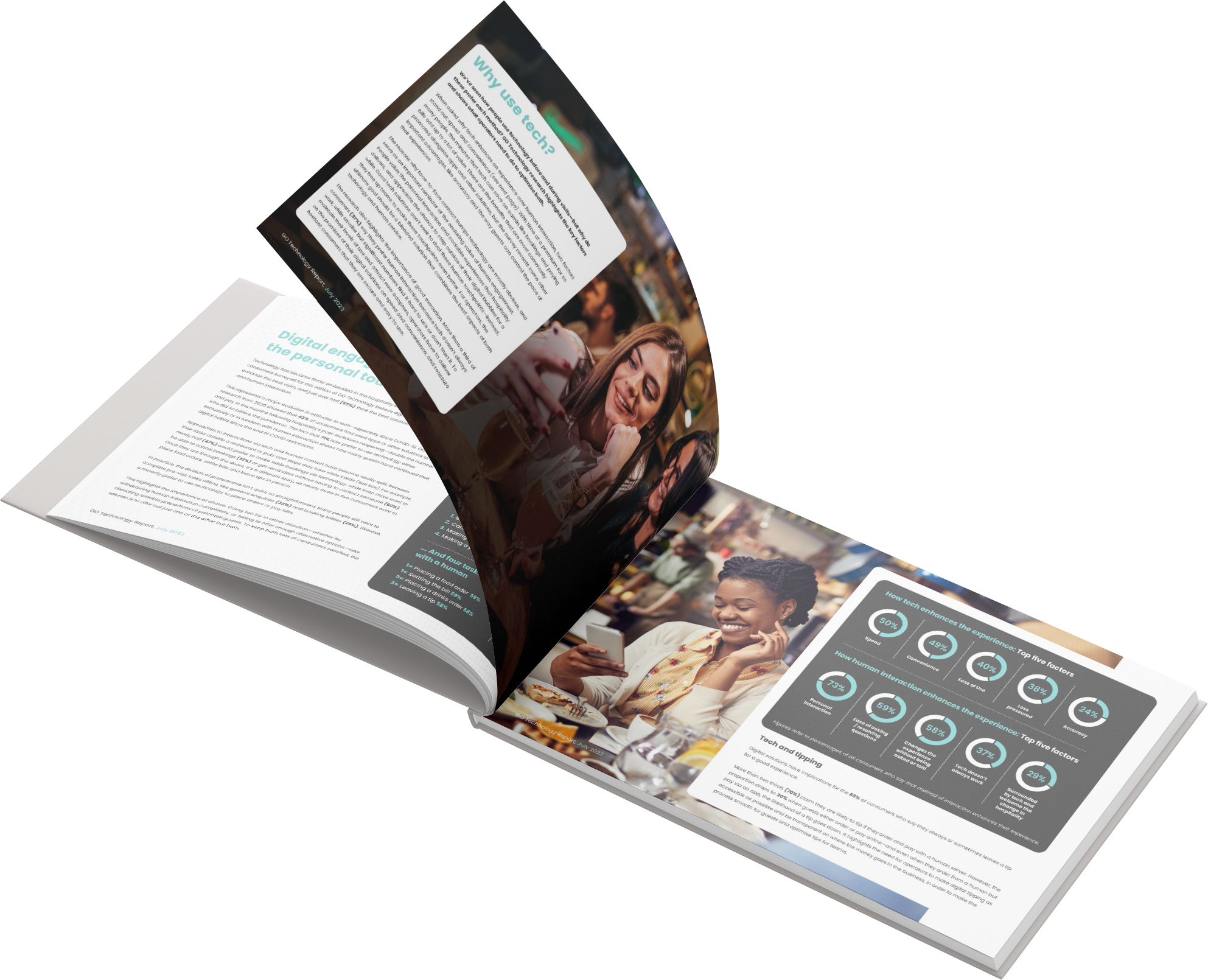
What's in the report?
- When guests prefer to use technology versus interacting with staff
- How guest preferences change at different stages of the customer journey
- Average spend by tech natives versus those who prefer a human touch
- How attitudes to tech may develop over time
Subscribe to get the latest news, product announcements and industry updates
Subscribe to get the latest news, product announcements and industry updates
Webinar | 2023 hotel guest trends to help you maximise revenue
As the cost of living crisis continues to fuel the staycation trend amongst British consumers, ensuring your hotel is matching the demands of both new and existing guests will be key to making the most of the opportunities presented during today’s turbulent trading landscape.
Join Stewart Moss, Managing Director at High Level Software and Karl Chessell, Director of Hospitality and Food, EMEA, at CGA by NielsenIQ, as they present an exclusive preview of the findings from Zonal and CGA’s latest GO Technology research into how consumers engage with hotel businesses, and what they expect from their visits to hotels in the future.
From how often guests are visiting UK hotels and what the driving factors behind their visits are, to how they prefer to make a reservation ; as well as new innovations in hotel technology consumers are interested in, this webinar will provide you with actionable insights to help you boost your business in 2023.
Watch this webinar to discover insights including:
- The driving factors behind the frequency of guest visits to UK hotels
- How to cut costs by encouraging guests to book directly with you
- Hotel sector trends that consumers are most interested in
Subscribe to get the latest news, product announcements and industry updates
Watch: 2023 hotel guest trends to help you maximise revenue
Subscribe to get the latest news, product announcements and industry updates
Four ways F&B tech can help Holiday Parks prepare for a rise in cost-conscious holidaymakers
Amidst the current cost-of-living crisis, holidaymakers are expected to look closer to home this year, when planning a getaway. In fact, recent research suggests that 90% of travellers will plan a domestic trip in the next 12 months, with some planning shorter breaks to help keep costs down.
With activities such as caravanning, camping and glamping all popular staycation choices for holidaymakers, how can Holiday Park operators better utilise tech in the F&B arm of their business to capitalise on the opportunities the staycation boom brings, whilst also ensuring they are safeguarding their businesses for the future? Here’s just some of the ways that tech can help.
1. Pinpoint peaks
Despite economic uncertainty, recent data suggests that holiday retail spending will rise this year, and with more and more guests deciding to spend their holidays in UK holiday parks, operators that plan ahead and iterate on previous years’ successes can expect to see results. Technology can play a key role in helping you to achieve this, particularly in your F&B offering. With a fully integrated suite of technology in a park’s restaurants, bars, pubs and cafes, it’s easy to identify what worked well the year before during peak times – from what products sold best in the on-site bar, to what discounts customers took advantage of in the restaurant – providing detailed insights into what your customers respond well to in your hospitality facilities, and helping you to identify opportunities to increase spend. It’s also just as important to identify what didn’t work to ensure you’re offering products your guests want to buy, and that you’re not over-stocking on products that won’t sell well.
However, it’s not just your peak times that you should be looking at – data collected during quieter trading periods can also yield some really useful insights. This data will provide you a complete picture of how your business has been performing, during both the peaks and the troughs, to enable smarter, data-led decision making – such as ensuring you always have your most popular food and drink in stock at the right times, or planning more effective promotions to drive more revenue during the less busy trading periods.
2. Look at your environmental agenda
Consumers are becoming more eco-conscious and as result, expect the businesses they buy from to be more socially responsible too. However, when you’re faced with an increase in visitors and a busy park, how can you ensure you keep on top of demand while also prioritising your environmental responsibilities, such as reducing waste? By investing in an effective digital stocktaking solution for your F&B facilities that allows you to look at what’s not being ordered, what’s being wasted in the kitchen and what’s coming back on the plate, you can monitor portion sizes and reduce over-ordering of ingredients. Keeping on top of waste not only helps the bottom line but also helps to achieve sustainability ambitions, as well as ensuring you’re able to keep the value of your offering as reasonable as possible for guests in a year where costs will be front-of-mind when deciding where to spend their holidays.
3. Real-time, seamless data sharing
It’s no secret that data is at the beating heart of any hospitality operation, with holiday parks being no exception, bringing operations together and providing all the tools you need to manage your business successfully and efficiently. It connects the dots between your front and back-of-house, as well as helping you to easily generate an overall picture of your business, delivering you complete operational control – so it’s important that it’s being analysed and used correctly. For example, back-of-house tech that is integrated with EPoS can identify when the kitchen is too busy with in-venue diners and cut off takeaway or click & collect orders automatically, ensuring your in-venue customer experience isn’t affected. This real-time data can also have tangible benefits for your customers during the order journey itself. Fully integrated technology will push live stock availability to all your ordering channels whether it’s a till, handheld ordering device, or online ordering channels, meaning both your staff and customers will always know what’s available to order and what’s out of stock, eliminating a major bugbear for customers before it’s even occurred. A win for both you and your visitors!
4. Reward and incentivise returning customers through loyalty schemes
A tech-enhanced experience is crucial in achieving a loyal cohort of guests, as it helps in encouraging customers to return to your holiday park. Our research has shown that fewer than one in five (18%) of holiday park guests are currently signed up to a loyalty initiative, but of those who aren’t, nearly half (45%) say they would be interested in signing up to a scheme. With the cost-of-living crisis still impacting overseas travel, here is your opportunity to reap long-term benefits, starting with a loyalty scheme. Investing in an integrated digital loyalty solution will help gain valuable insights that can be gained from harvesting guest data. Visit frequency, guest preferences and spend can all be collected, so you can send tailored deals and rewards to each customer, driving more engagement and sales and increasing the value of your offering to your cost-conscious guests, something that’s sure to keep them coming back year on year.
Zonal has a wide range of technology solutions designed to increase efficiency and help holiday parks become more profitable. Find out more here!
Subscribe to get the latest news, product announcements and industry updates


From the crucial difference between customer care and customer service, to the importance of making time to visit other pubs yourself, the benefits of investing in order & pay apps and implementing a four-day week for staff, our Pioneering Pub People Podcast, in association with the BII, is packed full of insights and advice from some of the best in the business. You can see below for just a few choice highlights from the series…
The importance of failing – Chris Black, Pityme Inn, Cornwall
Whilst most of us have a fear of failing, Licensee of The Year 2021, Chris Black from the Pityme Inn says that trial and error is key to success. Whether you want to champion local produce in your meals or focus on outdoor drinking and dining, it’s important to stick to your gut instincts and learn from any mistakes made. Things do go wrong, things do change and it’s important not to fear it but to improve as a result. To set yourself up for success however, it’s important to get the basics right and provide top service to guests and having the right systems and tech in place has helped the Pityme Inn to achieve this.
Listen to the full episode with Chris here!
Keeping staff happy – Alex and Tanya Williams, The Polgooth Inn, Cornwall
Amidst a staffing crisis in the hospitality sector, it’s more important than ever to make your staff feel valued and Alex and Tanya seem to have managed it perfectly. They have around 40 staff, with the kitchen team on a four-day week, flexible shifts for other staff that provide a good work-life balance, a share of the tips and a good hourly work rate. These simple fixes have worked wonders, resulting in an engaged team who are willing to go above and beyond for customers, resulting in great customer service. Tech has also played its part in this – for example, Alex and Tanya have invested in a handheld EPoS system to alleviate pressure on staff and help them deliver brilliant customer experiences.
Listen to the full episode with Alex and Tanya here!
Engage with the local community – David Hage and Mark Osborne, The Railway in Lowdham
David and Mark at The Railway have really delivered on providing great food that draws in customers from far and wide, as well as being a hub for the local community. Staff greeting customers with a smile is essential but so is the layout of the pub. For example, separating the bar area from the restaurant ensures that locals are not put off the idea of popping in for a drink on their own. For destination diners, the team at The Railway have found their online booking system to be invaluable, as it not only gives customers a simple and friction-free way to book but it also helps the team better manage covers in-venue and continue to provide exceptional service.
Listen to the full episode with David and Mark here!
It’s about customer care, not customer service! – Cassie Davison, The Gate Hangs Well, Syston
It sounds simple, but the success of a pub isn’t just about providing customer service – it’s about customer care, says Cassie. Pubs are places where people go to relax and are a safe space for people to forget about the stresses of everyday life. Therefore, in order to provide that customer care, the key is teaching your staff to understand the true meaning of the word ‘hospitality’ and remind them why they work in the industry in the first place. By helping staff to understand what it is that makes serving customers so great and by employing staff who have the same values as you, teams can offer customers unrivalled experiences and keep them coming back time and time again.
Listen to the full episode with Cassie here!
Leverage customer data and take time to learn from other operators – Amanda and Nick Herring, The Heron, Cornwall
Learning from the business decisions made by other operators can inspire you to implement new, creative ideas into a venue. Amanda and Nick Herring of The Heron in Cornwall often take time out to visit London and other areas to check out pubs and chat to fellow operators. They use the insight to inspire them and to assess their own business. For example, they implemented online ordering and payment and labour management tools during the pandemic. Initially this was just to help them operate through all the various levels of restrictions, but they found the technology delivered far more benefits, helping them streamline their operations, cut costs, and improve the customer experience.
We also know that the hospitality industry is an incredibly supportive sector. Through the pandemic, for example, we saw pub operators sharing knowledge and advice to others on how to weather the storm and that continues to be the case. Why not visit other pubs and share knowledge in order to gain perspective on your own business’ successes and areas for improvement?
Listen to the full episode with Amanda and Nick here!
To stream the complete Pioneering Pub People podcast series, click here!


Subscribe to get the latest news, product announcements and industry updates
Watch: Embracing the future of hospitality tech
Download the full reports to discover more!
Subscribe to get the latest news, product announcements and industry updates
Research recently released from KAM Media has highlighted that the takeaway and delivery boom is not going anywhere, with 22 million Brits now ordering a takeaway or delivery from a restaurant or pub at least once a week.
Encouragingly, rather than replacing on-trade visits, the survey shows the significant majority – 74% of people – are ordering in to replace cooking at home. Further research from Otter highlighted the opportunities further, citing that Brits on average spend ₤21.29 per delivery order, with the average amount spent increasing throughout the day.
As we all know, many operators had to pivot to at-home dining offers during the pandemic – a move which no doubt saved thousands of businesses. With a cost-of-living crisis on the horizon, the question for hospitality now is: can takeaway and delivery can also get the sector through the next few months and beyond?
The results from CGA’s Hospitality at Home Tracker would suggest so, revealing that demand for takeaway and delivery remained high, even when normal trading resumed, with demand for both up on the same months in 2019. Furthermore, the research shows that a key factor determining the strong performance of restaurants is omnichannel operations – that is, those that have a takeaway, delivery or click and collect arm of the business.
Tech can play a huge part in this – moving online can streamline operations and increase visibility of a brand. For those considering how the takeaway and delivery boom might well help them through the current economic crisis, here are some top tips:
- Make it digital
Even pre-pandemic, the likes of Deliveroo and Uber Eats were popular. In fact, last year our GO Technology research conducted with CGA revealed that in January 2021, nearly a quarter (23%) of consumers said they had ordered deliveries or takeaways from platforms like Deliveroo and Just Eat more often than usual—double the number (11%) who said the same in April 2020 during the first lockdown. With this in mind, operators should consider shifting this element of the business online, to align with consumer behaviour and ensure that their delivery options are visible – especially as competition will be fierce. Don’t make your online ordering options hard for consumers to find!
- Accessibility is key
We know from our own research that customers who order via takeaway and delivery services do so for convenience and speed. In fact, two in five (43%) consumers say they would like to see faster delivery than they currently experience and the KAM research shows that 62% of people would prefer to order direct. Thus, whilst hosting a venue on third-party sites is great for visibility, it is also worthwhile for venues to set up their website to be able to process orders directly. Tech can help businesses and there are plenty of tools available to help businesses process takeaway and delivery orders efficiently and provide a more seamless experience for customers.
- Centralise online orders for complete control
An efficient digital takeaway and delivery system can also be essential in supporting staff on-shift. By offering online ordering to the customers– whether that be via app or website – and it being linked to your EPoS, staff won’t need to spend time on the phone taking orders or having to re-key them into the till. Instead, they can focus on delivering exceptional customer service to customers in-venue. It also avoids errors made from busy staff re-keying in orders taken over the phone.
It is also possible to connect online bookings to back of house tech, to support the kitchen staff in delivering orders in a timely manner. For example, Zonal’s Click and Collect technology and delivery solutions will only show orders to the kitchen team when preparation needs to begin. Instead of simply printing tickets as orders are placed by customers, the system will delay displaying information until it’s actually needed.
For the service to deliver maximum impact, it’s important that you can manage the flow of orders to the kitchen from orders received through online channels at any given time, to ensure the kitchen never gets overwhelmed. If a restaurant is usually particularly busy between 7-8pm, tech enables operators to simply set the system to reduce the number of orders that can be accepted during that time – or stop it all together.