

1. Reducing administration tasks

As hospitality operations continue to increase in complexity, the value of effectively managing and utilising your data to both make operational improvements and identify ways to drive additional revenue has never been higher.
In this webinar, Jonathan Grant, Director of Technical Sales at Zonal and Susie Clark, Head of CRM at Ignite explore the importance of data and the ways in which data can be developed into key information which can ultimately benefit your customers and company through improving customer relationships and increasing revenue.


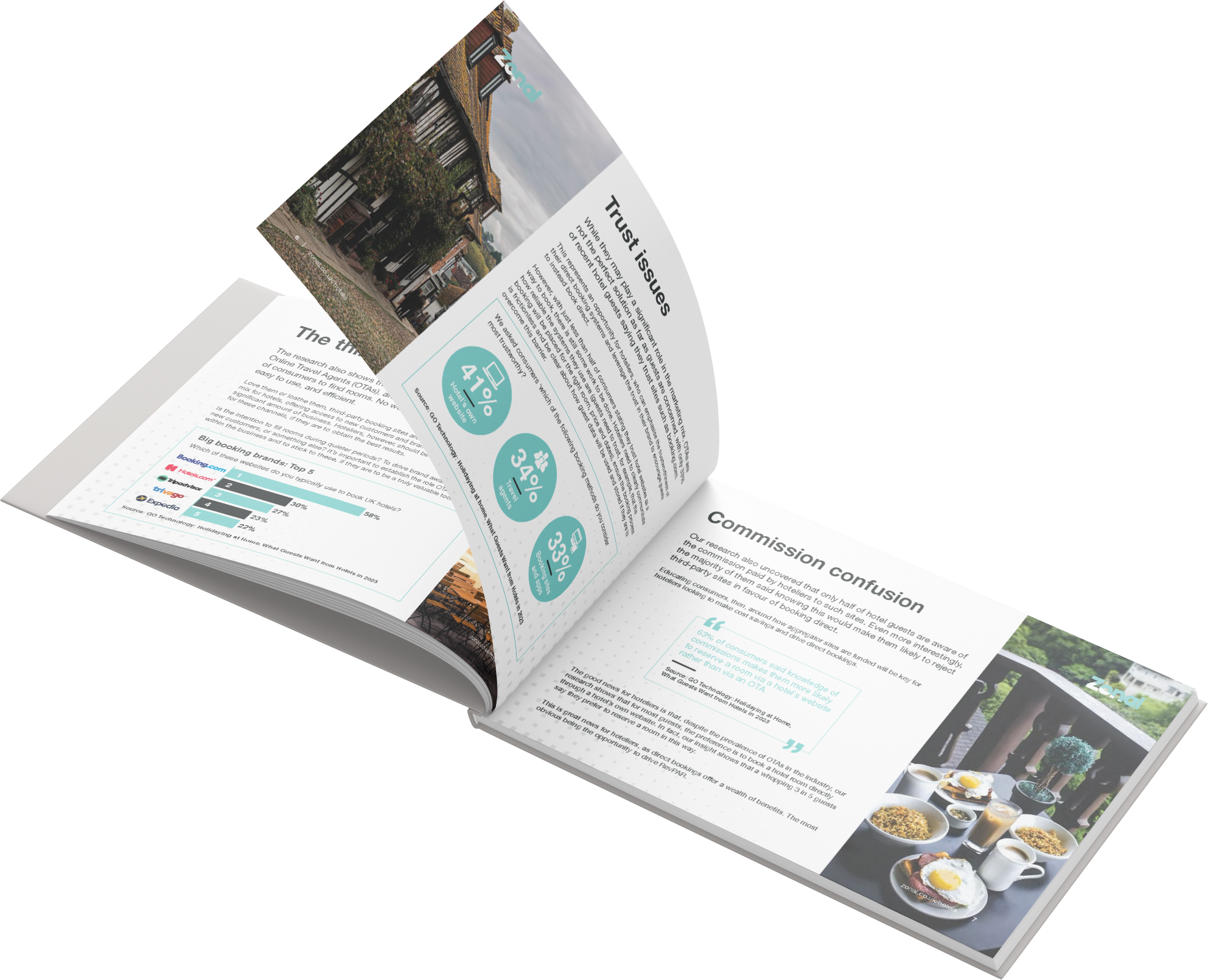
While third-party booking sites and OTAs can form a valuable part of the marketing mix by increasing brand reach and filling shoulder times, direct bookings offer a wealth of benefits – the most obvious being the opportunity to improve margins which increase RevPAR, but also providing the opportunity to drive longer-term loyalty for your hotel.
Is your website helping or hindering the number of direct bookings you receive? Run through your booking journey as if you were a guest, evaluating how easy it is to browse through your offering, check availability and make a booking. Some key things to look out for here are having too many steps in the booking process, unclear language, complicated systems – or even if it just takes too long to complete!
 Provide up-to-date information
Are all the facilities you offer easily available to view and do images reflect how things currently are? If you have rooms or facilities that are currently unavailable, make sure this is clearly communicated on your website and across any other sources of information to avoid any guest frustrations that may result in disappointment on arrival and damage your brand.
Guests are looking for the peace of mind of knowing their room reservation is secured immediately at the point of booking. Make sure room availability and rates are correct and in-line with those offered on third party sites. This can be achieved easily by integrating your hotel’s property management system (PMS) with your website’s booking engine via a channel manager, allowing you to centrally manage your rooms across all channels from one platform, and avoid overbooking.
Offer preferential rates or extra incentives to encourage guests to book via your website. Not only does this entice guests away from OTAs into booking with you direct, you’ll also be able to capture valuable information, increase opportunities for upselling, and provide added incentives for them to book direct in the future too.
 Highlight how you keep customer information
Trust is a hot topic amongst consumers at the moment, and if guests are confident that you are keeping their information safe, they are more likely to trust your direct booking process. You should clearly communicate how any data is being stored, as well as what you’ll be using it for, demonstrating the value in sharing their data to your guests.
42% of hotel guests say a high level of responsiveness to enquiries and bookings would encourage them to book direct, according to our research, so building a dialogue with guests in the early stages is vital.
Further to the above, make the most of every opportunity to communicate with guests through confirmation emails, reminder messages and offers. Not only will you build trust and provide your guests with peace of mind prior to arrival, these communications also provide valuable opportunities for upselling of experiences and F&B, so make sure you’re utilising these touchpoints to their full potential!
 Reward Loyalty
29% of hotel guests say they are interested in hospitality loyalty schemes that offer personalised rewards. Assess your current loyalty offering – does it meet this demand? If not, the data you gather from direct bookings can help you to develop this by analysing which promotions are working and which could use some refinement. For example, our recent research found 4 in 5 hotel guests said a discount on a return visit would encourage them to book a return trip. Use this insight to deliver tailored messaging that drives repeat custom and direct bookings.
43% of hotel users agree that a button to book a hotel directly from social media accounts would make their booking journey easier. Not only does this help to provide a more convenient journey for many bookers, particularly amongst younger generations, but will also help you drive more bookings and access new groups of guests.
Whilst personal recommendations from friends remains the top source of information for guests when choosing a hotel to stay in, online reviews play a crucial role, with 98% of consumers saying reviews influence their choice of hotel. Common platforms for leaving a review include TripAdvisor and Google, however your own website and social media are also popular places guests go to when looking to leave a review. Sending an email to those who have booked directly with an incentive to leave a review is an effective way of increasing your review presence on these platforms.
All signs point towards a bumper year for staycations in the UK, with recent research uncovering that 81% of consumers are planning to stay in a UK hotel in 2023.
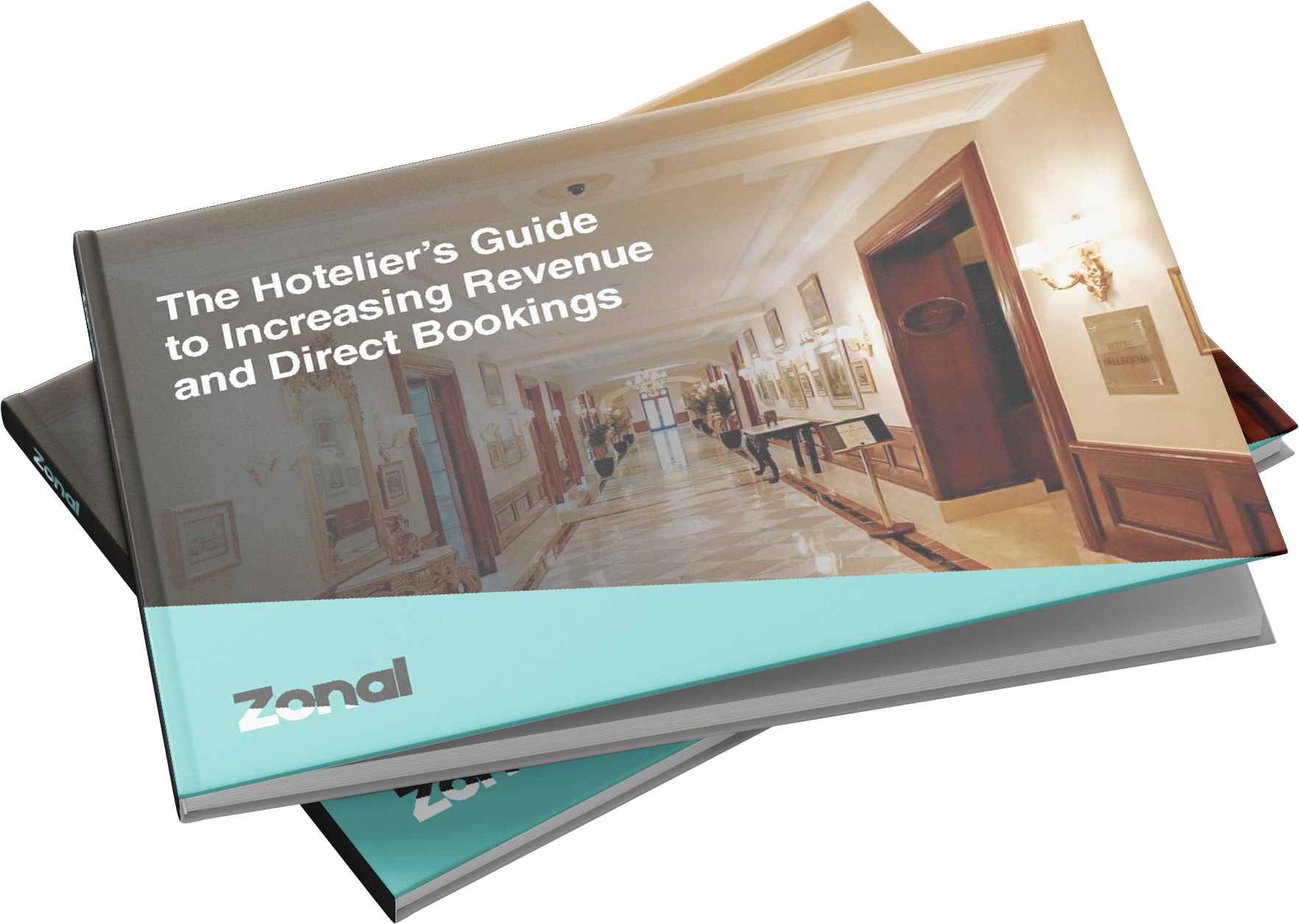
This increased demand for hotel accommodation presents a golden opportunity for hoteliers to grow profits and strengthen their businesses for the future. Download your free copy of ‘The Hotelier’s Guide to Increasing Revenue and Direct Bookings’ to discover actionable advice you can implement in your hotel today to help capitalise on the unique opportunities 2023 will bring.

As the cost-of-living crisis continues to squeeze consumer spending and budgets are more closely scrutinised, many guests are opting to leave the decision-making process for which venue to visit, to someone they trust.
These trusted ‘influencer’ consumers represent a significant opportunity for hospitality businesses able to convert them from regular guests into brand champions. But who are these ‘influencers’? What are their hospitality habits? And what do they look for when choosing a venue to visit for their friends, families and networks?
Produced in partnership with CGA by NielsenIQ and DataHawks, we surveyed 5,000 UK hospitality consumers to find out.

As the cost of living crisis continues to fuel the staycation trend amongst British consumers, ensuring your hotel is matching the demands of both new and existing guests will be key to making the most of the opportunities presented during today’s turbulent trading landscape.
Join Stewart Moss, Managing Director at High Level Software and Karl Chessell, Director of Hospitality and Food, EMEA, at CGA by NielsenIQ, as they present an exclusive preview of the findings from Zonal and CGA’s latest GO Technology research into how consumers engage with hotel businesses, and what they expect from their visits to hotels in the future.
From how often guests are visiting UK hotels and what the driving factors behind their visits are, to how they prefer to make a reservation ; as well as new innovations in hotel technology consumers are interested in, this webinar will provide you with actionable insights to help you boost your business in 2023.
Amidst the current cost-of-living crisis, holidaymakers are expected to look closer to home this year, when planning a getaway. In fact, recent research suggests that 90% of travellers will plan a domestic trip in the next 12 months, with some planning shorter breaks to help keep costs down.
With activities such as caravanning, camping and glamping all popular staycation choices for holidaymakers, how can Holiday Park operators better utilise tech in the F&B arm of their business to capitalise on the opportunities the staycation boom brings, whilst also ensuring they are safeguarding their businesses for the future? Here’s just some of the ways that tech can help.
Despite economic uncertainty, recent data suggests that holiday retail spending will rise this year, and with more and more guests deciding to spend their holidays in UK holiday parks, operators that plan ahead and iterate on previous years’ successes can expect to see results. Technology can play a key role in helping you to achieve this, particularly in your F&B offering. With a fully integrated suite of technology in a park’s restaurants, bars, pubs and cafes, it’s easy to identify what worked well the year before during peak times – from what products sold best in the on-site bar, to what discounts customers took advantage of in the restaurant – providing detailed insights into what your customers respond well to in your hospitality facilities, and helping you to identify opportunities to increase spend. It’s also just as important to identify what didn’t work to ensure you’re offering products your guests want to buy, and that you’re not over-stocking on products that won’t sell well.
However, it’s not just your peak times that you should be looking at – data collected during quieter trading periods can also yield some really useful insights. This data will provide you a complete picture of how your business has been performing, during both the peaks and the troughs, to enable smarter, data-led decision making – such as ensuring you always have your most popular food and drink in stock at the right times, or planning more effective promotions to drive more revenue during the less busy trading periods.
Consumers are becoming more eco-conscious and as result, expect the businesses they buy from to be more socially responsible too. However, when you’re faced with an increase in visitors and a busy park, how can you ensure you keep on top of demand while also prioritising your environmental responsibilities, such as reducing waste? By investing in an effective digital stocktaking solution for your F&B facilities that allows you to look at what’s not being ordered, what’s being wasted in the kitchen and what’s coming back on the plate, you can monitor portion sizes and reduce over-ordering of ingredients. Keeping on top of waste not only helps the bottom line but also helps to achieve sustainability ambitions, as well as ensuring you’re able to keep the value of your offering as reasonable as possible for guests in a year where costs will be front-of-mind when deciding where to spend their holidays.
It’s no secret that data is at the beating heart of any hospitality operation, with holiday parks being no exception, bringing operations together and providing all the tools you need to manage your business successfully and efficiently. It connects the dots between your front and back-of-house, as well as helping you to easily generate an overall picture of your business, delivering you complete operational control – so it’s important that it’s being analysed and used correctly. For example, back-of-house tech that is integrated with EPoS can identify when the kitchen is too busy with in-venue diners and cut off takeaway or click & collect orders automatically, ensuring your in-venue customer experience isn’t affected. This real-time data can also have tangible benefits for your customers during the order journey itself. Fully integrated technology will push live stock availability to all your ordering channels whether it’s a till, handheld ordering device, or online ordering channels, meaning both your staff and customers will always know what’s available to order and what’s out of stock, eliminating a major bugbear for customers before it’s even occurred. A win for both you and your visitors!
A tech-enhanced experience is crucial in achieving a loyal cohort of guests, as it helps in encouraging customers to return to your holiday park. Our research has shown that fewer than one in five (18%) of holiday park guests are currently signed up to a loyalty initiative, but of those who aren’t, nearly half (45%) say they would be interested in signing up to a scheme. With the cost-of-living crisis still impacting overseas travel, here is your opportunity to reap long-term benefits, starting with a loyalty scheme. Investing in an integrated digital loyalty solution will help gain valuable insights that can be gained from harvesting guest data. Visit frequency, guest preferences and spend can all be collected, so you can send tailored deals and rewards to each customer, driving more engagement and sales and increasing the value of your offering to your cost-conscious guests, something that’s sure to keep them coming back year on year.
Zonal has a wide range of technology solutions designed to increase efficiency and help holiday parks become more profitable. Find out more here!
Dan Brookman, CEO of Digital Loyalty Company Airship, part of Zonal, shares his thoughts on how to boost business this winter.
Have you ever wondered whether digital loyalty schemes really deliver?
After years of working in partnership, Zonal acquired digital loyalty company Airship and Toggle a few months ago, immediately unlocking new ways for operators to increase profits, grow their loyal customer base and provide a smoother, more connected customer journey.
The man who knows everything there is to know about gift cards, Airship CEO Dan Brookman, remains at the helm, and here he addresses some of the most frequently asked questions about how bounce-back deals, vouchers and personalisation can help boost takings in January and beyond.
The start of the year is all about grabbing market share after christmas and getting customers to revisit your business rather than having a prolonged absence. For some time, hospitality businesses have used various marketing methods to drive footfall and spend in-venue, such as January bounce-back or New Year sales, and consumers have come to expect them. If an operator doesn’t offer it, they risk losing their competitive advantage.
What is key to success is making sure you get in early with your customers – so you should be promoting these deals early. Let customers know that it’s coming, be clear on the dates it will be valid for and keep it simple, don’t add too many terms and conditions. If you can, don’t keep promotions limited to a particular day of the week or an hour of the day either, so it’s easy to claim.
Be generous, as there is a lot of competition out there! Think a minimum of 25%, potentially up to 50%, if you were doing a Monday to Thursday offer. Don’t forget the importance of a stored value, so rather than a discount, consider actually giving people money in advance. One of the best things that are a benefit during January and February is giving a £10 or £5 voucher to customers in your database, with the onus being on that this has to be spent in January. These kind of offers often have high levels of redemption, as those customers who were questioning whether to dine out or not will be more incline to do so with money off. They’re able to enjoy the experience at a cheaper price, when in turn builds up brand loyalty.
Across the board, one of the most effective methods we have seen is operators marketing to their database with a 50% off food and drink, with no terms and conditions attached. Every time somebody redeems one of the vouchers, they are sent another to follow. So, it’s about re-targeting the customers that do use their vouchers and drive revisits, increasing efficiency and spend-per-head. Of course, it’s not a one-stop shop for all, and every operator and their customer base are different. It’s about finding the right technology that retrieves the correct data, which means you can then offer a tailored approach to fit your audience.

Businesses that go a step further through making their promotions personalised specifically to their customer base, will ensure repeat service. We know this works. Research has shown that 81% of consumers expect personalisation, wanting to receive promotions and deals. It’s basic psychology: people are more likely to visit again if they get free stuff and that’s not about to stop in 2023. Data is key to this; in order to offer great deals, you need to know your customers, and for this you need data.
Through technology such as an EPoS system, hospitality operators can create or import voucher codes for the redemption of promotions or discounts during the payment process or at the point-of-sale. This helps in incentivising additional spend and increasing the frequency of visits through tactical promotions and offers. Triggered voucher codes can be issued to thank customers for their loyalty or distributed to prospective customers. This integration allows operators to capture and analyse valuable customer data with every transaction including what they’ve ordered, how much it costs, and how frequently they have visited. This information will help in building an effective and personalised digital loyalty scheme suited to customer needs.
With so many loyalty programmes out there, building a scheme that’s right for your business isn’t always easy. For more information about how we can help you with digital loyalty schemes, please visit our loyalty programmes page here.

CEO at Airship & Toggle

Dan is CEO of Airship & Toggle which joined the Zonal Group in 2022. Launched in 2013, Airship is the UK hospitality’s leading CRM and customer engagement platform. In 2018, Dan created Toggle, so operators could boost revenues through online sales of gift cards and experiences. With more than 30 years’ experience in the hospitality industry, Dan is hugely passionate about helping operators drive ROI through data, loyalty and technology.
From the crucial difference between customer care and customer service, to the importance of making time to visit other pubs yourself, the benefits of investing in order & pay apps and implementing a four-day week for staff, our Pioneering Pub People Podcast, in association with the BII, is packed full of insights and advice from some of the best in the business. You can see below for just a few choice highlights from the series…
Whilst most of us have a fear of failing, Licensee of The Year 2021, Chris Black from the Pityme Inn says that trial and error is key to success. Whether you want to champion local produce in your meals or focus on outdoor drinking and dining, it’s important to stick to your gut instincts and learn from any mistakes made. Things do go wrong, things do change and it’s important not to fear it but to improve as a result. To set yourself up for success however, it’s important to get the basics right and provide top service to guests and having the right systems and tech in place has helped the Pityme Inn to achieve this.
Listen to the full episode with Chris here!
Amidst a staffing crisis in the hospitality sector, it’s more important than ever to make your staff feel valued and Alex and Tanya seem to have managed it perfectly. They have around 40 staff, with the kitchen team on a four-day week, flexible shifts for other staff that provide a good work-life balance, a share of the tips and a good hourly work rate. These simple fixes have worked wonders, resulting in an engaged team who are willing to go above and beyond for customers, resulting in great customer service. Tech has also played its part in this – for example, Alex and Tanya have invested in a handheld EPoS system to alleviate pressure on staff and help them deliver brilliant customer experiences.
Listen to the full episode with Alex and Tanya here!
David and Mark at The Railway have really delivered on providing great food that draws in customers from far and wide, as well as being a hub for the local community. Staff greeting customers with a smile is essential but so is the layout of the pub. For example, separating the bar area from the restaurant ensures that locals are not put off the idea of popping in for a drink on their own. For destination diners, the team at The Railway have found their online booking system to be invaluable, as it not only gives customers a simple and friction-free way to book but it also helps the team better manage covers in-venue and continue to provide exceptional service.
Listen to the full episode with David and Mark here!
It sounds simple, but the success of a pub isn’t just about providing customer service – it’s about customer care, says Cassie. Pubs are places where people go to relax and are a safe space for people to forget about the stresses of everyday life. Therefore, in order to provide that customer care, the key is teaching your staff to understand the true meaning of the word ‘hospitality’ and remind them why they work in the industry in the first place. By helping staff to understand what it is that makes serving customers so great and by employing staff who have the same values as you, teams can offer customers unrivalled experiences and keep them coming back time and time again.
Listen to the full episode with Cassie here!
Learning from the business decisions made by other operators can inspire you to implement new, creative ideas into a venue. Amanda and Nick Herring of The Heron in Cornwall often take time out to visit London and other areas to check out pubs and chat to fellow operators. They use the insight to inspire them and to assess their own business. For example, they implemented online ordering and payment and labour management tools during the pandemic. Initially this was just to help them operate through all the various levels of restrictions, but they found the technology delivered far more benefits, helping them streamline their operations, cut costs, and improve the customer experience.
We also know that the hospitality industry is an incredibly supportive sector. Through the pandemic, for example, we saw pub operators sharing knowledge and advice to others on how to weather the storm and that continues to be the case. Why not visit other pubs and share knowledge in order to gain perspective on your own business’ successes and areas for improvement?
Listen to the full episode with Amanda and Nick here!