-

Guides
The Loyalty Landscape
As more businesses turn to mobile apps to deepen customer engagement, managing loyalty programs within these platforms has become both a priority and a challenge.
Whether you’re launching a rewards system for the first time or optimizing an existing one, it’s natural to have questions which is often where Zonal’s Customer Success team are able to support our customers, not only those onboarding, but also those who are looking to improve.
Whether you’re considering implementing Loyalty into your venue, or already use Loyalty and are looking to get the most out of it, our Customer Success team have collated and answered some of the most common FAQs from both operators we work with and their guests about running a loyalty program through your app — so you can deliver seamless, personalized experiences that keep customers coming back.
With Zonal Loyalty, you’ll have access to a Loyalty UI (Platform) to manage this type of demand. Within the Loyalty UI, staff members can:
(It’s worth noting, though, that these changes will not update within the App).
As changes in Loyalty will not update within the app, the below process should be followed if a guest requests their details to be changed within the App:
Email addresses should not be changed for the White Label App, as this links to the Loyalty Account. The email address should first be changed within Loyalty by a member of staff. The guest should create a new account within the White Label App and add their existing card during sign up to the app. Alternatively, a service request can be logged for email addresses to be changed as the process is outlined above.
A process flow to help troubleshooting….
The below flow outlines the system checks that are completed during Sign Up to the App to support within trouble shooting.
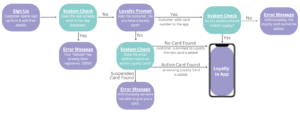
If a guest receives an error when adding Loyalty to the App, this could be due to a suspended loyalty card linking to the email address, the following options are available to support the guest:
When actioning any of the above, it is important to consider why the guest has a suspended card.
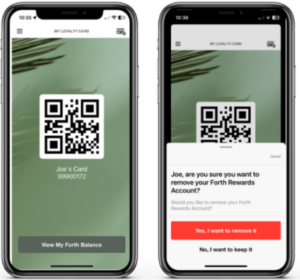
If a guest wants to remove their Loyalty Card from their App or an incorrect Loyalty Card has been added, they are able to complete is from the Loyalty card screen. Once the Loyalty card has been removed, the guest can then add an alternative card.
IMPORTANT
When logging requests for customers with the Zonal Help Centre, personal details must be shared securely. Additionally, service requests follow an SLA.
The below are some of the queries our Customer Success team hear being asked by guests to venues they visit. It’s worth displaying some of the most common questions and answers either within the App or on your own website somewhere to help guests navigating the platform(s).
Guests should navigate to the balance check screen on your website, enter their email or phone number (that was used to originally sign up to Loyalty), along with their Loyalty pin number. Their Loyalty card number can also be used to check balances on the website, along with their Loyalty pin number.
This will be sent to guests within their confirmation of registration email, on signing up to Loyalty. Additionally, the Forgotten Pin link within the balance check screen can be used to resend their Loyalty Pin number.
It is recommended guests contact the your Head Office to amend any details to ensure the information is updated correctly.
If logged in, guests should navigate to the side menu, select their name (first option on the list) and select “Edit Account”. They will need to enter their Existing Password and New Password and select “Update Details” to save.
If logged out, guests should use the Forgotten password link and enter their email address. If an app account with that email address is found, they will be emailed a new password to sign in. It is recommended that once signed back in, guests should update their password, using the above steps, for security.
Firstly, guests should check their Junk/Spam folders. If they are still unable to locate the forgotten password email, attempt to create an app account (if possible, don’t enter your mobile number in the sign-up form). If the guest can create an account, this means that they are using an email address that hasn’t previously been used in this app. If an error occurs on account creation, guests should contact your Head Office team.
No, a guest can’t change their Pin number. Only app passwords can be amended. If the guest is concerned that their Pin number has been compromised, they should contact your Head Office team..
If a guest believes the wrong Loyalty card is associated with their App account, they should navigate to the My Loyalty Card screen within the App. In the top right there is a button with a card symbol and a “-“. The guest should select this button and select “Yes, I want to remove it”. On completion, a new screen will appear asking if they have an account. Select “Yes, I have an Account”, enter the Loyalty Card Number they want to add to the app and the email address used when they signed up for Loyalty. If the details are correct this will add the required Loyalty card to the app.
If an account is created with the wrong email address, it is recommended that guests create new account on the app. Whilst creating the new account, the guest can add their existing Loyalty Card number along with the email address they originally used to sign up to Loyalty (this may be the incorrect email address).
No, it’s one Loyalty card/account per person.
If there’s any other topics, hints & tips or guidance you would like for us to write about or offer further insight, let the Customer Success Team know and we’ll see what we can do to help out!
Guides
The Loyalty Landscape


Research
GO Technology: The social value of hospitality

Webinars & podcasts
People Make The Experience: How Your Staff Drive Customer Loyalty

Webinars & podcasts
It Should Feel Like Magic, Not Marketing: Personalisation, Loyalty & Data in Hospitality

Webinars & podcasts
Loyalty That Lasts: Growing with Guests, Not Just Points

Webinars & podcasts
What Diners Want: The New Rules of Loyalty in Hospitality


Blog
How hospitality businesses can create ‘Superfans’
Blog
How loyalty can help tackle no shows

Research
GO Technology: More Than a Meal
John Sills is the author of Leadership Book of the Year 2023, The Human Experience, and is Managing Partner at The Foundation, a customer-led growth consultancy. We started working with him last year, as we embarked on our project to take a deep dive into the subject of loyalty in hospitality – even though, if you ask him customer loyalty doesn’t exist…
While customer loyalty is a hot topic in hospitality right now, I don’t believe it exists. To illustrate why I think this, here is a story about my love for Honest Burgers.
We have an Honest Burgers right opposite our office. In fact, if the fire alarm goes off, it’s our designated meeting point – we have a lot of fire drills. I loved going in there because the staff were friendly, the music was perfect, it had plants everywhere that gave a really nice feel to the place, and I had a rather specific, rather odd order.
I liked to have the plant burger – but I really like bacon, so I’d always add some of that on top, too. The vegan + meat combination could have easily been a cause for confusion. But rather than causing issues, it simply became ‘would you like the usual, sir?’ Then near Christmas, the manager of that restaurant left to go elsewhere.
And when I next went in, everything had changed. The staff were still lovely, but the music had changed. She chose the playlists, apparently. The plants were all gone – also hers, brought in from home. And when I put in my usual order, the waiter reappeared ten minutes later with a question from the chef. ‘Sir, just to check, did you really mean real bacon with that?
Loyalty is an overused term in organisations and hospitality, and it’s a dangerous one. Because if leaders believe their customers are loyal, they stop trying to impress them, focussing on winning them in the first place, then gradually taking their custom for granted.
Quite simply, if you stay more useful to your customers than the competitors and alternatives, your customers will stay with you. But if someone else becomes more useful – a better product, better price, better experience, more socially desirable brand – then they’ll go elsewhere.
The hospitality industry has a huge advantage over others in this, as a people-focussed sector and with colleagues who know that customer experience is crucial to delivering a great experience.
There are other complexities to this, of course, (the ambition of the leadership to provide excellent customer experiences, great training, a fundamental understanding of what drives your customers’ decision making, a recognition that not everything in good business must deliver an immediate ROI).
However, while I maintain that customers are not loyal to businesses, I do believe they are loyal to other people – and these can be your people, assuming you give them the correct support and tools.

Managing Partner at The Foundation
John Sills is the author of Leadership Book of the Year 2023, The Human Experience and Managing Partner at customer-led growth consultancy, The Foundation.
Customer loyalty is fragile. In the hospitality sector, consumers say they are loyal to just 2.1 brands on average and nearly a third of UK adults say they are very or somewhat likely to switch to a competitor. Our research shows that restaurant goers are the most fickle customers – 34% of them say they are likely to switch venue, more than pub patrons (29%) and bar flies (30%) but how does this compare to other sectors?
The good news is that restaurants, pubs, and bars inspire more loyalty in consumers than energy companies and utility firms (35% of the 5,000 consumers questioned for this survey said they are likely to switch suppliers in those sectors). However, hospitality finds itself pretty much on par with supermarkets (31%), gyms (32%), and phone networks (32%), when it comes to likelihood of loyalty to a specific brand, which is perhaps less confidence building for operators. This may be due to energy companies and utility firms being viewed as transactional, while hospitality and supermarkets place people at the forefront. As a result, the primary driver of loyalty seems to stem from the experiences provided by people rather than the brand itself.
In a cash-strapped market, as we find ourselves in now, loyalty becomes more precarious but also presents a greater opportunity for hospitality businesses. Therefore, finding ways to keep people engaged between visits, rewarding them when they do come through the doors, and delivering consistently great experiences, becomes even more critical.
When looking at the likelihood of switching loyalty varies across different age groups, our insight reveals loyalty is stronger amongst older consumers. A mere 16% of those aged 65+ say they are very or somewhat likely to switch to a competitor restaurant, pub or bar, compared to 41% of 25 to 44-year-olds.
Furthermore, parents are significantly more loyal to restaurants, pubs and bars than other groups, with only 26% of parents likely to switch to a competitor, compared with 37% of non-parents.
For a quick win, operators looking to build loyalty should therefore look at targeting these groups in the first instance before turning to the more fickle younger demographics.
Given the variance in loyalty levels across sectors, it is worth looking outside of our own industry to see what we can learn from others.
And, despite our research showing (perhaps unsurprisingly) that consumers are least loyal to utility companies and financial firms, there are nonetheless brands in these sectors working hard to change this – and finding success in doing so. Thus, proving that any company, in any sector, can build loyalty if they are willing to invest the time and resources – and genuinely put customers front and centre of their business strategy.
Octopus Energy has won awards for customer service and generates endless word-of-mouth recommendations from its customers to friends and family. It has achieved this by putting the customer experience at the heart of its offer, underpinning it with an understanding that dealing with energy bills is both boring and stressful.
No aspect of customer feedback is too small to warrant attention – following complaints about its hold music, for example, Octopus now plays customers tunes from the year they turned 14 (the theory being you are likely to enjoy it, as this is the average age at which people first engage with music). Meanwhile, the Octopus Wheel of Fortune recognises that it is inconvenient and time consuming to submit a meter reading and so every time an Octopus customer enters one, they can spin the “wheel of fortune” to win anything from 1p to £512 credit on their account – and more than 100,000 of them a month do so.
Another industry you may not think to look to for loyal customers is white goods, but online retailer, AO.com has become famous for its loyal customer base. That’s in no small part down to the fact that one of its core values is, “Treat every customer like your gran” but, more than this, staff are supported to deliver on this promise. Stories are manifold, from delivery drivers paying for pizzas when a new oven can’t be fitted in time for dinner to local teams arranging for an AO branded van to visit a six-year-old van fan on his birthday.
Banks are not well known for building loyalty but talk to any customer of First Direct and most will be more than happy to tell you all about why their bank is best. First Direct famously, “hires for the smile, trains for skill” and then enables its teams to listen to customers and act with empathy. The bank does not insist its call handlers stick rigidly to a script, they aren’t held to time targets, and all calls are answered by real people. This means customer issues are listened to with empathy, solved quickly and customers come away feeling as if the bank really does care.
Whilst loyalty is rooted in giving something back and building positive relationships with your customers, it also offers tangible benefits to your bottom line. Building and nurturing a base of loyal consumers who visit regularly, and spend more when they do, will be key to mitigating the impact of rising costs, and ensuring your business remains profitable.

Both domestically and abroad, the demand for accommodation remains high, with 78% of consumers having stayed in a hotel in 2024.
But guests’ engagement with hotels is evolving. With more discovery tools at their disposal than ever, and plenty of choice when it comes to the type of accommodation they want to stay in, it’s vital for hoteliers and operators to understand guest behaviour to stay ahead of the game.
This report, produced in partnership with CGA by NIQ, surveyed over 3,000 British consumers to provide a deep dive into what it is guests are looking for when booking a stay in a hotel; including how often, and for what reasons, guests are staying in UK hotels, their engagement with F&B during their stay, and the factors that influence their choice of hotel when booking a stay.

Research
GO Technology: The social value of hospitality
Research
GO Technology: More Than a Meal

Research
GO Technology: Why 6:12pm is the new 8pm

Research
Pub Accommodation Review 2025

Research
GO Technology: Hotels and consumers – Guest expectations and how to meet them

Research
GO Technology: Consumers and hospitality: 2024 in review

Research
GO Technology: The truth behind no-shows

Research
GO Technology: Brand loyalty in hospitality

The latest episode of the Tech On Toast podcast features our very own Pete Saunders, Head of Relationships at Zonal Hotel Solutions.
This episode takes a dive deep into the world of hospitality technology and explores the intersection of technology and hospitality, including:
The Tech on Toast podcasts are brought to you by Chris Fletcher, Founder & CEO of Tech on Toast. Chris talks to entrepreneurs in the world of hospitality and retail technology searching for the best problem-solving tech in the industry.
In this episode, Chris talks with Pete about customer obsession with hospitality tech. From personalisation to operational efficiency, the podcast explores how our solutions help businesses create exceptional guest experiences. Plus, why legacy tech isn’t a drawback – it’s a badge of honour!
Valentine’s Day looks to have been a success for hospitality this year, with our latest figures showing that overall bookings were up 8% compared to 2024, providing a much needed boost for the sector at a time when every cover counts.
However Mother’s Day is fast approaching, and we still have a full year of occasions to look forward to and plan ahead for. With this in mind, what learnings can we take from guests’ booking behaviour on Valentine’s Day, and what can we as hospitality businesses do to adapt to customer behaviour, and increase bookings?
Whilst overall bookings were up 8% compared to last year, we did see some interesting changes in consumer behaviour when looking at how far in advance of the day they made their bookings.
Valentines Day itself, as well as the day before, saw the most bookings made, with a combined 55% of the total bookings in 2025 being made last minute. This is lower when compared to 2024, however, where last minute bookings made up 66% of the total.
The biggest shift in behaviour appeared for those booking 4, 5, or 6 days in advance. Whilst these bookings only made up 13% of the total number, we did see a 40% increase in bookings made in this timeframe compared to 2024. This was closely followed by bookings made over a week in advance, with a 22% increase on last year.
Combined with reduction in consumers booking last minute, all signs point towards a shift towards booking earlier this year.
Broken down by session, dinner reservations were the most popular, making up 81% of bookings, followed by reservations for lunch at 17%. This breakdown is almost exactly the same as 2024, when Valentines Day also fell during the working week. Whilst a significant skew towards a post-work meal out is to be expected, it does still show a not insignificant demand for lunchtime reservations on special occasions, even if they happen to fall on a weekday.
During the evening, the hour between 18:30 and 19:30 was the most popular time to book for, making up 40% of bookings, and 19:00 itself coming out as the overall most popular time to book.
Despite these trends indicating a shift towards booking earlier, the majority of bookings are still made last minute, presenting both a challenge and opportunity for operators looking to capitalise on occasions.
Firstly, real-time table availability is a must-have for any business’s bookings system. With the majority of guests booking either last minute or in the few days leading up to an event, and significant demand for tables during the peak hour on the day, it’s important to make sure your system isn’t making you miss out on any potential bookings. Our reservations and table management platform, Zonal Bookings, always displays live table availability on your website, allowing guests to immediately find a date and time that meets their requirements, and allowing them to book with confidence. This also eliminates any possibility of double bookings, and minimises the chances of a guest choosing to go elsewhere if your system wasn’t displaying the correct availability.
With tight integration into Zonal’s EPoS, automated updates also allow you to eliminate manual table updating processes that take up staff time, as well as free up tables to be sold again quicker. Once a table has paid their bill, the table’s status is automatically updated in Zonal Bookings and can then be released after a set period of time, allowing your team to set it up for the next set of guests and eliminate any delays in marking the table as available again – helping to better cater to guests looking for last minute table availability – as well as helping you to serve more covers!
Despite the last minute bookings rush, customers are increasingly looking to make their bookings earlier, and the right tech can help you capitalise on this trend. Setting up and promoting any special offers well in advance can be a great approach to encourage guests to book earlier, helping you to better plan staff and stock requirements; whilst adding upselling opportunities to both your booking journey, and any reminder comms, can help you boost revenue and increase spend per head from guests ahead of their visit.
Click here to find out more about Zonal Bookings, or alternatively get in touch to speak to one of our experts.

Creating effective booking availability templates to manage covers, time intervals, and peak vs. off-peak periods is key to running a smooth and profitable restaurant.
The goal is simple: maximise table turnover while encouraging more bookings during quieter shoulder periods (like mid-afternoon and early evening), all while making the most of your busiest times (lunchtime and dinner rush).
From our experience in the hospitality industry, particularly in casual dining, having a well-structured system in place makes all the difference. The right technology should handle the heavy lifting, ensuring smooth operations and optimised capacity.
Our recent research found that, aside from Christmas/December bookings, Mother’s Day is the most popular date for reservations in 2024. With that in mind, let’s explore four key steps to help you fine-tune your strategy and make your booking system work harder for you.
Step 1: Define Your Table Layout & Flexibility
Understanding your space is crucial. Can your tables be moved around, or are they fixed?
During the week, you may have more flexibility to rearrange layouts—such as shifting table 20 from the back of the restaurant to join up with table 7. However, on weekends, moving tables might be impractical. Knowing when to be flexible and when to lock layouts in place will help streamline operations.
Example Table Breakdown for 50 Covers:
Total: 50 covers
Step 2: Determine Your Turnover Rates
Your turnover rate depends on the type of dining experience you offer. Are you a relaxed, full-service venue where guests linger over multiple courses and upsells? Or a fast-casual spot where guests grab a quick meal and move on?
Peak times often mean faster turnover, while guests may stay longer during quieter periods.
Recommended Turnover Rates:
Step 3: Peak vs. Off-Peak Trading Times
Understanding when your customers prefer to dine helps balance high-demand periods and spread reservations across quieter slots.
By strategically encouraging bookings in shoulder periods (e.g., early-bird offers or promotions), you can maintain a more consistent service flow throughout the day.
Step 4: Setting Covers per Time Slot
Once you’ve defined peak times and turnover rates, you can calculate how many covers to allocate per 15-minute slot.
Example Calculations:
Peak Periods (12:00–14:00 & 18:00–20:00)
Off-Peak Periods (14:00–18:00 & 20:00–22:00)
By mapping this out, you’ll see clear peaks and troughs in your availability template. Regularly check your data to adjust accordingly!
Key Takeaways for Smarter Booking Management
By following these steps, you’ll create a dynamic booking system that enhances guest experience while optimising revenue.
Head of Customer Success at Zonal at Zonal
Natalie is the Head of Customer Success at Zonal. Having worked in the hospitality sector for 17 years, in roles ranging from front of house, business development, event co-ordination and leading a project team, it brings an understanding of how various teams operate. Specialising in Bookings, Natalie is passionate at ensuring users get the most out their systems and ultimately driving operational efficiency as well as bottom line. In her spare time, Natalie is on the management committee of a Community Owned Pub in North Wales, which brings with it a wealth of knowledge in experiencing the day to day issues and challenges faced within a business.

Loyalty was one of the big topics in the hospitality sector last year and, with our research showing nearly one in three restaurant, pub, and bar patrons are very or somewhat likely to switch which venues they choose to be loyal to, we can expect it to be the same in 2025.
At the same time, the industry faces another pressing issue: no-shows. During 2024, these surged to a record high of 14%, reflecting both the volatility of consumer behaviour and the pressure on operators to deliver consistent value. To thrive in this landscape, hospitality venues must redefine loyalty strategies by balancing in-venue excellence with targeted, data-driven outreach.
A bespoke approach
The reality of changing habits means that consumers are becoming more adventurous and less tethered to specific brands. Our research, in partnership with CGA by NIQ, found that nearly 34% of restaurant customers are likely to switch venues, compared to 29% for pubs and 30% for bars. This is especially true for the younger generation, with adults aged 18-44 exhibiting the highest tendency for switching, driven by a desire for variety and new experiences.
On the other side, older consumers and parents tend to exhibit more loyalty. Older adults, having spent decades forming relationships with venues, value consistency and familiarity. Similarly, parents prioritise venues they trust to deliver reliable service for their families. These differences underline the need for tailored strategies to foster loyalty across diverse demographics.
Loyalty schemes: what works and what doesn’t
While loyalty schemes have proven effective in some other sectors, their success in hospitality hinges on their ability to address consumers’ key motivations — primarily financial savings. Our GO Technology report revealed that members-only pricing is the most appealing type of loyalty programme, favoured by nearly half of respondents. Points-based systems, cashback offers, and deals on frequently purchased items also ranked highly.
However, barriers to adoption remain significant. Upfront membership costs, subscription commitments, and perceived lack of value deter many potential participants. Operators must design schemes that are simple, transparent, and directly aligned with guest expectations. This could include eliminating upfront costs or introducing flexible, opt-in programmes that demonstrate clear, immediate benefits.
Combatting No-Shows
No-shows continue to be a persistent issue for operators and the recent rise to a record 14% no-show rate exacerbates the financial strain on operators already grappling with tight margins. Addressing no-shows is not just about mitigating financial loss; it’s also about maintaining customer trust and operational efficiency, both of which are integral to building long-term loyalty.
Fixing the issue is obviously easier said than done. However, operators can look to mitigate the issue by putting in place measures such as ensuring the cancellation process is as simple as possible (our insight shows that 30% of UK consumers say this would encourage them not to no-show without notifying the venue). More than a quarter (28%) meanwhile, said rewards and incentives for turning up would help, and 21% said the same of deposits.
The power of personalisation and communication
Beyond loyalty schemes, personalised communication plays a pivotal role in keeping guests engaged. According to our GO Technology research, 90% of consumers are open to joining a loyalty programme, and 73% want to hear about deals and rewards from their favourite venues.
Email remains the most preferred communication channel, followed by social media and text messaging. Regardless of the chosen channel, personalisation is key. Segmenting audiences by demographics, preferences, and behaviours allows operators to tailor their outreach. Younger consumers, for example, may respond well to frequent, visually engaging updates on social media, while older patrons might prefer concise emails highlighting value-driven offers.
Moreover, timing matters. While 30% of consumers welcome weekly communications, a slightly higher percentage prefer monthly updates. Striking the right balance ensures that communication feels relevant rather than intrusive.
A holistic approach to building loyalty
While technology and data-driven strategies are crucial, they are not substitutes for the fundamentals of hospitality: exceptional food, drink, service, and atmosphere. Poor experiences can quickly erode trust and loyalty, especially given the high expectations of today’s consumers. Operators need to continue to invest in staff training, and quality control, to ensure guests consistently leave with positive impressions.
Loyalty in hospitality is no longer about simply retaining customers — it’s about creating advocates. By combining exceptional in-venue experiences with thoughtful, targeted communication and well-designed loyalty programmes, operators can nurture deeper connections with their guests.
To address challenges like high no-show rates and shifting consumer preferences, venues must adopt a proactive, flexible approach. This includes leveraging customer data to understand behaviours, tailoring offerings to meet diverse needs, and fostering trust through transparency and value.
In an era where competition is fierce and spending power is limited, loyalty is hard-earned. However, by focusing on what truly matters to their guests, hospitality venues can turn fleeting visits into lasting relationships.

Group Marketing Director at Zonal
When it comes to promotions, ‘buy one, get one free’ is often the first that comes to mind. While it’s a great option for drinks, promotions can go beyond that. For instance, offering ‘buy one main course, get one half price,’ can increase footfall while protecting your margins.
To help you get ready for upcoming hospitality events, we’ve created six quick and easy steps to guide you through setting up promotions in Aztec.
Step 1: Decide where in your estate the promotion will run. Promotions can be applied across your entire estate or targeted to a specific sales area within your site.
Step 2: Sales Groups and Quantities. By specifying a quantity within a sales group, you determine how many times a product from that group needs to be selected to trigger the promotion.
Step 3: When choosing the products to include in each group from the product structure hierarchy, any item in the hierarchy can be selected. For example, in a ‘Buy one main course, get one half price’ promotion, both Group One and Group Two would need to include main courses.
*Remember, for promotions on specific portions, such as a glass of wine, be sure to filter down to the product portion.
Step 4: Select the days and times for your promotion. For all-day promotions, leave the days selected. To set specific times, uncheck ‘Promotion runs at all times’ and define the time range. You can also set a start and end date.
Step 5: Now price the products for each group in the promotion. For a ‘Buy one main course, get one half price’ promotion, set Group 1 to price entry and Group 2 to a 50% discount.
Step 6: The final step shows an overview of the amended prices. Here, you can adjust any prices if needed. Enhanced buy one, get one free, will allow you to make any child products associated to a product free.
Let’s now dive into two proven promotion types…
Multibuy Promotions
Multibuy promotions are perfect for occasions with a set menu such as Valentines Day or Christmas. A multibuy promotion offers a bundled price for a group of products, like a supermarket meal deal or a set-price menu. For example, a starter main, and dessert for a fixed price.
Firstly, follow the earlier steps for setup. Then when you reach the pricing screen, assign a single reward price. Once set, the promotion will trigger automatically at the till when the required products are selected.
Timed Promotions
Timed promotions are ideal for events such as happy hour. Setting them up follows the same steps as before, with one key difference – a timed promotion includes only a single group. You can add as few or as many products to this group as needed.
For more information on setting up promotions, please visit the Product Portal
Hospitality loyalty programmes drive customer retention, which can help organisations generate revenue, increase referrals and achieve overall growth. And in the current climate, it’s becoming increasingly clear that loyalty schemes are becoming more and more popular amongst cost-conscious customers prioritising value.
The majority of loyalty schemes have a base programme which converts customer spend into currency or rewards. However, a lot of schemes are missing out on key engagement by not utilising ad-hoc rewards.
Ad-hoc rewards sit on top of the base programme to provide further value for customers. They’re great for encouraging new customers into the loyalty scheme, as well as increasing footfall in quieter periods.
Let’s take a look at an example:
Base programme: Convert £ spend to points (e.g. £1 spent = 1 point)
When the customer gains enough points, they are given something for free e.g. 100 points = free starter, 200 points = free main.
This is a great way to encourage customers to spend more! However, it doesn’t appeal to all audiences and as a standalone offering isn’t that powerful.
Zonal’s Customer Success team have recommended some ad-hoc rewards you can incorporate into your current loyalty scheme to increase customer spend and drive repeat visits.
Example: £5 Currency for enrolling into the loyalty scheme. This is applied to the customer’s loyalty account the following day after registration
Registration rewards are extremely effective for motivating sign-ups. It can be set up so the customer doesn’t receive the reward until the following day, meaning they will need to return within the defined expiry period to redeem it. From our experience, offering a cash incentive has been the most successful tactic in getting customers to sign up to a loyalty programme. This works best when it is offered for a limited time.
Example 1: Offering 25% off all food products, all day on a Monday, throughout March
This reward is designed to increase footfall on quieter days. Additionally, the reward is advertised as a limited time offer so that customers are encouraged to visit the business sooner than they may have intended. Using discounts as well as points within a loyalty scheme helps reach a wider audience.
Example 2: In January 25% off Food Monday – Wednesday
A % off food reward should vary on days and % amount between months/seasons. Additionally, it’s advised that it doesn’t run at all times, so it is seen as “surprise and delight”.
Example: A “free glass of Fizz” for a customer’s birthday. Available 14 days prior and post the birth date
Making a customer feel special on their birthday, encouraging them to visit the business over a competitor that otherwise does not offer an incentive. What’s more, including this within an extended timeframe around their birthday can entice them in to your venue for an extra visit – even if they did choose to go elsewhere on the day itself.
Example: £5 cocktail Fridays. Only available Friday 4pm – 7pm on selected cocktails
This offer can be used to target a specific audience. This example is targeting after-work drinkers who may normally visit competitors.
All the above rewards should only be available to those who are part of your loyalty scheme. This is to give them a sense of feeling valued and encourages the “Regulars” mind set. Additionally, your loyalty scheme captures personal details. This data is extremely valuable, it allows businesses to strategically target customers and understand spending habits. By using a birthday reward, for example, date of birth needs to be captured so provides insight into the business’s age demographics, helping you to build a more and more detailed picture of who is visiting your business as guests engage with your promotions – and the effectiveness only increases when integrated with a CRM, such as Airship.
There are many more rewards that can be used to personalise and make your loyalty scheme more engaging. Get in touch with us today to find out how our technology can help you drive loyalty and increase guest spend in your business!
If you’re already an existing user of Zonal’s Loyalty platform, you can start making use of this functionality immediately! Simply get in touch with your Account Manager to find out more.

Customer Success Consultant at Zonal
Katie is part of the Customer Success Team working closely with multiple departments within Zonal to ensure customers are using our technology to drive retention and revenue into their business. Katie’s background is working within the hospitality industry, with a keen focus on Marketing.