-

Research
GO Technology: The social value of hospitality
Part of the Zonal family, Toggle is an all-in-one gift card and ecommerce
platform that will help you boost revenue and expand your offering by
selling gift cards, experiences, and retail products through your very own
branded webstore.
Add targeted, effective promotional vouchers to your marketing toolkit.
Zonal’s Voucher Manager is a flexible solution enabling you to increase visit
frequency, boost customer spend, or even re-engage guests you may not
have seen for a while. A streamlined redemption process means minimal
training is required for staff, with automatic prompts at the point-of-sale
guiding staff through the process.

Consumer behaviour is shifting towards going out earlier, with the new preferred start time for consumers’ bookings at pubs, bars, and restaurants now sitting at 6:12pm.
This marks a continuance of a trend that started post-pandemic, with consumers increasingly favouring convenience when it comes to their visits to hospitality venues. But what are the key factors that are influencing this shift towards earlier booking times? Which consumers are seeing the biggest behavioural shifts? And what are the biggest priorities for guests when choosing to visit hospitality venues earlier?
This research, produced in partnership with CGA by NIQ, surveyed 5,000 British consumers to find out these answers, and more.

Research
GO Technology: The social value of hospitality

Research
GO Technology: More Than a Meal

Research
GO Technology: Why 6:12pm is the new 8pm

Research
Pub Accommodation Review 2025

Research
GO Technology: Hotels and consumers – Guest expectations and how to meet them

Research
GO Technology: Consumers and hospitality: 2024 in review

Research
GO Technology: The truth behind no-shows

Research
GO Technology: Brand loyalty in hospitality
In hospitality, key dates like Valentine’s Day, Christmas, Mother’s Day, and New Year’s Eve, are goldmines for bookings, but they can also come with risks. No-shows, late cancellations, and inefficient table management can quickly erode potential revenue. For many, the go-to solution has long been taking deposits. But there’s a smarter, more frictionless approach: the Card Guarantee.
While deposits have their place, they can also come with friction: guests must commit funds upfront, and refunding them if plans change adds operational overhead. Card Guarantees, on the other hand, allow you to secure a booking with card details, only charging in case of a no-show or late cancellation. This, in turn:
We’ve put together five easy-to follow-steps on how you can use Zonal Bookings to add card guarantees to your bookings It is also worth noting, should you have any bespoke booking journeys (i.e., using the API), or if you have any 3rd party integrations, such as Mozrest, IOVOX or PolyAI etc, you may need to consult your Account Manager prior to setting this up.
Credit Card Guarantees can be set up within Events Admin > Booking rules
As mentioned above, the estimated cost will not be displayed for Card Guarantee as it would for a deposit. To ensure transparency, it’s important to enter an amount and a short message in the Card Guarantee Description Box, so the guest is made aware of the potential charge for a no-show.
When guests book using a Card Guarantee, they have 10 minutes to enter their card details. During this window:
If the card guarantee was not set as required during the API or widget journey, then:
Guests can also amend or remove their card details in the portal up until this cut-off point.
Identifying Card Guarantee Bookings
In the Events Host platform, bookings with a Card Guarantee are marked with a green credit card symbol. By clicking into the booking and scrolling to the “Card Guarantee” section, staff can confirm that payment details have been submitted. Note:
After the booking time has passed a ‘charge’ button will appear and can be used for up to 48 hours. You can amend the charge amount and must enter a reason for the charge.
Once charged:
Before going live, we always recommend that you test your setup and make a test booking to see the journey firsthand so you and your team can handle any guest queries with confidence.
Card Guarantees give you the best of both worlds, protection for your business and flexibility for your guests. Especially on dates where demand outstrips supply, this method builds guest commitment without putting up unnecessary booking barriers.
Now’s the time to modernise your booking strategy. Make Card Guarantees a key part of the booking journey, and you’ll be rewarded with higher attendance, and ultimately, better revenue control.
Research
GO Technology: Why 6:12pm is the new 8pm


Blog
Seamless stays and smooth operations: The impact of Zonal PMS on pub accommodation

Blog
Booking occasions in 2025: Guest behaviour and the opportunity for operators

Blog
Tips for Tips! Boost Your Team’s Tips and Efficiency with TiPJAR This Christmas
Research
GO Technology: Consumers and hospitality: 2024 in review
Research
GO Technology: The truth behind no-shows

Research
GO Technology: Fixing people’s hospitality bugbears

Guides
Making the business case to Finance for hospitality technology
Guides
Transform your hotel’s back-of-house operations with hospitality tech
Traditional loyalty schemes aren’t for everyone, of course. Some operators – particularly independent, single or smaller venues – may not feel the need for a formal or complex scheme but will nonetheless be looking to engage consumers and build loyalty.
In this article, we take a look at some operators who are approaching loyalty a little differently.
Flat Iron, the London-based steak specialist, has taken a unique approach with its Carcass Club, a series of exclusive one-off events that highlight rare types/cuts of beef.
For £20 per person, attendees receive a delicious meal that includes a special steak, beef dripping chips, sauce, a glass of wine, and Flat Iron’s signature popcorn and Tahitian vanilla ice cream. This event is walk-in only and operates on a first-come, first-served basis, adding an element of excitement and exclusivity.
Darren Smith, Head of Operations at Flat Iron, said that by offering a slightly elevated experience, Flat Iron are cultivating customer loyalty without relying on a cut and paste offer. This approach makes each visit feel special and effectively showcases and promotes a particular restaurant.
Anglian Country Inns is a family-run pub operator with 10 venues based in Norfolk and Hertfordshire. It has looked to create more of a “members club” look and feel to its loyalty scheme.
Managing Director, James Nye, explains: “Our loyalty scheme is a little different, in that we offer a card that can be pre-loaded with cash, acting a bit like a membership scheme, which can be used across all our pubs.
“It’s not run on a points-based system like a Nectar card but more about rewards such as ‘buy 5 coffees, get the 6th free’. This works well for us, not least because it means we have the cash up front – some of which does not get redeemed. People don’t talk about that but it is a benefit for us.”
At Cosy, a cocktail bar near Euston Station in London, loyalty takes on a tangible form with their Penny Club.
Customers receive a physical coin that grants them access to a special offer: 2-for-1 house cocktails from Tuesday to Saturday. Membership is by invitation only, creating a sense of exclusivity. Customers share their name and favourite cocktail, which is recorded in a physical book at the cocktail bar, enhancing the personal touch of the experience.
Rosie Lewis-Marsh, Hospitality Sales and Marketing Consultant for Yummy Collection, emphasises the importance of having a compelling story behind loyalty programmes, rather than simply offering free points. She observes that the younger generation, who have always accessed music online through platforms like Spotify, are now rediscovering CDs and vinyl records. Rosie says that people crave something tangible and want to feel connected, like being part of a club, and this approach to loyalty schemes can create that club-like atmosphere, making customers feel truly involved.
Businesses like Flat Iron, Anglian Country Inns, and Cosy are demonstrating that loyalty isn’t a ‘one size fits all’ practice, the objectives and approach can (and should) be individual to every business.
For independent venues and smaller groups, taking a creative, personalised approach to loyalty can be a great way to set your venue apart from the competition, and build loyalty.
Guides
The Loyalty Landscape
Research
GO Technology: The social value of hospitality

Webinars & podcasts
People Make The Experience: How Your Staff Drive Customer Loyalty

Webinars & podcasts
It Should Feel Like Magic, Not Marketing: Personalisation, Loyalty & Data in Hospitality

Webinars & podcasts
Loyalty That Lasts: Growing with Guests, Not Just Points

Webinars & podcasts
What Diners Want: The New Rules of Loyalty in Hospitality
A mere 10% of consumers say they don’t find loyalty schemes appealing, according to our research, so, for the 90% that do – what kind of schemes are they interested in and what do they want from them?
Member only prices (49%), collecting points for the purchase (39%), and cashback (37%) are the top three rewards which appeal to consumers looking to hospitality loyalty schemes. However, with an increasing number of schemes on the market, many with a broadly similar offer, how can your scheme stand out in a crowded market?
What types of loyalty schemes to consumers find most appealing?
% of consumers who selected each scheme as a top-three choice
This is an issue the retail industry has already been grappling with. A recent Mintel report showed, for example, that 45% of shoppers think that all loyalty and reward schemes offer the same benefits. Innovation and a bit of creative thinking, then, are vital in order to stand out.
The Mintel research suggests that personalisation will be a key differentiator. We know that personalisation is something hospitality guests are looking for as well – with our own research showing that 80% of consumers are interested in some form of personalisation from the restaurants, pubs and bars that they visit.
“By making schemes truly personal, they can move from being simply value-driven to a true shopping companion,” Mintel says – and we know pub, restaurant and bar goers want more personalised experiences and offers.
In fact our previous GO Technology research indicates around a fifth now expect to receive tailored recommendations (20%), or to be presented with personalised menus that incorporate their favourite dishes and drinks (19%).
What does this all mean for hospitality?
For hospitality businesses looking to nurture loyalty amongst their customer base, whether it’s to encourage more repeat visits, develop advocacy, or increase spend-per-head, it’s important to ensure your offering delivers what guests want – and that you’re meeting these expectations consistently.
Of the most popular types of loyalty schemes identified above, the top rated answers are all value-driven, indicating a desire for consumers to make their money go further. This is further evident from previous research in 2024, where we asked guests what factors would most likely motivate them to return after visiting a pub, bar or restaurant. Here, the top answers were the quality of food (53%), good service (50%), and good value for money (48%).
It’s important to note that ‘good value for money’ doesn’t necessarily equal ‘cheaper’ – whilst guests always appreciate a good deal, the fundamentals of hospitality, good service and good quality food & drink, are what keep truly build brand loyalty and keep them coming back for more.
Guides
The Loyalty Landscape
Research
GO Technology: The social value of hospitality
Webinars & podcasts
People Make The Experience: How Your Staff Drive Customer Loyalty
Webinars & podcasts
It Should Feel Like Magic, Not Marketing: Personalisation, Loyalty & Data in Hospitality
Webinars & podcasts
Loyalty That Lasts: Growing with Guests, Not Just Points
Webinars & podcasts
What Diners Want: The New Rules of Loyalty in Hospitality

Amidst high demand for UK accommodation, there’s huge growth potential for UK pubs to boost revenue by making rooms a core part of their offering.
Whether it’s a friendly welcome, high quality food and drink, or a more relaxed, welcoming atmosphere, a stay in a pub holds broad appeal for many consumers. But what are the key factors that influence guests in choosing to book a stay in a pub? How can pubs with rooms reach more guests? And what are the potential barriers causing guests to choose to stay elsewhere?
This report, produced in partnership with CGA by NIQ, Stay In a Pub, and VisitEngland, provides an in-depth exploration of current guest sentiment towards the UK pub accommodation sector from both guests and businesses; identifying where the opportunity lies for pubs that invest in accommodation, as well as the view from pub accommodation operators.

Research
GO Technology: The social value of hospitality
Research
GO Technology: More Than a Meal
Research
GO Technology: Why 6:12pm is the new 8pm
Research
Pub Accommodation Review 2025
Research
GO Technology: Hotels and consumers – Guest expectations and how to meet them
Research
GO Technology: Consumers and hospitality: 2024 in review
Research
GO Technology: The truth behind no-shows
Research
GO Technology: Brand loyalty in hospitality
Back in 1995, when Pulp was in the charts with Common People and Pierce Brosnan made his Bond debut in GoldenEye, Tesco trialled a ‘thank you’ card. It rewarded the customers who chose its stores by giving them 1% off their bill. This was, of course, the genesis of the Tesco Clubcard.
Now, Tesco’s loyalty scheme is hailed as one of the most successful in the UK retail market and more than 20 million people hold a Clubcard. The offer has evolved over time, of course. Competition has put its own pressures on the scheme and factors such as the current economic crisis have helped shape and change it over time too.
This latter point is currently highly relevant to hospitality businesses looking to capitalise on loyalty at the moment, with the current cost-of-living crisis having an impact on consumer behaviours and their expectations of brands.
Our insight shows, for example, that 16% of consumers are less loyal to hospitality brands since the start of the cost-of-living crisis and more than half of people (52%) admit they have higher expectations of the brands they are loyal to because of ongoing cost pressures.
Our research also shows that loyalty schemes may not be a primary reason for consumers to return to a venue again and again – but they can have a role to play in building loyalty and driving revenue.
One of the key aspects of a loyalty scheme, then, should be increasing the perception of value customers have towards your brand. However it’s important to note that ‘better value’ doesn’t necessarily mean ‘cheaper’, just that your offering presents the right value for money for your target audience. As Mark Derry, Chairman at The Heartwood Collection puts it–“Not all discounts are a bad thing. If you have evenings when your venue isn’t full and you offer a discount that gets loyal customers through the door and feeling special then, as a mechanic that delivers on business requirements, that works.”
Gusto: Launching a Subscription-Based Membership Scheme in a Cost of Living Crisis
In March 2024, Gusto became the UK’s first casual dining brand to launch a subscription-based membership programme. The Gusto Platinum Club is £65 a year, or £6 monthly, and members receive 40% off food from Sunday to Thursday for themselves and up to three guests. Members also receive a complimentary bottle of Prosecco to take home upon sign-up and exclusive invites to menu launches.
This model not only rewards loyal customers but also encourages dining out during quieter days of the week – and it has been a success for the brand.
In the months following the launch, frequency of visits doubled. There was also a noticeable increase in spend, with customers opting for nicer bottles of wine, or going for two rounds of cocktails, all thanks to the 40% discount off food.
Key takeaways
Whilst loyalty schemes alone may not be a guaranteed driver of repeat visits, they can play a powerful role in enhancing the value of your offering. As Gusto’s success with their subscription scheme shows, combining compelling promotions with a loyalty reward structure that gives customers what they want can be a great way of both rewarding customers already loyal to your business, as well as building new brand advocates.
Guides
The Loyalty Landscape
Research
GO Technology: The social value of hospitality
Webinars & podcasts
People Make The Experience: How Your Staff Drive Customer Loyalty
Webinars & podcasts
It Should Feel Like Magic, Not Marketing: Personalisation, Loyalty & Data in Hospitality
Webinars & podcasts
Loyalty That Lasts: Growing with Guests, Not Just Points
Webinars & podcasts
What Diners Want: The New Rules of Loyalty in Hospitality

Blog
How hospitality businesses can create ‘Superfans’
Blog
How loyalty can help tackle no shows
Research
GO Technology: More Than a Meal
Last summer Pret A Manger announced it was ditching its much loved subscription, Club Pret. Under the old scheme, subscribers received five free coffees a day and 20% off food for £30 a month. The new replacement scheme offered up to five half-price coffees a day for £10 a month, with no discount on food.
“Given the majority of our customers are not Club Pret subscribers, our priority now is to focus on better value for everyone,” managing director Clare Clough told customers at the time.
Certainly, our research shows people do see loyalty schemes as generally representing good value for money (58% of consumers agree with this statement) and financial rewards are particularly welcome when times are tough.
Nearly half (47%) of consumers – rising to two-thirds of those aged 25 to 34 – say they have joined more loyalty schemes to save money since the recent cost-of-living crisis began. While they are an important part of the mix, there is however, more to a successful loyalty scheme than deep discounts.
At its core, the role of your loyalty scheme is to keep your customers coming back for more. But to do this, it needs to actually give them what they want.
Our previous research into consumers’ loyalty towards hospitality venues found that value-led loyalty schemes were most popular with consumers, with members-only pricing (49%), collecting points for purchases (39%), cashback schemes (37%), and deals on frequently purchased products (29%) all coming out as the top picks in a list of what types of loyalty schemes they’d like to see. With rising costs putting pressures on consumers’ wallets as well as hospitality venues, it’s no surprise that schemes that offer straightforward financial incentives came out on top.
Beyond monetary incentives, schemes including a chance to win prizes (13%), personalised offers and deals (12%), and deals on products within a different sector (9%) all saw some interest from consumers. Whilst these may not take the form of blanket discounts or financial incentives, they do still emphasise the importance of ensuring your loyalty offering truly adds value to your customers.
While the appetite for loyalty schemes is clearly there, there are nevertheless some barriers to entry.
A significant number of people are put off by upfront membership costs (38%), for example, while 29% don’t want to be locked into a subscription, and 22% feel that they wouldn’t get enough value by signing up for a scheme.
It’s a reminder that for loyalty schemes to work, it must be clear what value they are going to deliver and communicating this will be key to success.
Guides
The Loyalty Landscape
Research
GO Technology: The social value of hospitality
Webinars & podcasts
People Make The Experience: How Your Staff Drive Customer Loyalty
Webinars & podcasts
It Should Feel Like Magic, Not Marketing: Personalisation, Loyalty & Data in Hospitality
Webinars & podcasts
Loyalty That Lasts: Growing with Guests, Not Just Points
Webinars & podcasts
What Diners Want: The New Rules of Loyalty in Hospitality
Blog
How hospitality businesses can create ‘Superfans’
Blog
How loyalty can help tackle no shows
Research
GO Technology: More Than a Meal
Pubs with rooms are on the rise. With more than 5,700 pubs with rooms across the UK —equating to around 50,000 guest rooms—and 41% of operators planning to expand their offering, it’s a market full of momentum. Pubs with rooms are perfectly placed to meet the needs of guests who want the charm, informality, and character of an Airbnb, but with the service standards, food, and drink experience only a pub can offer. In the article, Are pubs with rooms the new boutique hotels?, The Caterer recently reported on the growing trend of consumers turning away from budget hotel chains to mid-market pub groups with rooms.
With the right technology in place, pub operators have a unique opportunity to capitalise on this trend—streamlining operations, improving visibility, and delivering exceptional guest experiences from booking to checkout.
One of the most important aspects of Zonal PMS is its ability to enhance property visibility online in the market by integrating directly with online travel agents as well as your own website. A joined-up tech stack which feeds directly into the OTAs, saves a lot of time and makes selling your rooms significantly easier —with real-time availability making it possible to sell rooms right up to the last minute.
The technology also allows you to track customer data, ensuring that the guest journey can be followed from start to finish. This level of insight provides you with valuable information to help tailor and deliver great service to guests.
We recently spoke to some of the Provenance Collection team to find out what benefits integrated technology has had to their business.
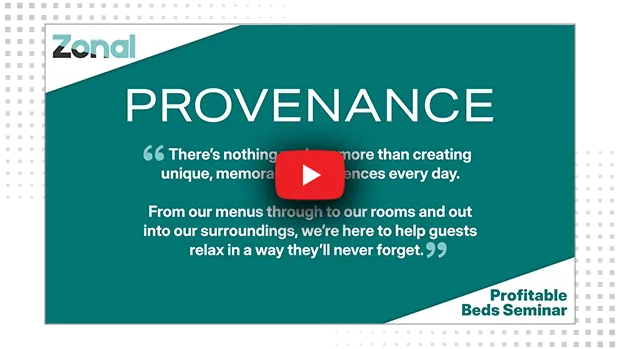
With Zonal PMS teams are freed up to focus spending more time with customers on creating great hospitality experiences for guests, where staff can be out on the floor engaging with customers, instead of spending time on admin. It’s not so much about eliminating tasks, but instead about freeing up staff to do what they really care about – creating great experiences.
Zonal PMS enables pub operators to efficiently manage bedroom booking rates, especially across multiple sites. What could take up to 12–15 hours per week can now be handled in just a couple of hours with Zonal PMS —freeing up valuable time.
Utilising one platform to manage your accommodation across your whole estate means that staff training is centralised across all sites, and service is consistent because staff are using identical technology across locations, processes such as booking, check-in, check-out, and billing are streamlined—ensuring accuracy and delivering a seamless guest experience.
We understand how frustrating it can be for guests to navigate a disjointed booking process—reserving a room, only to have to return to the website and click through again if they want to book a table as well. With the right technology in place, such as a table booking system that integrates natively with your PMS, guests can reserve a table in the pub’s restaurant at the same time they book their room. What’s more you can offer guests the opportunity to purchase optional extras whilst booking their stay and include optional extras such as Champagne, Flowers, Early Check-Ins and Late Check-outs. This not only streamlines the experience but also creates valuable upselling opportunities for food and drink, reduces admin for your team, and enhances the overall guest journey.
Zonal’s loyalty platform can also play a role here in helping venues encourage and reward repeat visits, where points can be collected and offers can be distributed through the platform. For example, hotel guests who stay regularly may earn points for each visit, and as it builds up, they’ll eventually have enough for a for a free stay.
In addition to rewarding loyal guests and driving repeat visits, an integration with Zonal’s loyalty platform can also help you boost guest spend during their visit and boost engagement with both the accommodation and F&B sides of your business. Loyalty rewards accrued from a guest booking a stay with you can be redeemed in your restaurant or bar, and vice versa, with any loyalty balance built from guests eating and drinking in your pub able to be used to pay towards their room during a stay.
Guides
The Loyalty Landscape
Research
GO Technology: The social value of hospitality
Webinars & podcasts
People Make The Experience: How Your Staff Drive Customer Loyalty
Webinars & podcasts
It Should Feel Like Magic, Not Marketing: Personalisation, Loyalty & Data in Hospitality
Webinars & podcasts
Loyalty That Lasts: Growing with Guests, Not Just Points
Webinars & podcasts
What Diners Want: The New Rules of Loyalty in Hospitality