-

Guides
The Loyalty Landscape
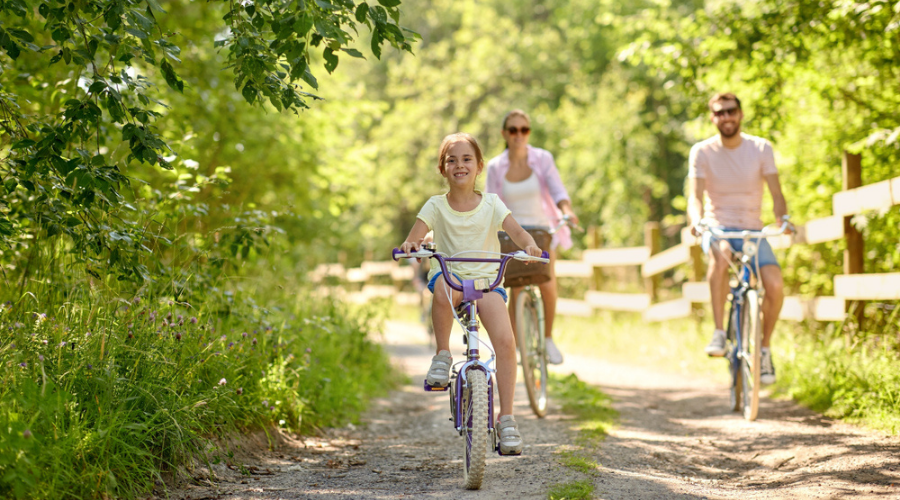
The figures above come from our recent research, where we took an in-depth look at the holiday park sector. We surveyed thousands of holiday park guests and residents to find out what they want from their holiday park experiences and to identify the challenges and opportunities facing operators in the sector. And as part of this, we looked at the role of loyalty schemes.
As in all other sectors of the hospitality industry, technology is helping holiday park operators deliver better customer experiences, drive sales and grow their businesses. Following a behavioral shift towards technology adoption – amplified by the pandemic – consumers now not only accept technology as part of the hospitality experience but agree that it improves their experience. In fact, our research showed that 64% of holiday park guests strongly agree, or agree, the availability of tech improves the quality of their stay.
However, such tech isn’t always available. Less than half of those surveyed said they’d had tech-based services available to them during their last visit to a holiday park and less than 20% of those had made use of those services. Moreover, even where it is on offer, it isn’t always hitting the mark. Over two-fifths of visitors gave low scores to tech services in holiday parks when asked as part of the survey. Nearly a quarter (23%) gave low scores when rating order at table systems in on-site restaurants, cafés and bars, and this rose to a quarter exactly (25%) giving a low score when rating the tech available to book activities.
Such figures strongly suggest that the sector is beginning to lag behind guests’ expectations. But all is not lost; investment in integrating systems and by ensuring you’re using all the capabilities of your existing systems, could be transformative. Even something as simple as utilising the customer data you already collect as part of the booking process will make a big difference, enabling you to remove particular pain points, personalise guest journeys and create more relevant experiences and offers. And the key to improving the guest experience in your park, could well be a loyalty scheme.
Loyalty schemes have proved themselves popular with consumers and proven their worth to retailers and hospitality operators, alike. With the right technology in place operators can effectively collect data and use that information to target guests with specific promotions and bespoke offers, thus boosting spend and encouraging repeat visits.
The power of loyalty schemes has not been lost on holiday park residents, with 51% of them already signed up to a holiday park loyalty scheme. When it comes to holiday makers, however, the number falls to a mere 16%. It is particularly thought-provoking to contrast this with the similar number of residents and non-residents who expressed interest in signing up for a scheme – 49% and 46% respectively, so the desire is there.
In conclusion, there is an opportunity for operators to leverage holiday park guests’ loyalty to the brands they love. Coupling this with more seamless, integrated technology and digital loyalty initiatives could really help make significant improvements to guest satisfaction and, therefore, the bottom line.
Zonal’s connected suite of hospitality solutions can help holiday park operators to optimise the guest experience and maximise revenues, while minimising costs and admin. These solutions include EPoS, table reservation systems, mobile Order & Pay at table, click and collect and more.
Visit our dedicated sector page to discover more.

With Christmas just weeks away and the festive season already in full swing, restaurants, pubs and bars are getting ready for the most critical trading period of the year. But what should operators be doing to prepare for the Christmas period as we enter the month of December?
To help you with your Christmas plans, Zonal, together with our good friends at Bums on Seats, and Wireless Social have put together twelve top tips to help your festive season go with a bang.
Download the 12 tips for Christmas guide to find out more about:
And much more…..

To help with this, Airship have put together a guest blog detailing their thoughts on the upcoming iOS 15 release, along with tips on adapting marketing strategies to ensure your customer communications remain effective despite some drastic changes.
By Dan Brookman, CEO, Airship
It’s all to do with the new iOS 15 rollout that’s expected between September and November this year. We’ve been doing some research as well as testing the beta release, and the following article lays out our findings, the changes they bring for marketeers, challenges for email marketing, new metrics and our recommendations.
It’s a big change though, and specifically for email marketers one that will require a rethink of how measurement is made of success. Open Rates have long been questionable as a metric; when Airship started out it was more relatable as a Read Rate as you were much more certain, with less volume, that the email had indeed been read.
A big thing to remember is that Apple generally leads with these big changes and, without doubt, other platforms will follow. The fear of losing market share to Apple and consumer demand will see to it; although the speed of sweeping changes across all platforms might still take a couple of years to come to fruition.
“Most importantly, this isn’t the end for email, it’s just the beginning of a new way to report on success.”
We’ve downloaded the BETA of iOS 15 and done some testing and can announce that the changes that Apple have made mean that Open Rates will pretty much no longer mean anything. The change is simple… Apple automatically downloads every image in an email without the recipient having to do anything. They aren’t blocking or removing anything, they are simply invalidating the metric by registering every image including the transparent gif that does the tracking.
Another feature of the update (less understood at present) is the ability for the user to ‘Hide My Email’. This, in effect, enables the user to have a ‘burner’ email account. They get to sign-up for offers and receive an offer but then in effect the email address is burnt and then will hard bounce.
This particular change is very much aimed at marketers that rely on second and third-party data.
Well, open rates will go up. It’s not only @mac @icloud addresses but also any email that’s read through Apple Mail. Users will need to accept the change but it’s already established that a high proportion will, following similar updates which saw a 96% take-up.
We don’t think so. There’s needed to be a shift to more meaningful metrics and truthfully that’s long overdue. Back to the original point; an ‘Open’ does not reflect a brand engagement; that really can only be reported as a click OR more obviously as a purchase or visit.
There’s a ton of new digital touch points now for hospitality businesses. It’s just a case of harnessing that data to bring it together to represent something meaningful and actionable.
Here’s some reading material for you to understand the release.


The possibilities of segmentation are endless, with most third-party software solutions now hooked into company CRMs via API, there is a wealth of knowledge about guests and their behaviour. How often they go out, what time of day, and even what they order.
Here are the best uses of segmentation to entice guests back to your business again and again:
1. Visit frequency triggered emails
Often simple is best, there’s no need to immediately jump into complicated logic-flow automation. Visit frequency is a piece of data that is available for most guests through a number of tech systems, such as Wi-Fi logins, loyalty card usage, pre-booking information, or an Order & Pay app.
Let guests know you appreciate their loyalty and drop them a note on their 5th visit, and if you include a voucher to treat them to a free dessert or drink on their next visit, this is likely to shorten the length of time between visits.
2. Birthday wishes
This is a super simple way to surprise and delight your guests. Also, a ‘it’s your birthday soon…’ email 1 or 2 weeks before the actual date is a great way to put your venue foremost in their mind when booking a place to celebrate with their family and friends.
3. Time and day of visit
Knowing what time guests usually visit your venue is very valuable, as it gives you the opportunity to promote other offerings and convert them to not only guests who visit for breakfast once a month, but guests who now also visit for dinner and drinks every other week with 3 friends.
4. Interests
There are multiple ways of getting to know your customers and their interests, for example, via Facebook data when logging into the venue Wi-Fi, or through booking data to see what events and themed nights they may have previously attended.
Facebook like data is particularly valuable, as it can be used to target Facebook ads to specific guests who ‘like’, for example, Katy Perry’s page. When Katy’s live tour stops in the nearby town or city, why not run a social campaign targeting all her fans who have previously visited your venue, offering a free Katy-cocktail to all guests who show their ticket before the show.
Maximise your data collection and better understand your guests with Wireless Social Wi-Fi. Automatically push all these data points into your CRM and social accounts to target guests with relevant, timely and personalised messages with connectors.
Simply put – data.
Data gathered from your in-house tech systems such as EPoS, bookings, loyalty, feedback and more holds the key to email marketing success. By combining and analysing this data, you can build highly personalised email marketing messages that gain cut-through and enable you to develop engaging one-to-one relationships with each customer.
With the right systems in place, you can take this even further to create automated communications and promotions in direct response to your customers’ behaviour – saving significant amounts of time and effort on your part. By getting the right message in front of the right customer at the right time, you can boost engagement and drive increased visits and greater spend at your venue.
But which emails work best to attract customers and convert them to bookings? Our team of marketing technology experts have highlighted some successful examples below:
Data you’ll need: First name, email address
Welcome emails are simply emails that are sent automatically to people after joining your email marketing list. They can set the tone for the customer relationship and encourage repeat visit. Bring in your personality, and create an engaging, personalised welcome email for new subscribers. Automate these emails so they go out in a timely manner so engagement is kept high and customers don’t lose interest.
Data you’ll need: First name, email address, booking history, spend history
If you can identify customers who always order wine, sending them promotional vouchers for your new beer tasting menu isn’t going to cut the mustard. Using previous spend history and personal preferences to dictate the content and nature of your email, you can make it completely relevant to each and every one of your customers. It’s a great way to increase engagement and encourage repeat visits.
Data you’ll need: First name, email address, date of birth, spend history
Everybody loves a celebration. Why not send your customers a birthday treat on their special day, such as a free glass of bubbly with their meal. If you’re able to access their spend history, you could even choose something you know they’ve ordered several times before. This will make your customer feel special, and they are likely to view your venue positively and increase the probability of them visiting again. Given all those birthdays missed during lockdown, why not send them a ‘belated birthday email’ so they can still use the offer despite the later date.
Data you’ll need: First name, email address, booking history – frequency, last booked date, spend history
If some of your regular customers haven’t opened an email from you or visited for a while, maybe it’s time to send a re-engagement campaign. Ask them if they still want to be included in your emails and if they’d still like to be kept up to date. This will not only clean your database but subtly remind them of the great experience they had at your venue. Send them a voucher or incentive to come back. This could be based on a dish or menu item that they have ordered previously.
Data you’ll need: First name, email address, postcode
Events can be a great way to get people through the door. Using data preferences, be sure to target your emails by geographical location – for example, you may not want to invite people to an event in Edinburgh when they are based in London. Promoting events is a great way to show your customers you are part of a community and helps to drive bookings, especially for those special days.
Data you’ll need: First name. email address, postcode
During holiday season email marketing is the perfect way to connect with your customers. Significant holidays tend to be lucrative for hospitality and email provides a great opportunity to reconnect to your audience and prompt people to make a reservation. Use email to promote holidays such as Valentine’s Day, Veganuary or even National Beer Day and provide offers to encourage customer visit.
A customer journey begins long before they have reached your door. Discover more ideas on how to attract customers and convert interest to bookings >
KAM Media conducted an in-depth research study with 1,004 UK adults – a nationally representative sample of British pub, bar and restaurant-goers. The full report is available here.
Below are 7 valuable takeaways for operators:
This rises to 1 in 2 for younger people and demonstrates the increasingly digital nature of the typical hospitality customer journey. The research showed that most people start their journey online, doing either a “general internet search” (38%) or using Google’s “near me” search tool (25%).
At the same time, a third said difficulty making a reservation was one of the key reasons they might decide to stay at home, so investing in a seamless booking system that offers real-time availability can really give an operator the edge.
New venues or familiar venues that are offering something new will be drawing in customers this summer and beyond. This is partly driven by the desire for new and exciting things to do after months of lockdown – but also to support local venues and to ensure that every visit counts.
Could it be that Covid has killed off the peculiarly British practice of ordering at the bar? Probably not, but this insight does indicate that a large proportion of customers now see the benefits of ordering and paying at table. Operators will need to look at offering both where possible.
Over 40% of consumers said so, which goes to show how technology originally adopted as a solution to a pandemic problem, will endure in the future. Unsurprisingly this rises to 65% of Millennials, although nearly half of people reported being frustrated when “forced” to pay via a mobile app, so it makes sense to offer a range of payment options to cater for differing preferences.
The power of loyalty schemes is generally underestimated by the hospitality sector but they have a number of benefits for operators. The report found that they drive footfall – for 1 in 7 customers, a loyalty scheme has a significant influence on which venue they choose; they encourage reviews – 31% of respondents say they would leave feedback if rewarded with loyalty points, and people are happy to share personal information in exchange for loyalty rewards as well – 79% would do so if they received tailored rewards as a result.
Nearly half (47%) of consumers said they looked at online reviews before booking. Smartphones are key to an explosion in online reviews, with 1 in 3 customers saying they are more likely to leave a review if they can do it via their smartphone, rising as high as 44% for those in the 25-34-year-old bracket.
To download the full research report and find out more about the essential role of technology in customer journey, visit our dedicated resources page: Connecting the Customer Journey
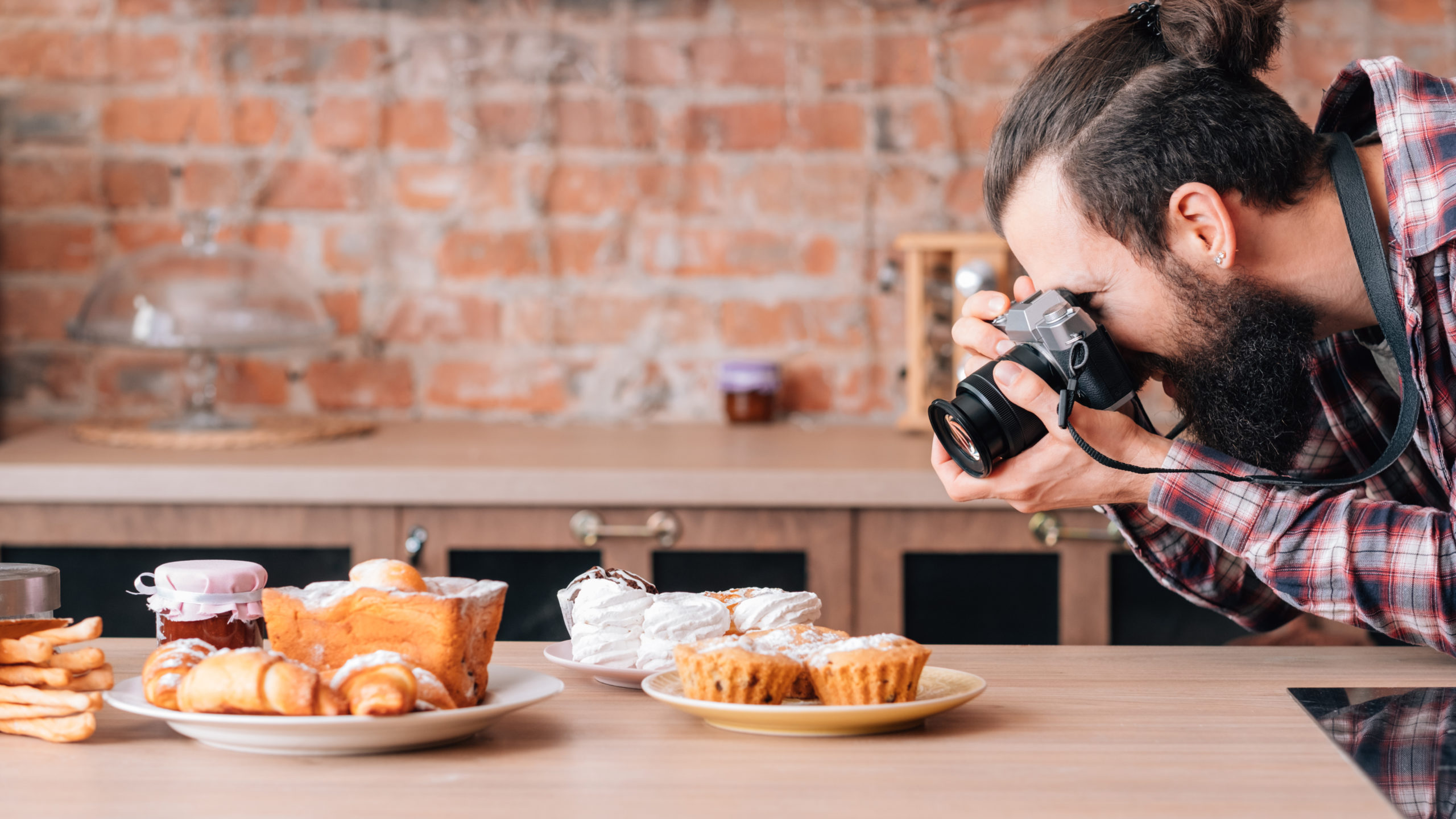
First impressions count. Humans are visual creatures, and when it comes to websites, images capture our attention and help us to visualise an experience. With 31% of consumers now looking at photos of food and 27% looking at pictures of the venue when searching for a potential hospitality venue according to recent KAM Media/Zonal research, the visual aspect of your website is more important now than ever before. A great emotion trigger: your website imagery is one thing you can control, and you can customise it completely to your taste and to fit your goals.
But how can you effectively use images on your website? And what is the best way to optimise your online menu? Zonal’s Digital Marketing Manager Joe Campbell shares his top suggestions:
If you can afford it, hiring a photographer is a great investment. Not only will you end up with professional well-composed images, but an expert will also have the knowledge on how to capture your venue and food in the best way possible. Before you start taking photographs, make sure your images are in line with the marketing goals for the business. Choose to take images of your best dishes and place them on your website with a goal in mind. You won’t be disappointed with the results.
When saving a photo file do you give it a specific name? Search engines tend to read photo files, names, titles, and descriptions and not having one there can affect your overall ranking. Do not leave your metadata blank, label your images with short snappy names, and give them hospitality-related labels with relevant titles and descriptions. This will help with optimisation and provide context to the image.
The average person spends about 8 seconds on a given webpage (Strikingly.com). That’s 8 seconds for customers to connect with your business and build a relationship with your brand. Be genuine with your photos – customers can tell the difference between stock images, and real images of your venue. Where possible, use photos of you and your staff and choose images that will accurately reflect what the customer will see when they arrive.
The top thing consumers search for when researching a potential pub, restaurant or bar is ‘What’s on the food menu’ (54%). Getting the menu and prices right can help draw your visitors in and convert them to a potential customer.
When adding a menu online, using the right images and selecting words that match your dish can help trigger senses, giving customers an idea of what each dish tastes like. Entice your customers in with powerful visuals, and accurate menu descriptions that highlight the best features of your business – your food.
Prices are important too. With 44% of consumers looking for prices when researching a potential hospitality venue, make sure you include your pricing information clearly on the menu. Your customers are going to be more conscious of how much they’re spending, and this is a major factor in their dining decisions. Despite this, 38% are more likely to try new venues when they are fully reopened, so make it easy for them by noting your prices on your online menus.
With more than four-fifths of time spent online via mobile, it is essential your website is mobile responsive. A mobile-responsive website will allow your visitors to view your website, menu and images with ease. Customers won’t stay on your website if it’s not optimised for mobile devices, and you may lose out on potential bookings. Provide a clear call to action, such as a booking link, and keep branding consistent.
Discover how Zonal’s integrated technology solutions can help you understand and enhance your customer journey and discover new ways to drive revenue.
A ‘map’ of all the steps a customer takes from the start to the finish of their experience with your pub, bar or restaurant.
The aim of a customer journey map is to give you a better understanding of how your customers experience your hospitality business, from the moment they start searching for somewhere to go out to eat or drink, to the moment they pay the bill and leave.
Having a better understanding of every step in their journey enables you to identify areas for improvement so you can enhance your customer experience, ensuring consistency and a seamless experience at all touchpoints and across all channels.
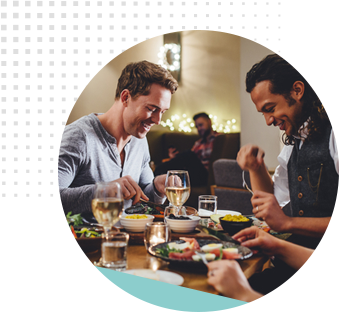
Mapping out your customer journey is important regardless of whether you’re a multi-brand, multi-site operator or an independent pub or restaurant, and what’s more, it’s doesn’t cost anything – just time and teamwork.
So, grab a pen and paper and have a look at our 5-step checklist below:
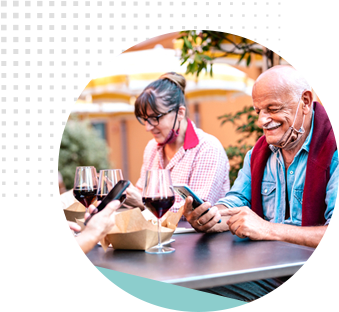
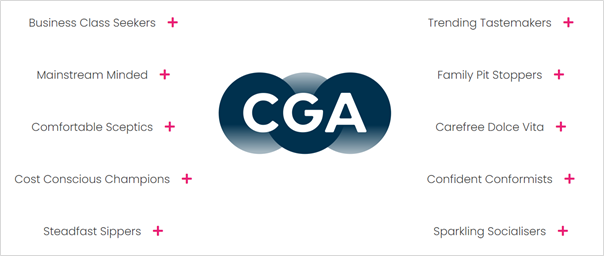
Once you’ve created a persona document for each of your customer types, you can use them to create a unique customer journey by persona; list out each stage and every single touchpoint of their customer experience with your brand – from start to finish.
This could include searching online for your business, the experience on your website, booking a table, arrival, ordering food, paying the bill, not forgetting any third-party experiences of your brand via services such as Deliveroo or TripAdvisor. Everything you can possibly think of!

For each stage of the journey and for every touchpoint, try to identify:
Once you’ve understood your persona’s goals and written down their touchpoints, walk through each of the journey maps for your customer groups with your team to help identify any points of friction within the customer experience. Does your menu load slowly on your website? Are customers forced to queue to get a table because you don’t take bookings? Are customers left waiting to pay the bill because your team are busy serving other tables? And so on…
Use your identified points of friction to create an action list of improvements. What simple changes can be made to fix the pain points? What communications can be put in place to answer common questions? What technology can be used to solve process challenges and make service efficiencies? Identify and prioritise your solutions and remember to allocate an owner for each.
The customer journey mapping exercise doesn’t end there. It’s a long-term commitment to improving your customer experience. Treat your map as a living document to be revisited regularly and updated as required; customers’ wants and needs change, circumstances change (Covid has been a sharp reminder of this!). Finally, remember to share it with any relevant internal stakeholders – ensuring the whole team is onboard and behind the initiative will ensure its success.
Get in touch with Zonal today to discover how our connected technology solutions are helping hospitality businesses of all shapes and sizes to understand and enhance their customer journeys, make significant service improvements and exploit new revenue streams.
 RESEARCH
This insight report follows the customer journey - from initial decision and venue choice through to ordering, paying and finally leaving a review.
Read More RESEARCH
The latest GO Technology report reveals that having accepted the need for technology during the pandemic, two fifths of consumers say tech improves their hospitality experiences.
Read More
Amidst a challenging trading environment for pubs, many operators will be looking to use every tool at their disposal to help them better navigate rising costs, protect their margins, drive revenue and enable their team to achieve more.
Powerful pub tech, which has previously only been seen as viable for the big brands is now more accessible than ever, and the value it can add for smaller businesses – from independent village pubs to groups with aspirations for growth – has never been more apparent. In this guide, we explore the different solutions available to pub operators, and how this technology can help pubs meet their objectives.


Guides
The Loyalty Landscape


Research
GO Technology: The social value of hospitality

Webinars & podcasts
People Make The Experience: How Your Staff Drive Customer Loyalty

Webinars & podcasts
It Should Feel Like Magic, Not Marketing: Personalisation, Loyalty & Data in Hospitality

Webinars & podcasts
Loyalty That Lasts: Growing with Guests, Not Just Points

Webinars & podcasts
What Diners Want: The New Rules of Loyalty in Hospitality


Blog
How hospitality businesses can create ‘Superfans’
Blog
How loyalty can help tackle no shows

However, findings published in our latest GO Technology report, in partnership with CGA, tell a different story. With consumers eager to support their favourite businesses and get back into venues in 2021, this year could in fact be a prime opportunity to launch a new loyalty programme. With the pandemic having changed consumer behaviours though, a successful loyalty scheme will need to look a little different from anything offered pre-pandemic. Here’s four ways to make a success of a loyalty scheme in 2021.
A mere 35% of hospitality operators surveyed said that their current loyalty scheme was card-based, with over half (52%) adopting loyalty schemes powered by apps. This is borne out by our own experience in recent times – over the last 18 months we’ve not had a single enquiry from operators wanting to implement a card-based system, indeed all of the loyalty schemes we have delivered in that time have been digital.
This shift to digital loyalty solutions is very likely to continue in our opinion, a result of increased consumer uptake and comfort with order and pay apps and online ordering during the pandemic. Not only does this offer customer convenience but could drive sign ups and repeat orders. By having applications integrated into one platform the operational burden of linking the solutions and data together is removed as the technology is doing the hard work for you.
For the majority of people, discounts on food and drink are the main driver for using a loyalty app, with 48% looking for a percentage off their bill, 45% wanting a cash benefit, while 37% would like free food and drink after reaching a set spend. Non-monetary perks are relevant too (14% like a loyalty scheme to give them preferential booking and 11% want to be given queue jumping privileges) but with the economic outlook looking far from positive, unemployment on the rise, and job security a concern for many, it seems clear that in the future more sophisticated programmes will take a back seat to discount-driven rewards – at least in the short to medium term.
Once consumers start to use a loyalty scheme, they tend to make good use of it – about half say they do so almost or every time they visit a venue, so it makes sense to ensure your scheme is integrated with other digital products. Investing in a loyalty solution that integrates with your EPoS and booking functions for example, will reap many benefits, not least that members will be visible to staff at every point of the customer journey.
Further integration with your existing channels, such as with an order and pay app, offers further benefits. Giving delivery customers access to loyalty benefits as trading restrictions continue, for example, and then, when we can finally open our doors again, making it simple and easy for those downloading an order and pay app to join your loyalty scheme as part of the sign up process.
A major advantage of the shift to digital for operators is the valuable insights that can be gained from harvesting the available data. Visiting patterns, purchasing habits and general consumer behaviour can be collected and collated. This can be used to inform and deliver tailored deals and rewards to each customer, driving engagement and sales directly from the loyalty scheme, with the data then used to deliver more engaging and more targeted marketing campaigns. Using the insights alongside other customer data can also result in more informed longer-term strategy and planning to help future-proof your business.
Alison Vasey is Group Product Director at Zonal
Our latest GO Technology report in conjunction with CGA, reveals the popularity of loyalty schemes in restaurants, pubs and bars among both consumers and business leaders.