
-

Guides
The Loyalty Landscape
Guest blog by Net Zero Now
The climate crisis is no longer a distant threat but is already having a very real impact on the hospitality industry. That impact is both direct, resulting in increased costs as supply chains are put under increasing pressure and the cost of energy increases, and indirect, driving new attitudes and expectations of customers, employees, and investors.
But with these challenges come opportunities – to improve your bottom line, to establish yourself as a leader in an increasingly eco-conscious market and to increase the value of your business.
The hospitality industry is uniquely vulnerable to the effects of climate change. Rising temperatures, extreme weather events, and shifts in global ecosystems directly affect the supply chains that businesses rely on, resulting in higher costs and lower / less reliable availability.. Energy prices are also likely to soar as demand for cooling increases and fossil fuel resources become scarcer.
Indirectly, the climate crisis is changing the attitudes of the people who make your business thrive – your customers, your employees and your investors.
Businesses also face increased regulatory pressure. In the UK, larger businesses (£36m+ t’over) are already required to report Scope 1 and 2 emissions under the Streamlined Energy and Carbon Reporting (SECR) regulations. These requirements are expected to expand in the near future, reducing the threshold to include more businesses and increasing the reporting requirements to include Scope 3 emissions (the emissions from your supply chain, including all the food and drink you buy throughout the year). This is particularly relevant to the hospitality sector which contributes up to 15% of the country’s greenhouse gas emissions (Net Zero Now, 2024, and where Scope 3 emissions account for c.70-95% of emissions, the vast majority of which comes from the food served (see Figure 1).
Figure 1: Emissions Sources from different types of hospitality business
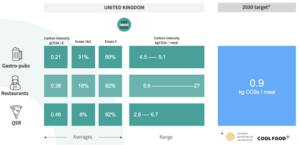
Source: Net Zero Now Customer analysis; Cool Food 2022
As Figure 1 also shows, as an industry, we have a long way to go to meet the 2030 targets for carbon emissions per meal. Getting anywhere near these targets will take more than removing plastic straws and adding a few LED lightbulbs, hospitality businesses need to understand their full carbon footprint, including Scope 3 emissions, and find ways to minimise their climate impact.
I know what you’re thinking – “it’s too expensive”, “it’s too complicated”, “we’re too busy” – and until recently, you might have been right. But…
and , as if all of the above wasn’t enough
Ready to turn the climate challenge into a business opportunity? Discover how Net Zero Now’s integration with Zonal can help you accurately measure, manage, and reduce your carbon footprint. Start your journey towards sustainability today—contact the Zonal team and see how we can support your business in leading the way to a net zero future.
Sources:
A landmark debate in September at the House of Commons is set to change the face of venue safety laws in the UK.
The Terrorism Protection of Premises Bill or ‘Martyn’s Law’ was discussed by MPs in September; an anti-terrorism bill in memory of 29-year-old Martyn Hett, who was killed alongside 21 others in the 2017 Manchester Arena bombing. The law is currently under review by the Public Bill Committee and is set to come into action over the coming weeks.
The main aim of the Bill is to protect the public from the impact of terrorist attacks and to prevent physical harm. It comes after the terror threat for venues in the UK has been described as ‘substantial’ by officials, who have revealed that 43 terrorist plots have been foiled since 2017.
Mainly aimed at concert halls, stadiums and other crowded venues, Martyn’s Law outlines new specific safety measures for most public venues based on different capacities, meaning hotels and other hospitality venues will be affected when the law becomes official.
The Law calls for mandatory safety training and ‘practicable public protection procedures’ in venues with a capacity of 200 – 799 (known as standard tier and raised from 100 in September to create a more appropriate scope of duty).
Whereas in larger venues with a capacity of over 800 (enhanced tier), more rigorous measures are required such as additional security staff and minimum CCTV requirements.
Martyn’s Law will have large implications on the hospitality industry, however, many hospitality providers are clearly seeing the benefit to public safety, with 100 venues publicly backing the bill, including McDonalds.
Since we last talked about Martyn’s Law in February of this year, there have been some adjustments to the proposed requirements. Here we discuss the biggest changes for hotels and other hospitality providers to help you prepare for the new legislation.
There is a focus on practical and effective safety training to prepare for a terrorist event, including practice runs by team members.
Since the bill was first proposed, the requirements for training have become more prescriptive and involve safety procedures for the following:
This more active approach aims to raise and maintain awareness of anti-terror measures amongst hotel staff so they can be implemented effectively in the event of a terror attack.
A ‘responsible person’ will implement these measures and ensure adequate training takes place and all safety measures should be clearly communicated with the regulator.
In summary, since the Government consultation on Martyn’s Law, there is now less emphasis on paperwork and a greater focus on ensuring that all your employees fully understand how to deliver the anti-terrorism measures to reduce physical harm.
The government hopes that these requirements will enable venues to tailor their measures to suit their operational needs.
If your hotel or venue falls into the Enhanced Tier category, regulators will need to be informed of any events where 800 or more individuals are attending your event.
The same safety training and actionable public safety procedures apply here as for Standard Tier venues; however, paperwork requirements are more rigorous and all safety measures in place must be adequately documented as proof of compliance. This will also include safety assessments of the efficiency of your hotel’s safety measures.
As with standard tier requirements, there must be a ‘responsible person’ in charge of implementing these measures. However, if your hotel or venue falls under the 800 capacity tier, a ‘senior’ responsible person must be nominated for each event where there are 800 or more individuals attending.
As well as the hotel itself, the surrounding area must be monitored for suspicious activity by using additional staff and/or extra CCTV.
There will be an expected grace period of around 24 months to enable venues to put these plans into place before the Security Industry Authority (SIA) begins regulatory action to enforce the law.
The SIA will have the power to issue compliance notices, limit operations and give out hefty fines to venues of up to 5% of worldwide revenue (AEO) for those who don’t comply. This figure could be in the millions for multi-site hotel chains or venues.
With this in mind, and the bill currently making its way through Parliament, now is the time to get your anti-terrorism measures in place to ensure the safety of your customers and guarantee your venue is compliant.
Guides
The Loyalty Landscape


Research
GO Technology: The social value of hospitality

Webinars & podcasts
People Make The Experience: How Your Staff Drive Customer Loyalty

Webinars & podcasts
It Should Feel Like Magic, Not Marketing: Personalisation, Loyalty & Data in Hospitality

Webinars & podcasts
Loyalty That Lasts: Growing with Guests, Not Just Points

Webinars & podcasts
What Diners Want: The New Rules of Loyalty in Hospitality


Blog
How hospitality businesses can create ‘Superfans’

Blog
How loyalty can help tackle no shows
Trade show season is nearly here, and we’re thrilled to be back at the Casual Dining Show and Hospitality Tech Expo again this year!
We’ll be joined by some of our amazing partners at Airship, Toggle, Feed It Back and TiPJAR, so make sure to stop by the stand to see what’s new and learn more about how integrated tech can truly enhance your guest experience and operations.
We’re excited to be showcasing our new Kiosks Integration, available through chosen partners, as well as our new delivery service provider management platform, Zonal Delivery.
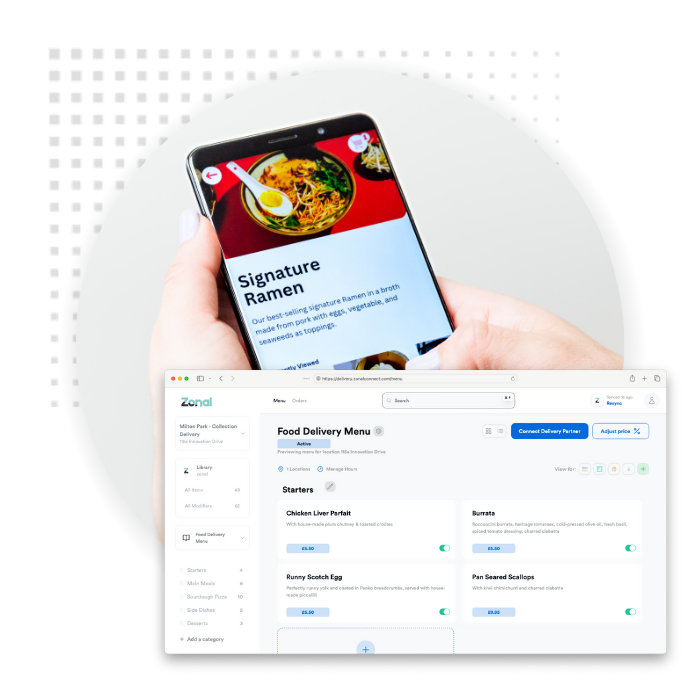
Whether you’re looking to simplify your delivery order process via one centralised platform, improve order accuracy or discover insights with in-depth reports, Zonal Delivery is a user-friendly solution that will instantly improve your revenue stream.
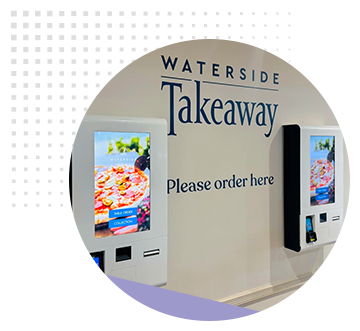
Whether you’re looking to help your teams achieve more or provide a convenient experience for customers, fully integrated self-service kiosks are a flexible solution that will set your business apart.
“If there are any operators out there that think they might not be big enough to switch to Zonal, I would say don’t be put off by the big names. Our experience was that Zonal tailored a package that was built just for us, was really specific to us, and was designed around our needs and our drive for great hospitality.”
Matt Gladman, Head of Systems & Continuous Improvement, North Brewing Company
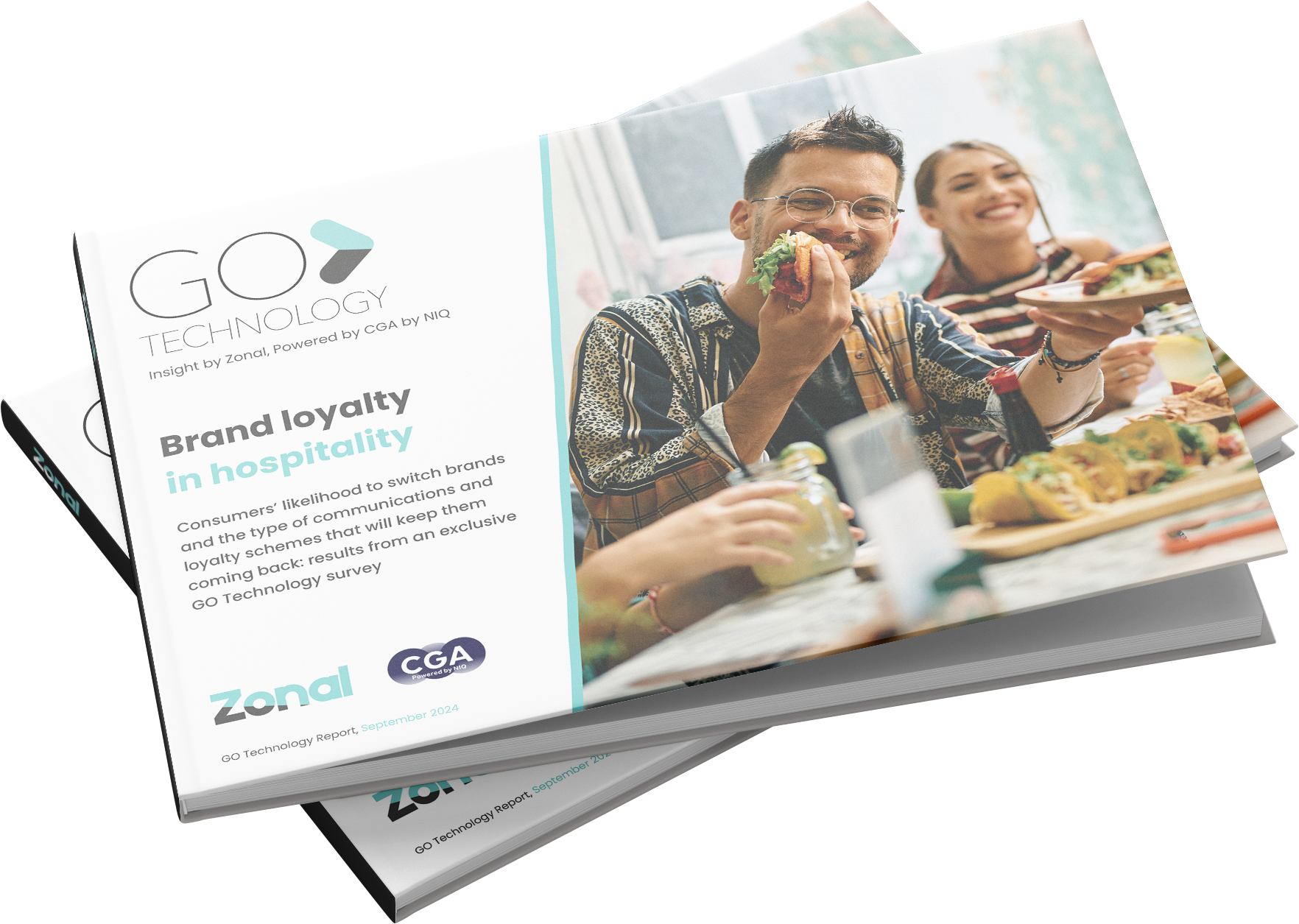
With consumer spend tightening and visit frequency reduced, a loyal customer base providing that all-important repeat business is the holy grail for operators looking to succeed in today’s difficult trading landscape.
Our previous research in partnership with CGA by NIQ revealed that consumers, on average, feel loyal to 2.1 hospitality brands – but how likely are their choices of preferred venues to change?
In this exclusive survey of 5,000 British hospitality consumers, we reveal how likely consumers would be to switch their preference to a different hospitality brand, how hospitality stacks up against other sectors, and the role loyalty schemes play in ensuring customers keep coming back to you for more.

Research
GO Technology: The social value of hospitality

Research
GO Technology: More Than a Meal

Research
GO Technology: Why 6:12pm is the new 8pm

Research
Pub Accommodation Review 2025

Research
GO Technology: Hotels and consumers – Guest expectations and how to meet them

Research
GO Technology: Consumers and hospitality: 2024 in review

Research
GO Technology: The truth behind no-shows

Research
GO Technology: Brand loyalty in hospitality
To celebrate 10 years of GO Technology insight, Zonal and CGA take a look back at how tech has shaped the industry over the past decade.
Back in 2014, when David Cameron was Prime Minister, the biggest tech launches of the year were Amazon’s Alexa and Google’s ill-fated glasses. The Apple Watch hadn’t been launched, Apple Pay didn’t exist, and Kim Kardashian married Kanye West.
It was also the year that Zonal entered into a long term partnership with CGA by NIQ, via the launch of the first ever GO Technology report. In the 10 years since, the reports have tracked the adoption of tech solutions in hospitality by consumers and businesses alike.
A decade on, here are the top ways that innovation has reshaped our sector.
Ten years ago, over half (58%) of consumers said they preferred to make table bookings by telephone. Fast forward nearly a decade, only a fifth (20%) of consumers cite this as their preferred booking method, with nearly half (45%) now wanting to book online. As for using AI tools to book – we didn’t know what that was back in 2014.
Consumer preferences when it comes to paying for food in bars or restaurants have also seen a significant shift. In 2014, GO Technology revealed that only 6% of consumers used digital payment methods for their orders. By 2024, this had increased to 43%, resulting from the rapid adoption of mobile devices for payment as a result of the pandemic.
Advances in mobile technology over the last ten years have opened up the potential to tailor services and offers to guests and in turn help drive loyalty. In 2018, GO Technology found that only half (51%) of consumers would be willing to exchange personal information to receive tailored offers, increasing to 64% a mere two years later.
Consumers’ growing desire for value has also led to an increased engagement with brands and loyalty schemes. Back in 2021, less than a quarter (23%) were signed up to more than one loyalty programme, but by 2024 nearly half (47%) of consumers have joined several loyalty schemes, primarily to make the most of deals and promotions available.
Our first ever report also revealed that 17% of young consumers, aged 25 to 34, were frustrated by having to wait to settle the bill at the end of a meal. This has increased to a whopping 75% of young consumers in 2024.
Similarly, people have become increasingly demanding that their food is served in a timely fashion. In 2014 nearly half of consumers (47%) cited waiting a long time for food as their number one frustration when going out for a meal, while this year’s report revealed an increase to nine in ten (91%) consumers who now say long waits and hot food served cold are their top bugbears.
All of which goes to show that investing in tech that can help deliver on these fundamentals is key to business success.
Commenting on the findings, Tim Chapman, Chief Commercial Officer, Zonal, said: “Hospitality has evolved significantly over the past ten years and tech has played a fundamental role in this journey, enabling operators to deliver the fast, seamless and hassle-free experience that consumers have come to demand and in turn, drive growth.
“Looking ahead to the next ten years, there will undoubtedly be more change to come, but one thing we can be certain about is that technology will continue to play its part. However, this doesn’t mean that hospitality will become all about robots and automated processes. The best hospitality experiences remain those that offer the right balance of technology and traditional face-to-face service and that’s never going to change.”
Click here to download the latest report in the series, ‘Fixing people’s hospitality bugbears’.
Guides
The Loyalty Landscape
Research
GO Technology: The social value of hospitality
Webinars & podcasts
People Make The Experience: How Your Staff Drive Customer Loyalty
Webinars & podcasts
It Should Feel Like Magic, Not Marketing: Personalisation, Loyalty & Data in Hospitality
Webinars & podcasts
Loyalty That Lasts: Growing with Guests, Not Just Points
Webinars & podcasts
What Diners Want: The New Rules of Loyalty in Hospitality
Blog
How hospitality businesses can create ‘Superfans’
Blog
How loyalty can help tackle no shows
We’re proud to announce our sponsorship of the Hospitality Junior Board, an initiative to encourage young people to choose hospitality as a career path.
Our SaaS hotel PMS was specifically designed and built for the hospitality industry and that is why we continue to invest in its development. As a result, we understand the need to invest in the future of the people who work in the sector.
By supporting this important initiative, we are encouraging future hospitality innovators to become aspiring leaders in the industry. Not only does it help with young people’s professional and personal development, but it also changes the perception of the industry as an ambitious career choice.
“We recognise both the unique challenges and the immense potential within the hospitality industry. Supporting this fantastic initiative goes beyond giving back – it’s about strategically investing in the future of our sector. By empowering young leaders and reshaping perceptions, we are paving the way for hospitality to continue thriving as a dynamic and rewarding career choice.”
Pete Saunders, Head of Relationships, Zonal Hotel Solutions
In recent years, the hospitality industry has needed to overcome many challenges, and employee retention is high on the list. With us sponsoring this transformational programme, we are joining forces with other industry supporters to alleviate the wider community perception that the hospitality industry lacks career progression or room for growth.
Creating a Junior Board of young leaders in hospitality who will undergo a mentorship and training programme as well as work on community projects, will help the industry to start recruiting and keep the best possible talent.
Through investing in the future workforce, we hope to encourage a new wave of talent in hospitality, not only as future leaders but to also shape the evolution of the industry.
Guides
The Loyalty Landscape
Research
GO Technology: The social value of hospitality
Webinars & podcasts
People Make The Experience: How Your Staff Drive Customer Loyalty
Webinars & podcasts
It Should Feel Like Magic, Not Marketing: Personalisation, Loyalty & Data in Hospitality
Webinars & podcasts
Loyalty That Lasts: Growing with Guests, Not Just Points
Webinars & podcasts
What Diners Want: The New Rules of Loyalty in Hospitality
Blog
How hospitality businesses can create ‘Superfans’
Blog
How loyalty can help tackle no shows
Zonal has partnered with Workforce, a brand new, free-to-use membership platform, promoting the incredible career opportunities available in pubs and providing practical support and inspiration for everyone working in the sector.
It has never been more important to nurture and develop the home-grown talent that exists within the pub sector. From professional development, apprenticeships, and training information, to blogs and podcasts sharing the stories of those at the beginning of their careers through to industry leaders, Workforce will promote the welcoming and diverse nature of pubs and help attract and retain the home-grown talent needed to help keep pubs thriving in every community in the UK.
Steven Alton, BII CEO commented:
“Workforce will be instrumental in creating a free to use community for team members from across the sector, enabling their growth and development in our fantastic industry.
“I am incredibly proud that we are able to launch this free-to-use platform, promoting the incredible career opportunities that exist for people from all walks of life in the pub sector, and supporting BII members as they recruit and nurture the next generation of amazing talent.”
The BII are inviting anyone working in the pub sector to join Workforce by signing up at biiworkforce.org today to get access to career guidance, podcasts and blogs featuring fantastic stories from across the industry, wellbeing advice and support, and discounted pub experiences with Perks. Future developments for members will include webinars with award-winning mentors, free training opportunities, competitions and more.
Guides
The Loyalty Landscape
Research
GO Technology: The social value of hospitality
Webinars & podcasts
People Make The Experience: How Your Staff Drive Customer Loyalty
Webinars & podcasts
It Should Feel Like Magic, Not Marketing: Personalisation, Loyalty & Data in Hospitality
Webinars & podcasts
Loyalty That Lasts: Growing with Guests, Not Just Points
Webinars & podcasts
What Diners Want: The New Rules of Loyalty in Hospitality
Blog
How hospitality businesses can create ‘Superfans’
Blog
How loyalty can help tackle no shows
Christmas bookings for 2024 are up by 54% compared to the number of reservations that had been made by this time last year.
Has the soggy summer weather convinced Brits to start planning Christmas early? Latest insight from Zonal reveals that bookings for Christmas 2024 are up by 54%, compared to this point in 2023.
Over half of the bookings (52%) that have already been made for this coming December are for Christmas Day itself, compared to 44% this time last year. Saturday 14th December 2024 is currently the most popular day for bookings in the festive period, followed by Saturday 7th December.
When it comes to group bookings (covers of 10 people or more), reservations are up 38% in comparison to this time in 2023 and group bookings currently account for 26% of the total bookings for this December. All of which points to a potential cracker of a Christmas for the hospitality industry this year.
Commenting on the findings, Tim Chapman, Chief Commercial Officer, Zonal, said: “Our insights show that Christmas 2024 is already looking positive for hospitality – with bookings up on this time last year. With group bookings looking to be particularly popular, there is even more reason for operators to celebrate, but to also get prepared. Operators will therefore benefit from having a booking system in place which is able to facilitate large party bookings, enquiries, and pre-order functionalities. This will reduce any admin headaches while giving operators full visibility and control at the busiest time of year.”
Guides
The Loyalty Landscape
Research
GO Technology: The social value of hospitality
Webinars & podcasts
People Make The Experience: How Your Staff Drive Customer Loyalty
Webinars & podcasts
It Should Feel Like Magic, Not Marketing: Personalisation, Loyalty & Data in Hospitality
Webinars & podcasts
Loyalty That Lasts: Growing with Guests, Not Just Points
Webinars & podcasts
What Diners Want: The New Rules of Loyalty in Hospitality
Blog
How hospitality businesses can create ‘Superfans’
Blog
How loyalty can help tackle no shows
Zonal is thrilled to announce a strategic partnership with Net Zero Now, a leader in carbon accounting solutions. This integration aims to streamline carbon accounting, reduce wastage, and enhance operational efficiency for restaurants, pubs, and bars.
Empowering the hospitality industry in climate action
Net Zero Now has been at the forefront of helping hospitality businesses manage their carbon footprints, with over 3,000 sites currently using its platform to achieve sustainability goals. Developed in collaboration with Coca-Cola Euro Pacific Partners, the Net Zero Hospitality protocol, endorsed by The Sustainable Restaurant Association and Pernod-Ricard, uniquely provides comprehensive guidance for sustainability across the sector. The partnership with Zonal, which serves over 17,000 hospitality businesses, represents a transformative step in enhancing operational efficiency and environmental responsibility within the industry.
Key benefits of the integration:
Transformative impact
Zonal’s technology offers end-to-end, real-time visibility over stock management, automates procurement, and reduces wastage. Integrated with Net Zero Now, it enables precise carbon accounting, helping businesses minimise their environmental impact. This collaboration streamlines operations and empowers hospitality businesses to achieve their sustainability targets seamlessly.
“We are thrilled to partner with Zonal,” said Neil Ross Russell, Managing Director of Net Zero Now. “This integration not only streamlines carbon accounting but also empowers hospitality businesses to achieve their sustainability targets seamlessly.”
Tim Chapman, Zonal’s Chief Commercial Officer, added “We value working with partners like Net Zero Now who share our commitment to empowering businesses, allowing our customers to become more cost-effective and resilient in the face of a changing climate. Their solutions will be instrumental in helping our customers not only achieve their environmental goals, but to also make informed decisions that reduce waste, streamline operations, and ultimately create a more sustainable hospitality industry for the future.”
For more information on how this integration can benefit your business, visit Net Zero Now’s website. Schedule a demo today and take the first step towards a more sustainable future.
Guides
The Loyalty Landscape
Research
GO Technology: The social value of hospitality
Webinars & podcasts
People Make The Experience: How Your Staff Drive Customer Loyalty
Webinars & podcasts
It Should Feel Like Magic, Not Marketing: Personalisation, Loyalty & Data in Hospitality
Webinars & podcasts
Loyalty That Lasts: Growing with Guests, Not Just Points
Webinars & podcasts
What Diners Want: The New Rules of Loyalty in Hospitality
Blog
How hospitality businesses can create ‘Superfans’
Blog
How loyalty can help tackle no shows
Latest insight from leading hospitality technology partner Zonal, reveals Father’s Day bookings are up 44% compared to last year, as Brits gear up to celebrate their dads over a Euros-packed weekend.
Dinner reservations for this Sunday are up a staggering 66% in comparison to last year, as dads and their families come together to cheer on the Three Lions. Lunchtime bookings are also popular, up 52% YoY, as guests look to take full advantage of enjoying the first restriction-free Euros tournament since the pandemic.
Commenting, Tim Chapman, Chief Commercial Officer, Zonal, said: “’The fact that operators are in for a bumper weekend of Father’s Day bookings is a step in the right direction for hospitality. Ahead of Sunday, it’s important for operators to utilise their booking systems to capitalise on the opportunities they provide, such as taking advantage of upselling opportunities with Father’s Day packages and promoting pre-orders for food and drinks to maximise revenue.
“It’s key to get this right – as the tournament goes on and our home nations potentially progress, operators can only expect the demand to grow, so it’s important to be prepared.
“Having the right tech in place can help venues streamline operations during busy periods whilst ensuring customers have seamless experiences – from ordering and paying directly from tables to being able to amend bookings digitally. This combination ensures a winning experience for both dads and football fans, not to mention more profits for operators.'”
Guides
The Loyalty Landscape
Research
GO Technology: The social value of hospitality
Webinars & podcasts
People Make The Experience: How Your Staff Drive Customer Loyalty
Webinars & podcasts
It Should Feel Like Magic, Not Marketing: Personalisation, Loyalty & Data in Hospitality
Webinars & podcasts
Loyalty That Lasts: Growing with Guests, Not Just Points
Webinars & podcasts
What Diners Want: The New Rules of Loyalty in Hospitality
Blog
How hospitality businesses can create ‘Superfans’
Blog
How loyalty can help tackle no shows