

-

Guides
The Loyalty Landscape

The latest episode of the Tech On Toast podcast features our very own Pete Saunders, Head of Relationships at Zonal Hotel Solutions.
This episode takes a dive deep into the world of hospitality technology and explores the intersection of technology and hospitality, including:
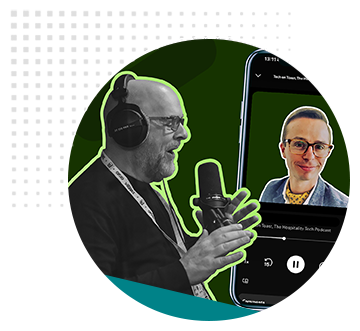
The Tech on Toast podcasts are brought to you by Chris Fletcher, Founder & CEO of Tech on Toast. Chris talks to entrepreneurs in the world of hospitality and retail technology searching for the best problem-solving tech in the industry.
In this episode, Chris talks with Pete about customer obsession with hospitality tech. From personalisation to operational efficiency, the podcast explores how our solutions help businesses create exceptional guest experiences. Plus, why legacy tech isn’t a drawback – it’s a badge of honour!
UKHospitality has announced a brand-new partnership with the government to provide over 16s with sector-based Work Academy Programmes (SWAPs) to boost employment in the hospitality industry.
The scheme, which was announced last month, will provide applicants with the skills they need to secure employment within hotels, restaurants, bars, pubs and leisure venues.
The partnership comes as UKHospitality recently reported a shocking 48% increase in hospitality job vacancies in 2024 compared to pre-pandemic levels, revealing the desperate need for up to 90,000 skilled workers in the industry.
The sector-based programme will provide industry-specific training for applicants in 26 locations around the UK, with the goal of getting 10,000 young people job-ready by next year. UKHospitality aims to boost productivity in the industry, spur economic growth and provide people with stable, engaging and fulfilling careers.
Alongside SWAPs, The Department of Education has also made key changes to apprenticeship schemes to cut red tape and make learning more flexible for young people. This includes letting businesses decide whether each applicant needs to complete Maths and English qualifications at Level 2 to pass their chosen training scheme.
These hospitality sector-based Work Academy Programmes are set to bring thousands of high-quality recruits into the hotel industry. Through the Government’s Hospitality Skills Passports, workers will gain skills that are applicable across different roles in hospitality, from F&B provision and service to customer service and front-of-house roles. This means that hospitality businesses will gain staff with sought-after transferrable skills to boost productivity and provide great customer service across all departments.
This extra recruitment to the hospitality sector is forecast to support the industry to grow, boosting further investment and expanding profits for hoteliers and other business owners.
UKHospitality will begin rolling out this programme alongside the Department for Education from April 2025, in partnership with job centres, colleges and training centres across the country. This will make the scheme accessible for both applicants and hospitality businesses seeking new recruits.
Valentine’s Day looks to have been a success for hospitality this year, with our latest figures showing that overall bookings were up 8% compared to 2024, providing a much needed boost for the sector at a time when every cover counts.
However Mother’s Day is fast approaching, and we still have a full year of occasions to look forward to and plan ahead for. With this in mind, what learnings can we take from guests’ booking behaviour on Valentine’s Day, and what can we as hospitality businesses do to adapt to customer behaviour, and increase bookings?
Whilst overall bookings were up 8% compared to last year, we did see some interesting changes in consumer behaviour when looking at how far in advance of the day they made their bookings.
Valentines Day itself, as well as the day before, saw the most bookings made, with a combined 55% of the total bookings in 2025 being made last minute. This is lower when compared to 2024, however, where last minute bookings made up 66% of the total.
The biggest shift in behaviour appeared for those booking 4, 5, or 6 days in advance. Whilst these bookings only made up 13% of the total number, we did see a 40% increase in bookings made in this timeframe compared to 2024. This was closely followed by bookings made over a week in advance, with a 22% increase on last year.
Combined with reduction in consumers booking last minute, all signs point towards a shift towards booking earlier this year.
Broken down by session, dinner reservations were the most popular, making up 81% of bookings, followed by reservations for lunch at 17%. This breakdown is almost exactly the same as 2024, when Valentines Day also fell during the working week. Whilst a significant skew towards a post-work meal out is to be expected, it does still show a not insignificant demand for lunchtime reservations on special occasions, even if they happen to fall on a weekday.
During the evening, the hour between 18:30 and 19:30 was the most popular time to book for, making up 40% of bookings, and 19:00 itself coming out as the overall most popular time to book.
Despite these trends indicating a shift towards booking earlier, the majority of bookings are still made last minute, presenting both a challenge and opportunity for operators looking to capitalise on occasions.
Firstly, real-time table availability is a must-have for any business’s bookings system. With the majority of guests booking either last minute or in the few days leading up to an event, and significant demand for tables during the peak hour on the day, it’s important to make sure your system isn’t making you miss out on any potential bookings. Our reservations and table management platform, Zonal Bookings, always displays live table availability on your website, allowing guests to immediately find a date and time that meets their requirements, and allowing them to book with confidence. This also eliminates any possibility of double bookings, and minimises the chances of a guest choosing to go elsewhere if your system wasn’t displaying the correct availability.
With tight integration into Zonal’s EPoS, automated updates also allow you to eliminate manual table updating processes that take up staff time, as well as free up tables to be sold again quicker. Once a table has paid their bill, the table’s status is automatically updated in Zonal Bookings and can then be released after a set period of time, allowing your team to set it up for the next set of guests and eliminate any delays in marking the table as available again – helping to better cater to guests looking for last minute table availability – as well as helping you to serve more covers!
Despite the last minute bookings rush, customers are increasingly looking to make their bookings earlier, and the right tech can help you capitalise on this trend. Setting up and promoting any special offers well in advance can be a great approach to encourage guests to book earlier, helping you to better plan staff and stock requirements; whilst adding upselling opportunities to both your booking journey, and any reminder comms, can help you boost revenue and increase spend per head from guests ahead of their visit.
Click here to find out more about Zonal Bookings, or alternatively get in touch to speak to one of our experts.
We understand that managing finances is a critical part of your business, and our finance module is designed to make it as seamless as possible. Below, you’ll find answers to some of the most frequently asked questions from our customers. Whether you’re looking for guidance on correcting a float, refunding a guest or completing daily sign off, we’ve got you covered.
If you can’t find what you’re looking for, our support team is always on hand to help, get in touch today!
How do I correct a float?
*If you have floated the wrong insert or money belt, you will need to complete this process for both the insert you floated, and the correct one, to make sure they are both correct. If in any doubt, manually re-count both to confirm what money is in them and check this against the floated amount.
How do I correct a misc income or expense after a daily sign off?
*You will need to create a new entry for either a misc income or misc expense dependant on where the error has been identified.
How do I edit or delete a cash management entry before daily sign off?
*All entries made that day will be displayed, under the relevant heading.
*If you select ‘Edit’, you will be taken through all relevant screens for that entry. Work through the screens, making the required changes, until finished.
*If you select ‘Delete’, you will be asked to confirm. Once confirmed, the entry will be removed from the system.
How do I preform a safe transfer
How do I refund a guest after daily sign off?
How do I refund a guest on the same day?
* The right hand-side of the screen will show a list of tabs/tables that have been cashed off. The purple buttons in the centre of the screen can be used to filter this list to enable you to find the correct tab/table.
Select the tab/table requiring the refund from the list on the right-hand side, this will then be highlighted in yellow
*The tab/table details will be displayed on the left
A – If You Are Refunding the Entire Bill
B – If You Are Refunding Selected Items from the Bill
A – If You Are Refunding the Entire Bill
*If the guest originally paid by cash, you can now remove this from the cash drawer and return to them. If they paid by card, their card payment will now have automatically been refunded, and a customer and merchant copy refund slip will be printed.
The tab/table will now still be open with the items, and will need to be closed in one of the following ways:
B – If You Are Refunding Selected Items from the Bill
*If the guest requires a card refund, they will need to reinsert their card and follow the instructions on the EFT.
The tab/table will then be closed.
How do I reverse a walkout payment after daily sign off?
I cannot complete my daily sign off, what can I do?
Try the below options:
A – All Closed Sessions Declared
B – All Safes Counted
C – No Open Sessions
Daily operations: Start of day

Creating effective booking availability templates to manage covers, time intervals, and peak vs. off-peak periods is key to running a smooth and profitable restaurant.
The goal is simple: maximise table turnover while encouraging more bookings during quieter shoulder periods (like mid-afternoon and early evening), all while making the most of your busiest times (lunchtime and dinner rush).
From our experience in the hospitality industry, particularly in casual dining, having a well-structured system in place makes all the difference. The right technology should handle the heavy lifting, ensuring smooth operations and optimised capacity.
Our recent research found that, aside from Christmas/December bookings, Mother’s Day is the most popular date for reservations in 2024. With that in mind, let’s explore four key steps to help you fine-tune your strategy and make your booking system work harder for you.
Step 1: Define Your Table Layout & Flexibility
Understanding your space is crucial. Can your tables be moved around, or are they fixed?
During the week, you may have more flexibility to rearrange layouts—such as shifting table 20 from the back of the restaurant to join up with table 7. However, on weekends, moving tables might be impractical. Knowing when to be flexible and when to lock layouts in place will help streamline operations.
Example Table Breakdown for 50 Covers:
Total: 50 covers
Step 2: Determine Your Turnover Rates
Your turnover rate depends on the type of dining experience you offer. Are you a relaxed, full-service venue where guests linger over multiple courses and upsells? Or a fast-casual spot where guests grab a quick meal and move on?
Peak times often mean faster turnover, while guests may stay longer during quieter periods.
Recommended Turnover Rates:
Step 3: Peak vs. Off-Peak Trading Times
Understanding when your customers prefer to dine helps balance high-demand periods and spread reservations across quieter slots.
By strategically encouraging bookings in shoulder periods (e.g., early-bird offers or promotions), you can maintain a more consistent service flow throughout the day.
Step 4: Setting Covers per Time Slot
Once you’ve defined peak times and turnover rates, you can calculate how many covers to allocate per 15-minute slot.
Example Calculations:
Peak Periods (12:00–14:00 & 18:00–20:00)
Off-Peak Periods (14:00–18:00 & 20:00–22:00)
By mapping this out, you’ll see clear peaks and troughs in your availability template. Regularly check your data to adjust accordingly!
Key Takeaways for Smarter Booking Management
By following these steps, you’ll create a dynamic booking system that enhances guest experience while optimising revenue.
Head of Customer Success at Zonal at Zonal
Natalie is the Head of Customer Success at Zonal. Having worked in the hospitality sector for 17 years, in roles ranging from front of house, business development, event co-ordination and leading a project team, it brings an understanding of how various teams operate. Specialising in Bookings, Natalie is passionate at ensuring users get the most out their systems and ultimately driving operational efficiency as well as bottom line. In her spare time, Natalie is on the management committee of a Community Owned Pub in North Wales, which brings with it a wealth of knowledge in experiencing the day to day issues and challenges faced within a business.

Bookings already up by nearly 40% compared to last year, new data shows
With the Guinness Men’s Six Nations rugby tournament set to kick off this week (Friday 31st January), the latest figures from leading hospitality technology provider Zonal, reveal bookings in pubs and bars are up a huge 38% for match times, compared to the comparable period last year.
Moreover, the insight from previous years’ trends shows that most bookings for Six Nations games are made just a week ahead of fixtures – in 2024, for example, 81% of bookings for the first day of the Six Nations were made within a week of the event. This suggests pubs can expect a further surge in fan bookings.
As the tournament progresses, in order to cope with demand, operators could think about offering incentives to persuade customers to book further in advance to help with planning for stock and staff requirements and ensure their booking systems are easy to use, optimised, and well promoted. Digital ordering, whether that be via the web or an app, can also help improve guests experience by enabling them to place orders directly from their seats, ensuring they don’t miss any of the game and help to reduce bar queues.
Tim Chapman, Chief Commercial Officer, Zonal, commented: “Technology is a crucial tool in making sure venues can handle the increased volume of bookings during major events like the Six Nations. Ensuring your booking platform is robust, and that staff are trained to manage busy match days efficiently, will be key to taking full advantage of this busy period.”
“By leveraging tools that provide real-time table availability and streamline the booking process, operators can ensure they’re well-prepared to capitalise on these high-demand dates and drive revenue throughout the year.”
Loyalty was one of the big topics in the hospitality sector last year and, with our research showing nearly one in three restaurant, pub, and bar patrons are very or somewhat likely to switch which venues they choose to be loyal to, we can expect it to be the same in 2025.
At the same time, the industry faces another pressing issue: no-shows. During 2024, these surged to a record high of 14%, reflecting both the volatility of consumer behaviour and the pressure on operators to deliver consistent value. To thrive in this landscape, hospitality venues must redefine loyalty strategies by balancing in-venue excellence with targeted, data-driven outreach.
A bespoke approach
The reality of changing habits means that consumers are becoming more adventurous and less tethered to specific brands. Our research, in partnership with CGA by NIQ, found that nearly 34% of restaurant customers are likely to switch venues, compared to 29% for pubs and 30% for bars. This is especially true for the younger generation, with adults aged 18-44 exhibiting the highest tendency for switching, driven by a desire for variety and new experiences.
On the other side, older consumers and parents tend to exhibit more loyalty. Older adults, having spent decades forming relationships with venues, value consistency and familiarity. Similarly, parents prioritise venues they trust to deliver reliable service for their families. These differences underline the need for tailored strategies to foster loyalty across diverse demographics.
Loyalty schemes: what works and what doesn’t
While loyalty schemes have proven effective in some other sectors, their success in hospitality hinges on their ability to address consumers’ key motivations — primarily financial savings. Our GO Technology report revealed that members-only pricing is the most appealing type of loyalty programme, favoured by nearly half of respondents. Points-based systems, cashback offers, and deals on frequently purchased items also ranked highly.
However, barriers to adoption remain significant. Upfront membership costs, subscription commitments, and perceived lack of value deter many potential participants. Operators must design schemes that are simple, transparent, and directly aligned with guest expectations. This could include eliminating upfront costs or introducing flexible, opt-in programmes that demonstrate clear, immediate benefits.
Combatting No-Shows
No-shows continue to be a persistent issue for operators and the recent rise to a record 14% no-show rate exacerbates the financial strain on operators already grappling with tight margins. Addressing no-shows is not just about mitigating financial loss; it’s also about maintaining customer trust and operational efficiency, both of which are integral to building long-term loyalty.
Fixing the issue is obviously easier said than done. However, operators can look to mitigate the issue by putting in place measures such as ensuring the cancellation process is as simple as possible (our insight shows that 30% of UK consumers say this would encourage them not to no-show without notifying the venue). More than a quarter (28%) meanwhile, said rewards and incentives for turning up would help, and 21% said the same of deposits.
The power of personalisation and communication
Beyond loyalty schemes, personalised communication plays a pivotal role in keeping guests engaged. According to our GO Technology research, 90% of consumers are open to joining a loyalty programme, and 73% want to hear about deals and rewards from their favourite venues.
Email remains the most preferred communication channel, followed by social media and text messaging. Regardless of the chosen channel, personalisation is key. Segmenting audiences by demographics, preferences, and behaviours allows operators to tailor their outreach. Younger consumers, for example, may respond well to frequent, visually engaging updates on social media, while older patrons might prefer concise emails highlighting value-driven offers.
Moreover, timing matters. While 30% of consumers welcome weekly communications, a slightly higher percentage prefer monthly updates. Striking the right balance ensures that communication feels relevant rather than intrusive.
A holistic approach to building loyalty
While technology and data-driven strategies are crucial, they are not substitutes for the fundamentals of hospitality: exceptional food, drink, service, and atmosphere. Poor experiences can quickly erode trust and loyalty, especially given the high expectations of today’s consumers. Operators need to continue to invest in staff training, and quality control, to ensure guests consistently leave with positive impressions.
Loyalty in hospitality is no longer about simply retaining customers — it’s about creating advocates. By combining exceptional in-venue experiences with thoughtful, targeted communication and well-designed loyalty programmes, operators can nurture deeper connections with their guests.
To address challenges like high no-show rates and shifting consumer preferences, venues must adopt a proactive, flexible approach. This includes leveraging customer data to understand behaviours, tailoring offerings to meet diverse needs, and fostering trust through transparency and value.
In an era where competition is fierce and spending power is limited, loyalty is hard-earned. However, by focusing on what truly matters to their guests, hospitality venues can turn fleeting visits into lasting relationships.

Group Marketing Director at Zonal
When it comes to promotions, ‘buy one, get one free’ is often the first that comes to mind. While it’s a great option for drinks, promotions can go beyond that. For instance, offering ‘buy one main course, get one half price,’ can increase footfall while protecting your margins.
To help you get ready for upcoming hospitality events, we’ve created six quick and easy steps to guide you through setting up promotions in Aztec.
Step 1: Decide where in your estate the promotion will run. Promotions can be applied across your entire estate or targeted to a specific sales area within your site.
Step 2: Sales Groups and Quantities. By specifying a quantity within a sales group, you determine how many times a product from that group needs to be selected to trigger the promotion.
Step 3: When choosing the products to include in each group from the product structure hierarchy, any item in the hierarchy can be selected. For example, in a ‘Buy one main course, get one half price’ promotion, both Group One and Group Two would need to include main courses.
*Remember, for promotions on specific portions, such as a glass of wine, be sure to filter down to the product portion.
Step 4: Select the days and times for your promotion. For all-day promotions, leave the days selected. To set specific times, uncheck ‘Promotion runs at all times’ and define the time range. You can also set a start and end date.
Step 5: Now price the products for each group in the promotion. For a ‘Buy one main course, get one half price’ promotion, set Group 1 to price entry and Group 2 to a 50% discount.
Step 6: The final step shows an overview of the amended prices. Here, you can adjust any prices if needed. Enhanced buy one, get one free, will allow you to make any child products associated to a product free.
Let’s now dive into two proven promotion types…
Multibuy Promotions
Multibuy promotions are perfect for occasions with a set menu such as Valentines Day or Christmas. A multibuy promotion offers a bundled price for a group of products, like a supermarket meal deal or a set-price menu. For example, a starter main, and dessert for a fixed price.
Firstly, follow the earlier steps for setup. Then when you reach the pricing screen, assign a single reward price. Once set, the promotion will trigger automatically at the till when the required products are selected.
Timed Promotions
Timed promotions are ideal for events such as happy hour. Setting them up follows the same steps as before, with one key difference – a timed promotion includes only a single group. You can add as few or as many products to this group as needed.
For more information on setting up promotions, please visit the Product Portal
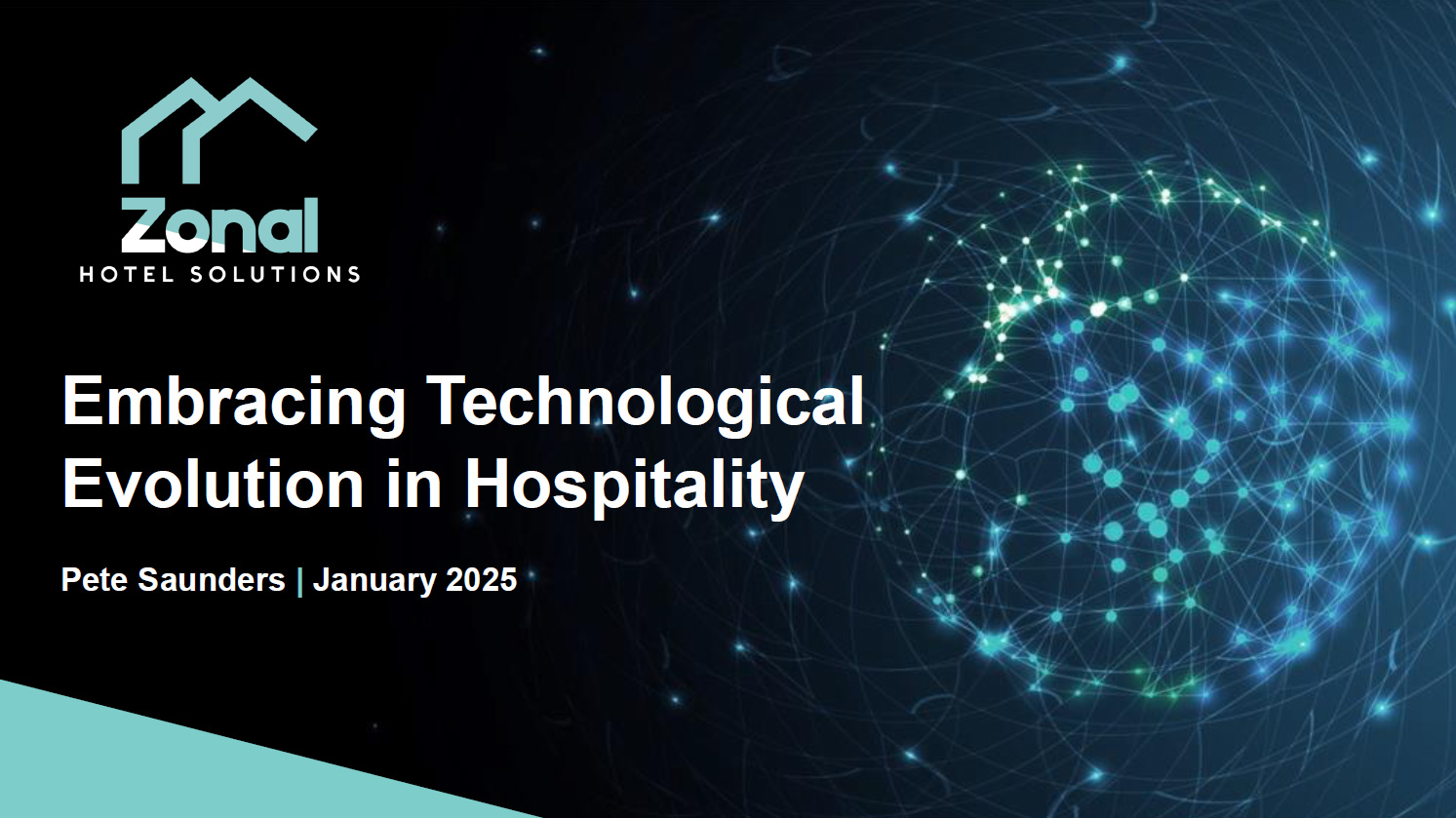
Earlier this month, our Head of Relationships, Pete Saunders, had the opportunity to present to the North Yorkshire Hospitality Junior Board, a board of talented young managers aged 20-26 from pubs, hotels and restaurants across the region.
Pete discussed the evolution of technology and its adoption in the hospitality industry, as well as the challenges and opportunities he expects over the next five years.
The meeting in Malham, North Yorkshire, consisted of 11 leading young Managers from the Hospitality Junior Board, an organisation designed to support, develop and advocate for young people working in the industry in the UK. The member’s mission is to make hospitality the career of choice for young people by identifying future leaders, helping them to build life skills, promoting the industry and influencing decision makers in the sector.
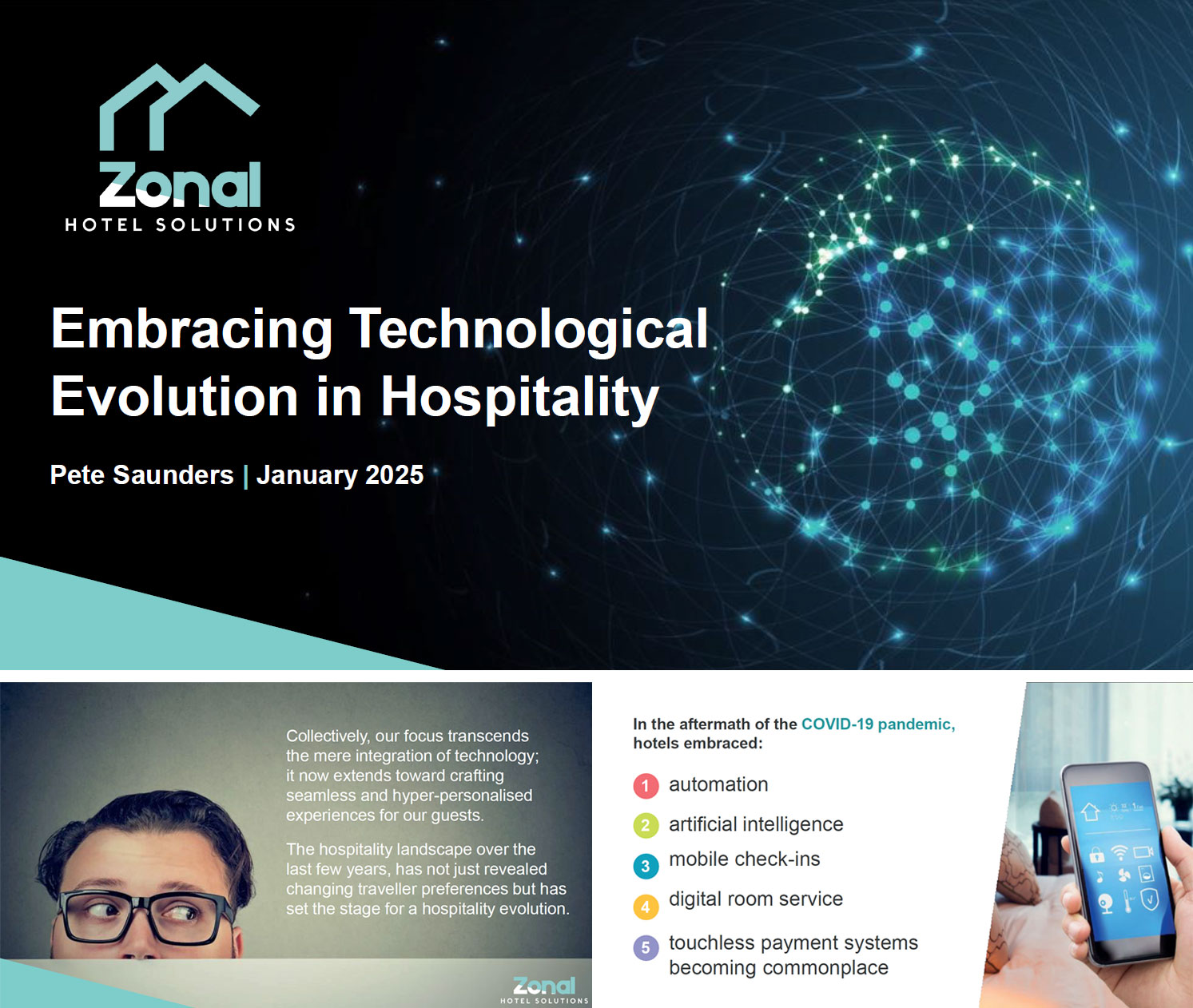
Pete spoke with board members about the growing role of technology within the hospitality industry and the huge benefits of software for all team members both front and back of house. He also discussed the opportunities software can provide and the challenges facing the sector over the coming years.
He said: “When I was asked to present at the Hospitality Junior Board meeting, I jumped at the opportunity. It was inspiring to meet the next generation of hospitality professionals and gain insight into their mission to support and advocate for young people as they progress with their careers.
“The development of tech in this sector will directly impact these Managers and their teams, so it was great to discuss Zonal, our software products and our ethos and hear their thoughts and concerns on topics such as AI, and the changes technology will inevitably bring about for them.”
Guides
The Loyalty Landscape


Research
GO Technology: The social value of hospitality

Webinars & podcasts
People Make The Experience: How Your Staff Drive Customer Loyalty

Webinars & podcasts
It Should Feel Like Magic, Not Marketing: Personalisation, Loyalty & Data in Hospitality

Webinars & podcasts
Loyalty That Lasts: Growing with Guests, Not Just Points

Webinars & podcasts
What Diners Want: The New Rules of Loyalty in Hospitality


Blog
How hospitality businesses can create ‘Superfans’
Blog
How loyalty can help tackle no shows
Hospitality loyalty programmes drive customer retention, which can help organisations generate revenue, increase referrals and achieve overall growth. And in the current climate, it’s becoming increasingly clear that loyalty schemes are becoming more and more popular amongst cost-conscious customers prioritising value.
The majority of loyalty schemes have a base programme which converts customer spend into currency or rewards. However, a lot of schemes are missing out on key engagement by not utilising ad-hoc rewards.
Ad-hoc rewards sit on top of the base programme to provide further value for customers. They’re great for encouraging new customers into the loyalty scheme, as well as increasing footfall in quieter periods.
Let’s take a look at an example:
Base programme: Convert £ spend to points (e.g. £1 spent = 1 point)
When the customer gains enough points, they are given something for free e.g. 100 points = free starter, 200 points = free main.
This is a great way to encourage customers to spend more! However, it doesn’t appeal to all audiences and as a standalone offering isn’t that powerful.
Zonal’s Customer Success team have recommended some ad-hoc rewards you can incorporate into your current loyalty scheme to increase customer spend and drive repeat visits.
Example: £5 Currency for enrolling into the loyalty scheme. This is applied to the customer’s loyalty account the following day after registration
Registration rewards are extremely effective for motivating sign-ups. It can be set up so the customer doesn’t receive the reward until the following day, meaning they will need to return within the defined expiry period to redeem it. From our experience, offering a cash incentive has been the most successful tactic in getting customers to sign up to a loyalty programme. This works best when it is offered for a limited time.
Example 1: Offering 25% off all food products, all day on a Monday, throughout March
This reward is designed to increase footfall on quieter days. Additionally, the reward is advertised as a limited time offer so that customers are encouraged to visit the business sooner than they may have intended. Using discounts as well as points within a loyalty scheme helps reach a wider audience.
Example 2: In January 25% off Food Monday – Wednesday
A % off food reward should vary on days and % amount between months/seasons. Additionally, it’s advised that it doesn’t run at all times, so it is seen as “surprise and delight”.
Example: A “free glass of Fizz” for a customer’s birthday. Available 14 days prior and post the birth date
Making a customer feel special on their birthday, encouraging them to visit the business over a competitor that otherwise does not offer an incentive. What’s more, including this within an extended timeframe around their birthday can entice them in to your venue for an extra visit – even if they did choose to go elsewhere on the day itself.
Example: £5 cocktail Fridays. Only available Friday 4pm – 7pm on selected cocktails
This offer can be used to target a specific audience. This example is targeting after-work drinkers who may normally visit competitors.
All the above rewards should only be available to those who are part of your loyalty scheme. This is to give them a sense of feeling valued and encourages the “Regulars” mind set. Additionally, your loyalty scheme captures personal details. This data is extremely valuable, it allows businesses to strategically target customers and understand spending habits. By using a birthday reward, for example, date of birth needs to be captured so provides insight into the business’s age demographics, helping you to build a more and more detailed picture of who is visiting your business as guests engage with your promotions – and the effectiveness only increases when integrated with a CRM, such as Airship.
There are many more rewards that can be used to personalise and make your loyalty scheme more engaging. Get in touch with us today to find out how our technology can help you drive loyalty and increase guest spend in your business!
If you’re already an existing user of Zonal’s Loyalty platform, you can start making use of this functionality immediately! Simply get in touch with your Account Manager to find out more.

Customer Success Consultant at Zonal
Katie is part of the Customer Success Team working closely with multiple departments within Zonal to ensure customers are using our technology to drive retention and revenue into their business. Katie’s background is working within the hospitality industry, with a keen focus on Marketing.