-

Guides
The Loyalty Landscape
Zonal partner, 125 Data & Insights, is a customer experience dashboard that gathers consumer data and shows operators exactly what their customers love and where they think things can improve, so that they become, and remain, loyal customers and advocates of the business.
Here we chat with Managing Director at 125 Data & Insights, Olivia FitzGerald, about all things loyalty – and how to make a ‘superfan’.
What channels do you think are most effective for engaging customers in today’s market, and why?
There’s no one size fits all solution when it comes to ways of communicating in today’s market. Our data shows that Google is universally important across different demographics, with businesses needing to prioritise their reputation there. In fact, 69% of customers reported checking Google before planning a visit, and 90% of them considered the information found on Google as crucial. This highlights how businesses cannot afford to ignore Google.
Social media channels are also very important, with younger generations more engaged with Instagram and TikTok due to their visual nature. Older generations tend to use review websites such as TripAdvisor instead and, while it may seem outdated, email is still one of the most cost-effective and easy-to-use channels.
How can businesses leverage data to personalise customer interactions and improve engagement across different channels?
The first step to personalisation is understanding your customer demographics. By using certain tools, businesses can segment their database based on customer preferences and behaviour. For example, older demographics tend to have higher brand loyalty, while younger generations may frequent a wider range of brands and are more easily swayed.
This demographic insight allows businesses to tailor their communication and engagement strategies accordingly. For example, Bill’s restaurants promote their bottomless pancake offering mainly through Instagram, as it appeals to their younger, student-heavy audience who prefer visual content. Using data to segment your audience and then choosing the most appropriate channels based on that segmentation leads to more effective customer engagement.
How can data-driven insights help identify potential loyal customers early in their journey and tailor strategies to enhance their experience?
We’ve been working on identifying what makes someone a ‘superfan’— those who advocate for a brand. Key indicators include using emotional language in feedback, such as ‘love’ and using multiple exclamation marks. We’ve found that people who score highly on Net Promoter Score (NPS) tend to leave more emotive, personalised comments, while lower scores are more functional and less personal.
By tagging these superfans in your database, businesses can start personalising their engagement early. Even without a formal loyalty programme, businesses can offer special deals or incentives to these superfans. Combining customer feedback with CRM data offers actionable insights for improving engagement and loyalty.
What are some of the challenges companies face when using data to manage loyalty programmes, and how can they overcome these obstacles?
Companies often overcomplicate their loyalty programmes, to the point that they become too complex for both customers and staff to understand. Taking it back to basics is key, ensuring that the programme is simple, aligned with their objectives, and based on actual visit frequency. For instance, a points system relying on frequent visits won’t work for businesses with low visit frequency.
Additionally, businesses often fail to define clear objectives for their loyalty programmes, which makes it hard to measure success. Overcoming this requires businesses to leverage their data to understand what they are trying to achieve and how they will measure success. It’s also important to recognise that loyalty isn’t always about structured programmes – it can be based on human connections, such as staff discretion or special incentives, which may resonate more with customers.
Guides
The Loyalty Landscape


Research
GO Technology: The social value of hospitality

Webinars & podcasts
People Make The Experience: How Your Staff Drive Customer Loyalty

Webinars & podcasts
It Should Feel Like Magic, Not Marketing: Personalisation, Loyalty & Data in Hospitality

Webinars & podcasts
Loyalty That Lasts: Growing with Guests, Not Just Points

Webinars & podcasts
What Diners Want: The New Rules of Loyalty in Hospitality
We’ve all been there; prepped for a busy Friday night, stoves firing, servers on the floor and yet, something is missing. The table of 8? No shows is one of the biggest impactors of success in hospitality.
Last year £17.6 Billion pounds was lost across the hospitality sector directly linked to no shows and that is just taking account of lost covers. The picture is even worse when accounting for the loss of other customers, who have been turned away by a venue in the mistaken belief that bookings are full, leading to wasted food and unnecessary staffing costs.
In a recent piece of research, a survey of over 5,000 UK pub, bar and restaurant-goers, we found that whilst more than two thirds (68%) of consumers who make bookings say they turn up for all of them, 18% cancel in advance and one in seven (14%) admit to failing to turn up without even telling their venue.
This comes at a huge cost to the industry. In partnership with CGA by NiQ, we have been measuring the number of customers who make a booking and then simply don’t turn up (aka No Shows) since 2021.
It is a huge issue for the industry and underlines again, why building a loyal customer-base is crucial for pubs, bars and restaurants.
[Pull stats] Why do People No Show?18
29% said it was because they decided it would be too expensive to go out
27% said it was because they changed their plans
21% said it was because someone in the group fell ill
17% said it was because they forgot
14% said it was because someone else in the group cancelled
10% said it was because they had booked several venues
Despite these frustrating figures, hospitality does at least compare favourably to other sectors.
While 14% of customers fail to show up for hospitality, you have to feel for the gym sector, where 35% of people admit to having booked and no showed to a class in the last year, as well as hairdressers, driving instructors, and taxi drivers, for whom a quarter of people admit to not attending a booking they have made without cancelling in the last 12-months.
No shows are more than missed bookings. They disrupt operations, drain resources and impact the bottom line. There is a way forward by investing in loyalty strategies that build trust and consistency, operators can reduce no shows and strengthen guest relationships. Now is the time to act. Review your booking journey, reward repeat visits and give customers a reason to commit. Because in hospitality, loyalty is not just valuable – it is vital.
Persuading customers to show up
With £17.6bn on the table, the sector needs to find ways to mitigate the issue and encourage consumers to at least let venues know if they no longer intend to turn up.
Interestingly, loyalty was one of the top five reasons consumers said they’d be more likely to honour a booking, with 17% saying they are less likely to no show if they felt loyal to the venue or brand. The same proportion said they would do so if they knew about the impact of lost bookings on businesses and this underlines the need for the industry to join forces and clearly communicate the damage the practice causes.
Other reasons guests gave when asked what would make them less likely to miss a booking were: a simple cancellation process, rewards and incentives to show up, reservation reminders, and (controversially within the trade at least) paying a deposit.
Operators should therefore be looking at implementing some, or all of these, in order to mitigate any losses.
Guides
The Loyalty Landscape
Research
GO Technology: The social value of hospitality
Webinars & podcasts
People Make The Experience: How Your Staff Drive Customer Loyalty
Webinars & podcasts
It Should Feel Like Magic, Not Marketing: Personalisation, Loyalty & Data in Hospitality
Webinars & podcasts
Loyalty That Lasts: Growing with Guests, Not Just Points
Webinars & podcasts
What Diners Want: The New Rules of Loyalty in Hospitality
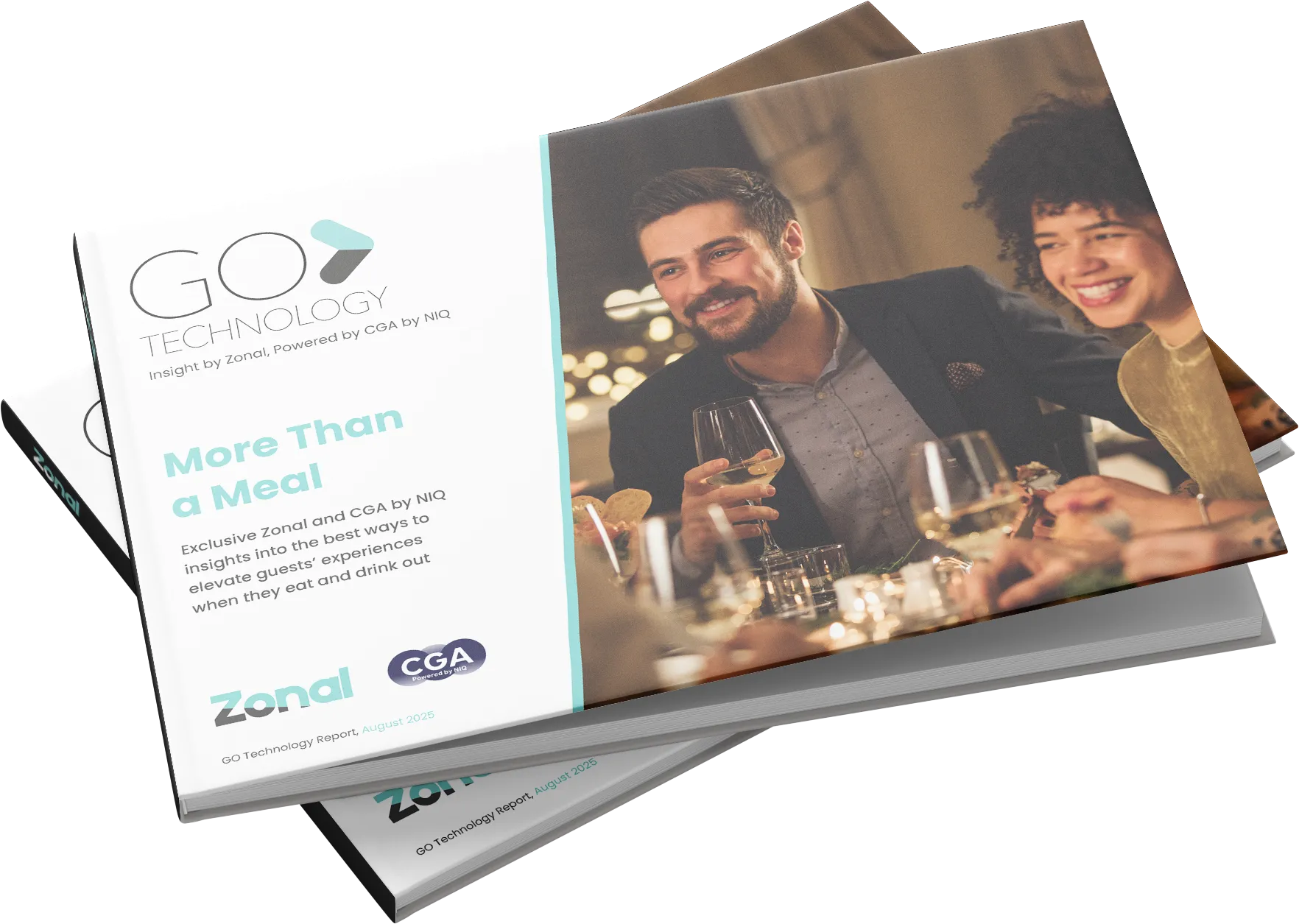
The research, produced in partnership with CGA by NIQ, surveyed 5,000 British consumers to find out what consumers want when dining or drinking out.
With the rising cost of living and tighter budgets, many people are cutting back on how often they eat and drink out and instead choosing to treat themselves with more special, memorable experiences.
From tasting menus, bottomless brunches and interactive activities, discover how you can encourage guests to book, spend and return by offering more than a meal.

Key findings:
Research
GO Technology: The social value of hospitality

Research
GO Technology: More Than a Meal

Research
GO Technology: Why 6:12pm is the new 8pm

Research
Pub Accommodation Review 2025

Research
GO Technology: Hotels and consumers – Guest expectations and how to meet them

Research
GO Technology: Consumers and hospitality: 2024 in review

Research
GO Technology: The truth behind no-shows

Research
GO Technology: Brand loyalty in hospitality
According to Zonal’s latest research , 6:12pm is now the new average time guests prefer to dine out, with almost half (48%) of bookings in Q1 2025 taking place between 12pm and 6pm.
This shift highlights a growing trend: customers are choosing to go out earlier than ever before.
To help you keep up with these changes, and get the most out of your current setup, we’re here to support you. Whether it’s ensuring your systems are optimised or helping you identify if these trends are affecting your business.
We’ve highlighted key areas to help you adapt to the evolving market, particularly those that influence the guest experience before they even arrive:
Rethink Your Offers
Traditional early bird specials from 5–7pm may no longer be as relevant if guests are dining earlier anyway. Consider tailoring offers to off-peak times earlier or maybe later in the day.
Review Your Capacity Settings
Ensure you’re maintaining your capacity models. Zonal can even run a free health-check for customers to ensure you are optimising your bookings.
Make the Most of Your Data
Dive into your reports and trend data and use the insights to guide your decisions.
1. Rethink Your Offers
Loyalty programmes can significantly boost customer engagement and sales, but only when the rewards are timely, targeted, and aligned with customer behaviour.
The top Loyalty programmes we see working for operators include registration rewards (such as a £5 credit applied the day after sign-up to encourage a return visit), to discounts on quieter days (like 25% off food on Mondays).
Our latest research, highlights a major shift in consumer dining habits. As more guests choose to dine earlier, traditional peak hours are changing. This shift presents an opportunity for operators to rethink how they manage evening flow and optimise revenue. To encourage visits beyond the new, earlier peak, time-sensitive offers can be a powerful tool. For example: Bring a Friend: Buy one main and get 50% off the second, available from 8 PM to 10 PM or The Late Night Special: Receive a complimentary glass of bubbly with every main after 8 PM until close. Operators who adapt to these changing patterns will be better positioned to meet guest expectations and stay ahead in a competitive market.
Tip: Connect your Loyalty offering to Bookings:
If you have Table Management enabled within Bookings, integrating your loyalty programme with Bookings system can be a real game-changer. It means a guest’s loyalty account is automatically linked to their reservation the moment they book – no need for scanning cards, digging through emails, or manually adding details at the till.
A loyalty icon will appear next to their booking in Tables Host, so your team can instantly recognise and engage with loyal guests. Their loyalty details will also feed directly into the POS, allowing any eligible discounts or rewards to be applied seamlessly at checkout.
Plus, you can reward guests simply for booking and showing up, whether that’s points toward their next visit or a perk after a certain number of visits.
Loyalty icon

Tables Host

2. Review Your Capacity Settings
Guest demand shifts throughout the week, and these fluctuations can significantly impact your service. By analysing your bookings data, you can begin to identify patterns and make smarter operational decisions.
For instance, your data may show that Monday to Wednesday are typically quieter, while Thursdays and Fridays see a noticeable increase in activity. Saturdays may be your peak for dinner service, and Sundays for lunch. Recognising these trends allows you to tailor your operations accordingly.
By digging deeper, you can uncover more specific insights, such as the average time guests spend at the table. For example, you might find that on Friday evenings, tables of two tend to turn over 30 minutes faster than on other days. Adjusting your configuration to reflect these habits can help increase yield without compromising guest experience. We recommend you change your configuration in order to suit this with an aim to increase your yield. Not only can this be done for standard days as mentioned above, but also key dates and events.
Capacity management is no longer just about setting the number of covers per timeslot; it now involves considering external factors and adapting proactively.
Zonal can support hospitality businesses in setting up dynamic configurations using features like Plans within our Booking solution. A Plan combines your table layout (e.g., table numbers and seating capacity) with defined turn times by party size. These Plans can be applied flexibly – per day, per session (e.g., breakfast, lunch, dinner), or even for specific scenarios like Bank holidays or special events.
For example, within the Standard Days capacity group, it is possible to change a standard Monday Plan from a standard Breakfast setup to a Bank Holiday configuration. This flexibility allows you to adjust your layout, online availability, and table prioritisation to better match your operational needs.
With the right data and setup, you can manage capacity and optimise your entire guest experience.
3. Make the Most of Your Data
Whether you have a dedicated data team analysing your data, or you’re reviewing it yourself, we recommend you do it as regularly as possible.
For those with data warehouses, we recommend linking daily feeds of your data using an SFTP feed. This pushes data daily to a file location that can then be picked up and absorbed. Everything from when the guest booked, if they edit their booking, when they seat, check-out and if they opted into your marketing. Zonal also offer Power BI reports that can help show this in a much clearer format.
Here are some powerful reports within our Loyalty and Bookings products:
Loyalty:
Three flexible loyalty reports are available, allowing you to easily define the level of detail you need. You can customise the search criteria and choose which report fields to display.
The Transaction Report contains loyalty transaction information based on various customisable criteria, such as a person’s name, their card ID or transaction type.
The Registration Report provides information on the registrations made to a specific loyalty program for a given date range.
The Liability Report provides information on the current loyalty liability for a chosen reward, up to and including the date on which the report is requested.
Your business data holds powerful insights. Analysing and understanding it can empower you to make smarter, more informed decisions about how to optimise your system setup.

Head of Customer Success at Zonal at Zonal
Natalie is the Head of Customer Success at Zonal. Having worked in the hospitality sector for 17 years, in roles ranging from front of house, business development, event co-ordination and leading a project team, it brings an understanding of how various teams operate. Specialising in Bookings, Natalie is passionate at ensuring users get the most out their systems and ultimately driving operational efficiency as well as bottom line. In her spare time, Natalie is on the management committee of a Community Owned Pub in North Wales, which brings with it a wealth of knowledge in experiencing the day to day issues and challenges faced within a business.
Guides
The Loyalty Landscape
Research
GO Technology: The social value of hospitality
Webinars & podcasts
People Make The Experience: How Your Staff Drive Customer Loyalty
Webinars & podcasts
It Should Feel Like Magic, Not Marketing: Personalisation, Loyalty & Data in Hospitality
Webinars & podcasts
Loyalty That Lasts: Growing with Guests, Not Just Points
Webinars & podcasts
What Diners Want: The New Rules of Loyalty in Hospitality


Blog
How hospitality businesses can create ‘Superfans’
Blog
How loyalty can help tackle no shows
Research
GO Technology: More Than a Meal
Our Product team regularly release new features and functionality for our solutions aimed at increasing the value our technology adds to your business, including our kitchen and service management solution, Kitchen iQ.
We’ve put together this blog to give you some insights into some of the great functionality we’ve released recently for our Kitchen iQ product, highlight the importance of upgrading regularly, and showcase some of the benefits all of this can bring to your venue.
In a recent release for Kitchen iQ, we added the ability to create load balancing rules to evenly distribute orders across multiple stations. These customisable rules enable a primary station to assign orders to one or more secondary stations, ensuring a balanced workload for your team and helping you stay in control of demand – even during peak hours.
Choice items are now taggable, which makes it even easier to keep track of order statuses across multiple stations. This is particularly useful for side dishes or sauces that may be ready before other parts of an order.
Kitchens are fast-paced environments, so we’ve enhanced the sidebar functionality within Kitchen iQ. The sidebar now shows the last 30 actions, as well as allowing you to reverse an action if the preparation wasn’t quite right.
You can now print a ticket for items without waiting for the full order to be completed – particularly useful for smaller spaces where there may not be space for a screen!
Wait times
In a recent release, we added functionality to allow Kitchen iQ to automatically calculate an estimated wait time for an order to be ready.
Multiple calculations can be configured to determine wait times on specific courses and terminal group areas within a venue.
Results can be displayed on site in the Channels screen, allowing front of house staff to understand and communicate how long the order should take to complete. This feature increases customer satisfaction, keeps them informed and reduces any uncertainty that may come with an extended wait time.
The Kitchen iQ site server and database has been optimised in recent versions to improve the performance and stability of the application, while maintaining existing functionality. If you experience particularly busy periods of trading, you’ll find these enhancements beneficial.
New features have been made available to improve efficiency in a busy site. Load Balancing is useful to quickly push incoming orders to an additional station when additional capacity is required. Recipe Cards from Ten Kites can be opened directly on IoT screen controllers, quickly displaying ingredients, cooking instructions, plating, allergen info etc – all at the touch of a button.
Touch screen controls was introduced to support new any new screens or portable devices used on site. Future enhancements are being considered for future versions of Kitchen iQ.
The Kitchen iQ releases contain important bug fixes to support your business, ensuring that orders are processes seamlessly and customers are satisfied with the service. The new Wait Time Information feature can also be displayed on screens to provide your team with the estimated time it will take for an order to be ready, based on calculations performed by looking at current activity on site at that time.
Customer View enhancements have been introduced, allowing collection points to display more accurate information and have customisation options to be aligned with the sites branding. Tagging child order lines is now also supported, to allow users mark off part of an order that is ready or delivered. Recent releases have also included enhancements to the Count View, with the option to display same day Delayed Order counts sent from the POS, highlighting the number of items that need to be prepared and supporting your team with advance bookings.
Please speak to your Account Manager about upgrading to the latest version of Kitchen iQ.
Guides
The Loyalty Landscape
Research
GO Technology: The social value of hospitality
Webinars & podcasts
People Make The Experience: How Your Staff Drive Customer Loyalty
Webinars & podcasts
It Should Feel Like Magic, Not Marketing: Personalisation, Loyalty & Data in Hospitality
Webinars & podcasts
Loyalty That Lasts: Growing with Guests, Not Just Points
Webinars & podcasts
What Diners Want: The New Rules of Loyalty in Hospitality
Blog
How hospitality businesses can create ‘Superfans’
Blog
How loyalty can help tackle no shows
Research
GO Technology: More Than a Meal
One of the key factors in building customer advocacy, driving visit frequency, and improving the effectiveness of your loyalty offering, is getting your comms right.
Nearly three-quarters of consumers (73%) are happy to be contacted by their favourite restaurants, pubs, and bars, which is great news for operators looking to engage and build a relationship with their customers. But what do they want to hear about and how do they want to be contacted?
Perhaps predictably, saving money is the most popular reason for a customer to want to be contacted but there is other information that floats their boat too, including new menu items and events.
What do you want to hear about from your favourite pubs, bars and restaurants?
In terms of reaching customers, email remains the most popular channel, with 47% of people indicating they want hospitality brands to contact them this way, followed by social media and text (17% for both), WhatsApp (15%) and apps (14%).
Whichever channel – or channels – operators are using, it’s important to get the frequency right if it is to stand a chance of engaging customers rather than turning them off. Our research shows that 36% of people expressed a preference to be contacted monthly, for example, compared to just 30% who said they want to hear from their favourite venues at least once a week.
A database of consumers offers operators opportunities beyond promoting a meal deal or an event, however. By engaging in this way, customers are allowing you access to their data, which if used properly, can unlock sales growth, improve customers experiences, drive footfall and boost loyalty.
Taking the time to analyse data will help operators make more informed decisions and reduce friction points as it will shine a light on emerging consumer trends and customer preferences. If used properly, the insight contained in customer data can also help deliver more personalised offers and experiences – as flagged previously, this is something our research shows consumers increasingly want from hospitality brands.
Understand what it is you want to achieve with your communications and tailor your messaging accordingly. Are you looking to build loyalty? Or increase visit frequency? We’ve established that consumers want to hear from their favourite hospitality businesses on a number of topics – and it’s not just simple discounts. Keeping your customers updated with variety of comms that showcase what makes your venue special, whether it’s new additions to your menu or an exciting new event, are great ways of keeping your customers engaged with your brand and enticing them back in beyond their usual visits.
Use the right channels at the right frequency. Consumers receive high volumes of communications, making it vital for you to match what, when, and how you’re sending your marketing to their preferences to cut through the noise. Email remains the top preference for the way consumers want to be contacted, and monthly comms – followed closely by a weekly update – rank highest in terms of frequency. Keep your comms regular, but avoid overloading.
Personalisation is key. It’s not surprising that value-driven communications are the most popular, with 54% of guests wanting to hear from hospitality businesses about deals and rewards. However to achieve the highest potential of these deals and offers resulting in a visit, they should be personalised. Ensuring you’re taking the time to analyse your customer data to understand who your customers are, and what aspects of your offering they’re most engaged with, will help you deliver more effective marketing campaigns that result in more visits.
Guides
The Loyalty Landscape
Research
GO Technology: The social value of hospitality
Webinars & podcasts
People Make The Experience: How Your Staff Drive Customer Loyalty
Webinars & podcasts
It Should Feel Like Magic, Not Marketing: Personalisation, Loyalty & Data in Hospitality
Webinars & podcasts
Loyalty That Lasts: Growing with Guests, Not Just Points
Webinars & podcasts
What Diners Want: The New Rules of Loyalty in Hospitality
Dining out with friends or colleagues often involves splitting the bill – a common practice that can vary based on the group’s preferences. Some may opt to divide the total bill equally, while others prefer instead to pay only for the items they ordered. As more hospitality operators adopt loyalty programs, vouchers, and gift cards, the operational complexity of splitting a bill has increased significantly over the years.
To help you understand how technology can help streamline and simplify this process, as well as provide an enhanced customer experience, Zonal’s Customer Success team explore some of the ways our technology can facilitate the process of splitting the bill.
Splitting the bill
When processing a payment on the POS, there are 3 primary methods for splitting a bill on an open account:
Even Split: divide the total equally among all parties.
Itemised Split: splitting the account by individual items.
Visual Split: allocate items based on items consumed.
The table below outlines each method, provides example scenarios, and highlights key considerations to keep in mind.
| Even Split | Visual Split | Split Account | |
|---|---|---|---|
| Description | Creates multiple bills by splitting the total amount due on the account evenly by a defined number.
The Aztec Account remains as one. |
Creates multiple bills by allocating products to individual bills as well as allowing 1 product to be split between multiple bills.
The Aztec Account remains as one. |
Splits an EPoS Account into individual accounts for each guest by moving products. This allows guests to pay for what they consumed.
A product can only be part of 1 account. The original table number remains on the first account, new account(s) use the table number followed by an alpha character. E.g. Table 1, 1A, 1B, etc. |
| Example Use Case | 3 guests order food and a bottle of wine. Each wants to pay the same amount and split the bill evenly. | 3 guests order food and 2 of the guests share a bottle of wine. Each wants to pay for the food they ordered, the bottle of wine is to be split between only 2 of the guests. | 3 guests order food and a drink each. Each wants to pay for their own food and own drink. Each guest will get their own copy of a bill. |
| Be Aware | Each guest pays the same. | This can be complex to reverse should a refund be needed, or reverting back to beginning state. Be sure to test and have your processes defined so that your teams are confident. | Doesn’t allow a product to be split between accounts. |
Now that we’ve covered the three primary ways for splitting a bill, its important to consider how additional systems like loyalty cards, rewards, vouchers, promotions, discounts and deposits can impact the process.
The table below outlines how the split bill functionality within Zonal’s POS operates when these systems have already been applied to the Aztec account, detailing how each scenario is managed during the split.
| Loyalty Rewards | Even Split | Visual Split | Split Account |
|---|---|---|---|
| Loyalty Card | The same loyalty card remains on all bills. You will be unable to remove loyalty cards or assign a new card whilst in split bill mode. Ultimately, whichever guest made the booking, or applied their loyalty card first gets the reward. | The same loyalty card remains on all bills. You have the ability to remove and add a new loyalty card. However, that one loyalty card is applied to all bills. There is no ability to add different loyalty cards to each bill. | The same loyalty card remains on all bills (accounts). In this instance however, you will have the ability to remove and add a different Loyalty card to each bill. |
| Loyalty Rewards | Loyalty rewards (promotions and/or discounts) will remain for each split and the price reduction is applied to all bills. | Loyalty rewards remain but cannot be moved from Bill 1. To apply promotions, you will need to ensure the promotional products remain on Bill 1. If the Loyalty reward is a discount, you will be unable to use visual split. | If the loyalty reward is a discount, you will be unable to split the account. Loyalty rewards remain but cannot be moved from first account (or Table). For promotions to apply, you will need to ensure the products that are part of the promotion remain on the first account (i.e., Table 1, NOT table 1A, or 1B etc). |
| Voucher Code | Voucher Codes (promotions and/or discounts) will remain and the price reduction is applied to all bills. | The item Voucher remains but cannot be moved from Bill 1. To apply promotions, you will need to ensure the promotional products remain on Bill 1. If a voucher code is a discount, you will be unable to use visual split. | The Voucher item remains but cannot be moved from the first account (or Table). For promotions to apply, you will need to ensure the products that are part of the promotion remain on the first account (i.e., Table 1, NOT table 1A, or 1B etc). If a voucher code is a discount, you will be unable to split accounts. |
| Promotion | The promotion remains and the price reduction is applied to all bills. | You will be able to use visual split. Promotions will still apply, providing all products in the promotion rule are within a single bill. | You will be able to split account. Promotions will still apply, providing all products in the promotion rule are within a single account. |
| Discount | The discount remains and the price reduction is applied to all bills. | Visual split cannot be used when a discount is applied. | An account cannot be split when a discount is applied. |
| Deposit | The deposit is applied and split between bills evenly. | The deposit remains on Bill 1 and cannot be split between bills. | An account cannot be split when a deposit is already on the Aztec account. Deposits can be partially or fully redeemed to the accounts after the account is split. |
Definitions
We know too well that terminology can often be confusing, so to help with the above tables, we’ve listed some definitions.

Customer Success Consultant at Zonal
Katie is part of the Customer Success Team working closely with multiple departments within Zonal to ensure customers are using our technology to drive retention and revenue into their business. Katie’s background is working within the hospitality industry, with a keen focus on Marketing.
Research
GO Technology: The social value of hospitality
Research
GO Technology: More Than a Meal
Research
GO Technology: Why 6:12pm is the new 8pm
Research
Pub Accommodation Review 2025
Research
GO Technology: Hotels and consumers – Guest expectations and how to meet them
Research
GO Technology: Consumers and hospitality: 2024 in review
Research
GO Technology: The truth behind no-shows
Research
GO Technology: Brand loyalty in hospitality

Research
GO Technology: Fixing people’s hospitality bugbears
Built for ease of use, iServe Plus empowers staff members to efficiently take
orders and payments from any location within your venue, enhancing speed of
service, accelerating order processing, and facilitating quicker table turns. By
minimising staff visits to the bar and kitchen, iServe Plus allows your team to
focus more on delivering exceptional customer experiences.
Built for ease of use, iServe Plus empowers staff members to efficiently take
orders and payments from any location within your venue, enhancing speed of
service, accelerating order processing, and facilitating quicker table turns. By
minimising staff visits to the bar and kitchen, iServe Plus allows your team to
focus more on delivering exceptional customer experiences