




1. Reducing administration tasks

With managing and reducing costs front-of-mind for every hospitality operator right now, it’s important to understand the role technology can play, however finding the right tech and knowing what functionality to look out for amongst a sea of different suppliers and solutions can feel like a daunting task.
To help you navigate the world of hospitality tech and identify which solutions you should consider implementing in your business, we sat down with Joel Wilson, Technical Sales Manager at Zonal, to explore how technology can help businesses more effectively manage costs through greater control of their purchasing, improved stock accuracy and greater stock visibility.
Tech’s main role in this area is to help provide visibility. By providing visibility we can help increase accuracy, and having those two things in place will naturally start to reduce waste and costs.
With products in particular, having a procurement or purchase-to-pay platform in-place can really help, by giving full visibility of your cost prices, all the way from the point of ordering to the point of receipt of the goods, to the point of invoicing. Sometimes the cost price we see when we order something and the cost price we’re invoiced for can be two different things, so having the visibility and auditability of that is really important. What’s more, if there’s a difference between the cost price that you’ve ordered and the cost price that you’ve been invoiced for, having a system that flags these so you only need to look at particular invoices, means you can spend less time on the auditing process and more time on the credit resolution stage.
Another area it can help is with digital count sheets, so if we think about the stock audit process, the really annoying and time consuming bit once you’ve done the count is then having to add all of that up, add your count up and then manually enter it in. If you have digital count sheets that let you just automate that process, and import all of those figures in, you then get to spend more time on the important bit which is the analysis side of things – pinpointing where those variances are and why those variances might’ve happened.
An integrated stock system needs to be able to provide real-time visibility of stock holding and then have the ability to manage, maintain and communicate that. One of the key ways of being able to do this is through line checks. They provide a granular view of your stock, and of your stock variances, so you can start to be able to pinpoint where these are occurring and be able to respond immediately to any issues – you’re not having to wait until the end of the week or the end of the month to find out what your stock result is, you can get a real-time view there-and-then and respond.
Having that data in real-time doesn’t restrict your operations either, so you can build it naturally into your working day. If you’re having to wait for data to process overnight you might then only have a set window to do these analysis tasks, but the fact you can do this as and when you need to is really important.
Other solutions operators could look at include recipe modelling, or menu management tools – systems that help you to model your menu items and dishes and provide full visibility over your GPs and your margins, with a full cost-breakdown , including each individual ingredient. So sometimes we know what the overall GP of a dish is, but we don’t necessarily know the makeup of that – but once you know the impact of each ingredient to a dish, you could tweak those to see if there are any potential savings that can be made.
Another key benefit of these tools is the standardisation of your operations. We can spend a lot of time modelling our costs and our dishes, and from a theoretical point of view we know what to expect GP-wise, but sometimes that isn’t delivered at a site level. Building in things such as specification cards, methodology statements and dish photos, gives us the knowledge that when this is passed on to the sites – they not only know what to buy and where from, but they also know how to produce the dishes and ensure things are being executed properly and consistently.
Development menus and temporary stock items can also be built in these tools so, when faced with supply chain issues, you know that if you’re having issues with a current supplier or particular product line, you can start to do the work in the background to help mitigate the impact on your business. Then, once a switch is needed, you can make the ingredients in your dishes live so the switch is seamless.
If you’d like to find out more about how Zonal’s solutions can help you better manage costs and minimise wastage in your business, get in touch today for a technology consultation and one of our experts will be happy to talk you through what’s possible!

Technical Sales Manager at Zonal
Joel has been with Zonal for over 10 years, working across a number of customer-focussed roles including training, systems implementation and account management before joining our sales team to apply his expertise as part of our consultative sales processes. Prior to joining Zonal, Joel spent almost 10 years working in hospitality, managing pubs in and around London, providing him with a breadth of knowledge of the sector.
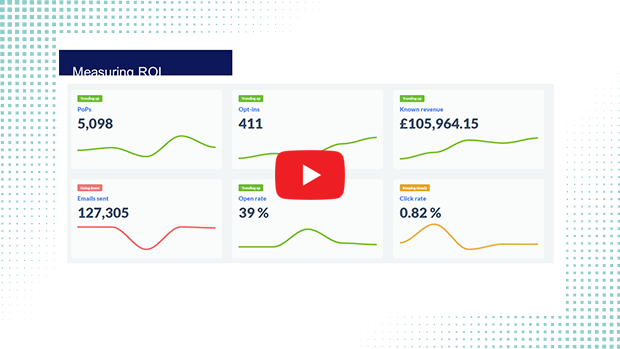
Join Airship’s CEO, Dan Brookman, and DataHawks’ Founder, Victoria Searl, as they unveil the power of Airship’s dedicated hospitality CRM system.
Explore how this system seamlessly integrates your valuable data, taking care of the laborious tasks through marketing automation. Discover the key to unlocking revenue and fostering long-term guest loyalty, propelling your business forward!
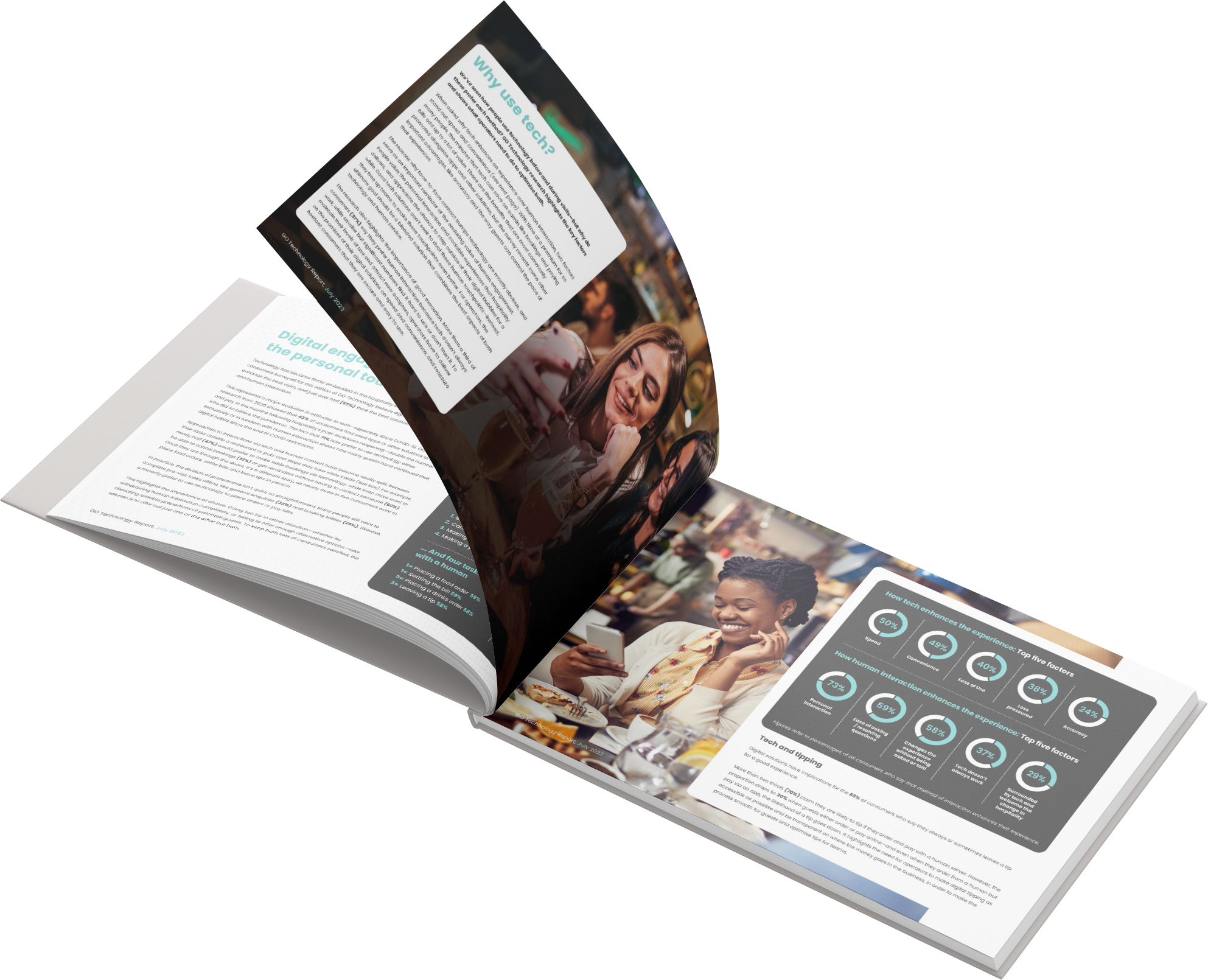
The role of technology in hospitality is evolving – not only are guests used to seeing technology in-venue, they now expect it to be present. But the importance of human connection for which the hospitality industry is known and loved so well, is not to be underestimated.
Produced in partnership with CGA by NielsenIQ, we asked 5,000 UK hospitality consumers to find out their views on technology in hospitality.
With 55% of those surveyed believing that a balance between technology and a human touch delivers the best hospitality experiences, ensuring you’re meeting the expectations of ever-increasingly digitally-savvy guests, will be key for success now, and in the future.
As hospitality operations continue to increase in complexity, the value of effectively managing and utilising your data to both make operational improvements and identify ways to drive additional revenue has never been higher.
In this webinar, Jonathan Grant, Director of Technical Sales at Zonal and Susie Clark, Head of CRM at Ignite explore the importance of data and the ways in which data can be developed into key information which can ultimately benefit your customers and company through improving customer relationships and increasing revenue.



Being able to effectively manage suppliers, product availability and menus down to an ingredient level will ensure operators are able to tackle rising costs and remain profitable – all while maintaining the same standard of service guests expect.
Implementing smart back-of-house tech solutions which update in real-time and that are fully connected to other tech in the venue, such as the EPoS, will enable operators to make vital cost-cutting decisions based on accurate data from across the entire business. Technology can also streamline and speed up mundane, labour intensive or time-consuming tasks involved with managing inventory and ordering, as well as reduce waste.
For many operators, manually managing inventories and stock is a particularly time-consuming task, and one that can cause a huge admin headache if not done accurately. But it can also be costly to operators in terms of their bottom line and wastage, so utilising robust, feature-rich technology to aid the process will undoubtedly prove to be beneficial.
With this in mind, here are five ways that digital stock and order systems can help operators transform their inventory management:
We all know that having accurate and up to date stock information is a critical part of the business decision making process. As hospitality businesses have increased in operational complexity, so too has the process of calculating the stock. There is a real danger that in modern operations decisions are being made based on inaccurate information generated by conflicting stock management processes.
First and foremost, EPoS integration would be beneficial. At Zonal, our EPoS comes as standard with a complete stock management solution, which provides accurate, real-time data that allows businesses to ensure appropriate amount of stock for each product is being held, enabling operators to set limits on product usage, mark them as ‘unavailable’, as well as run regular line and spot checks and same day stock takes. The system also enables operators to review stock position down to an individual ingredient. This enables operators to avoid the potential for unnecessary overordering and reduces the amount of cash tied up in stock. The real-time data provided by the system also enables operators to keep on top of where and for what reasons they are losing money, whether that be due to drinks being poured in error or staff giving away too many free drinks.
Ensuring sales data is being captured from the till and other ordering channels – and that all this insight is feeding into the stock management system – will enable operators to keep tabs on stock, purchasing and costs, all in real-time, meaning they can be quick and agile in making important cost-cutting decisions. Not only this but having the right solutions in place allows operators to reduce admin time and ensure accuracy of purchase items and recipes by removing the need to re-key the information.
Preparing a stock order is often viewed as a necessary evil. Even with a flawlessly organised stock room, team members can find themselves spending a large amount of time trying to obtain an accurate account of stock needed. Not only that, but this runs the risk of missing key products, or juggling new product lines during a menu change. The outcome of this is inaccurate product levels and availability.
Having feature-rich purchasing and stock control systems that allow staff to create order templates for items that are ordered regularly can be particularly useful to operators. This enables them to re-order popular products quickly, reduces errors being made with the ordering of stock, as well as minimises the risk of over-ordering. Templates can be set up either by an individual operator on-site or at head office level, and pushed out across a whole estate, helping to streamline the ordering process regardless of the size of the operation.
With a few simple clicks of a button, staff can create templates directly in the system – either from scratch or based on previous orders that need to be replicated regularly. What’s more, the list of products to order within the template can be ordered based on the layout of the back bar or storeroom, making it easier to cross-check physical stock in-venue against the ‘regular order’ template, helping to speed up the process and further reduce the potential for unnecessary over-ordering. These templates can then be re-ordered however regularly they need to be, so you can ensure the right amount of stock is always available.
What’s more, with the right system, value-based approvals can be set up as part of the ordering process if needed by a business. This is particularly useful for pubs, bars and restaurants with multiple sites, as orders that exceed a configurable threshold cannot be made until approved by a manager, helping to eliminate unnecessary costs caused by purchasing errors before they occur.
We know that operators are continuously looking to reduce the time spent on repetitive tasks, whilst also maintaining a high degree of accuracy. Whilst having tools to help build a stock order are helpful and do save time, it often remains a laborious task and can certainly be a challenge for inexperienced team members. Suggested ordering is one way to drive a reduction in admin time and to increase stock order accuracy – keeping stock holding values down whilst also ensuring all items remain available. An effective suggested order facility will consider real-time stock holding levels (driven by EPoS integration), minimum stock and par levels and anticipated usage taken from historical usage.
This kind of facility ensures businesses are not needlessly ordering too much stock, driving high stock holding, increased wastage and added burden to operations. It also provides a safety net to prevent underordering which impacts product availability and ultimately revenue.
Having stock in place at the right levels and at the right time is certainly a key element for keeping costs down. But so too is having the right stock from the right source and at the right price. Keeping track of suppliers, catalogues and prices is important to ensuring cost of sales is where it needs to be, however this is becoming an increasingly challenging task to manage.
Back-of-house tech can play a crucial part in this process. It offers operators tools to digitally store large product lists, segment products into manageable catalogues and importantly import prices changes as they happen. These digital processes make managing suppliers simple and ensure teams are always ordering the right products to hit those all-important margins. And with supply chains facing ever increasing challenges, the reduction in admin overhead is a welcome relief for those responsible.
Having a fully digital supplier and ordering process also allows operators to drastically reduce the time and effort needed in processing both invoices and credit notes. The use of ‘invoice matching’ technology eliminates the need to manually reconcile delivery notes and invoices where they both match – leaving only those that have discrepancies. And where discrepancies occur, having a fully digital credit request and acceptance process allows for tighter control and reduces the risk of losing money.
Not only does all this save staff admin time, but it enables operators to also protect and even boost margins.
Technology doesn’t only provide direct operational improvements to your inventory management – it also provides access to a whole host of reporting you can use to make smarter decisions to cut costs, such as helping you quickly identify any potential issues when it comes to stock.
Being able to see a report – in a few clicks of a button – that estimates how may days’ stock you have on hand based on live data makes managing stock levels easier and reduces the risk of waste and overordering too. Zonal’s end-to-end purchasing system, Acquire, also displays discrepancy reports which can help operators or staff easily identify where errors are occurring throughout the ordering process, such as incorrect invoices. This empowers operators to better manage their supplier relationships and cut down on time spent dealing with these issues.
The thing that makes this all possible however, is having an EPoS that is integrated with all the back-of-house and stock-taking tech. Having integrated systems which use the EPoS as the central data hub allows for seamless data sharing and reporting, providing you with one version of the truth for accurate, insightful reporting. This enables operators to be able to very quickly identify where processes across the business can be improved and made more efficient, such as identifying the need for more training for staff or recipes that may need refining to maximise margins, helping to save businesses time as well as money.
Using the right technology to manage both suppliers and stock can help operators manage the level of waste they produce which in turn can save them valuable money, and allowing technology to do the heavy lifting will let you know where those all-important pennies can be saved across the business.
If you’d like to find out more about how our hospitality EPoS and inventory & ordering systems could help you to more effectively manage costs in your business, get in touch today and our team of hospitality technology experts would be happy to show you what’s possible!
Director of Technical Sales at Zonal
Jonathan started his hospitality career over 20 years ago managing venues before moving into a technical training role at Zonal in 2012. With a vast amount of operator knowledge and a passion for technology, Jonathan leads Zonal’s technical sales function. Supporting Zonal's internal teams to ensure customers technical requirements are exceeded, Jonathan’s expertise is pivotal in our customer success process providing advice, recommendations and specialist technical support.
Over 60% of customers research and book online – significantly higher for those booking larger groups or special occasions. Your booking platforms are a gateway to increasing revenue and, if utilised to their full extent, can be a powerful tool in boosting your bottom line.
Here are 11 ways you can utilise your booking platforms to drive revenue from hospitality sales & marketing experts Bums on Seats:
Take another good look at your current online booking journey, or better still, ask someone else to do it for you. Your own ‘secret shopper’. Is there plenty of imagery (people only read 10% of information they see – rocketing to over 60% if accompanied by attractive images of your venue). Ensure that all your spaces are shown separately so that customers can envisage themselves enjoying them, know when they are available and how to book.
Look at your timeslot capacity and ensure this is maximised. Table joins can be utilised to maximise pre-booked capacity.
Take the time to review your whole booking journey, ensure any Covid 19 messaging has been removed along with any booking restrictions.
Tables are often moved from area to area based on demand – your booking system can work on a first come first served basis to guide required layouts.
You can also assign tables based on occasion or booking type.
Itemised upsells at the point of booking are a great way to increase spend per head (SPH). Allowing guests to pre-order a bucket of beers, or bottle of Prosecco for example. Spreading the guest spend in this way is a proven method to increase the overall SPH.
Ensure this is particularly being utilised for occasion bookings such as birthdays.
Ensure you have auto-confirm set up for smaller bookings (we suggest 12pax), allowing guests to make a booking immediately. This not only increases conversation but frees up your sales team to focus on larger enquires and building relationships.
Deposits or card pre-authorisations are a sure-fire way to reduce no-shows. Consider basing these on booking size or occasion type.
Set up your SMS and email reminders for bookings. Use your brand tone of voice for this to not only build excitement for the visit, but also reduce no shows.
Ensure these are set up for any outstanding deposits or pre-orders. Again, this will free up your team to focus less on admin, more on converting those larger enquires!
Ensure your online booking journey is clear for special occasions and key calendar dates.
Have you given them an easy way to get more information before they book? If it’s all there they will be confident about booking with you, but if not, may well go elsewhere. And remember not to leave marketing of key dates too late, people start thinking about booking for special occasions months in advance.
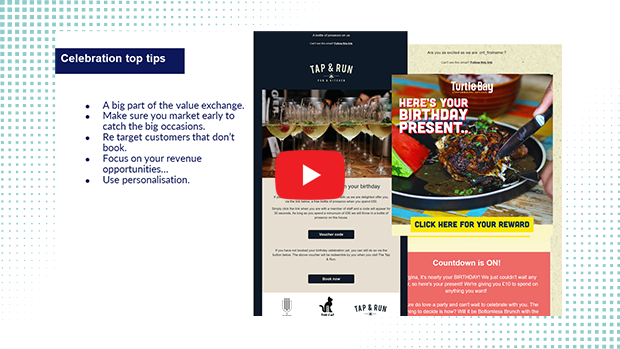
Utilise your systems to send follow up emails prompting feedback and online reviews from guests. Go even further and incentivise repeat visits with your automated follow-ups, to build brand loyalty.
Utilise all your data touch points (Booking System, WIFI, Order & Pay, Feedback Management Tool, EPoS) to integrate and feed into a central CRM system.
This will allow you to build a clear view of who your most loyal guests are, who your lapsed guests are, what occasions they visit for, their most purchased items etc – to enable effective marketing campaigns.
If you’d like to find out more about Zonal Bookings you can browse through some of the great functionality available here, or get in touch today and our team of hospitality technology experts will be happy to talk you through what’s possible.